Roy’s Front Row at the Oscars: ‘How Oscar became more important than ever’
-
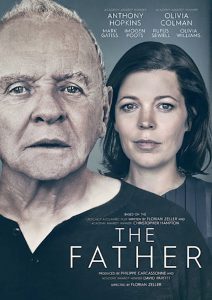
- PHOTO PROVIDED The poster for Oscar-winning film “The Father” is shown.
-
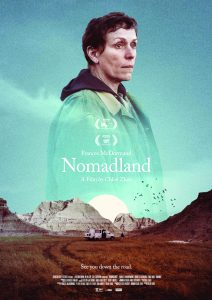
- PHOTO PROVIDED The poster for Oscar-winning film “Nomadland” is shown.
PHOTO PROVIDED The poster for Oscar-winning film "The Father" is shown.
The Oscar ceremony this year, like every other major event throughout this pandemic, was unusual to be sure and I have to say, refreshing and exciting too. There are several reasons why I think this year’s Oscars have become so important from a social point of view so — before my review of the big night and a look at the winners — I want to talk about how Mr. Oscar has evolved and adjusted over the years and how the ceremony has always been part of any domestic or world event that have surround it at the time.
Movies have always reflected the time at which they were made. Whether the stories are set in the past, in the present or in the future, there is no escaping the trappings of the moment of their release. The Oscar ceremony is a testament to that very point.
The socio-economic, political, and spiritual happenings of the time have always had a bearing on any decision made by the voting academy and many of the winners for “Best Picture” throughout the 93 years of Oscar have shown that very point in all aspects of production. Whether through their visual and audio artistry to their scripting, acting, and directing or ultimately through their themes and story lines, the result is the same — a rich barometer of the moment — of the good times and the bad times in equal measure.
In the 1930s and 1940s most of the Oscar winning Best Pictures were dominated by movies that reflected the social struggles at home and the wars abroad. “All Quiet on the Western Front,” (1930), “Gone with the Wind” (1939), “Mrs. Miniver” (1942), “Casablanca” (1943), and “The Best Years of our Lives” (1946) were shining examples of the menacing shadow of War. Whilst “Grand Hotel” (1932), “It Happened one Night” (1934), ‘The Lost Weekend” (1945), and “Gentleman’s Agreement” (1946) were very much examples of the social and class struggles of the time.
In the 1950s and 1960s there was a change of perspective as the big studios, such as MGM and Paramount Pictures, turned out lavishly expensive movies that thrilled with their burgeoning widescreen ‘cinemascope’ technology, brilliant colors and larger than life acting, directing and, cross-the-board production standards.

PHOTO PROVIDED The poster for Oscar-winning film "Nomadland" is shown.
“An American in Paris” (1951), “The Greatest Show on earth” (1952), “Around the World in 80 Days” (1956), “Ben Hur” (1959), “West Side Story” (1961), “My Fair Lady” (1964) and “The Sound of Music” (1965). All garnering Best Picture Oscars for their own unique brilliance and, whilst seemingly different, were, in fact very much made in similar fashion and to serve a very controlled movie industry — the “Hollywood heyday,” as it became known.
The 1970s and the 1980s represented a change away from the big Hollywood control as many smaller, more independent movies, as well as some bright young directing, writing, and acting talent came through.
“The French Connection” (1971), “The Godfather: Parts 1 and 2” (1972-1974), “One Flew over the Cuckoo’s Nest” (1975), “Annie Hall” (1977), “Kramer vs. Kramer” (1979), “Chariots of Fire” (1981), “Terms of Endearment” (1983), “Platoon” (1986), and “Rain Man” (1988) were all examples of Best Picture winners that through their intensely well written and directed production values, together with the extraordinarily real acting therein, had brought movies full circle in showing all aspects of the human spirit, both good and bad, whether set against war or peace. These were about the human condition in all its triumph and equally its failure.
In the 1990s and through to the 2000s, there was another change, a change of conscience, as many historically based movies came forth as a sort of acknowledgment of the wrongs of the past.
“Dances with Wolves” (1990), “Unforgiven” (1992), “Schindler’s List” (1993), “Forrest Gump” (1994), “Braveheart” (1995) and “Gladiator,” (2000) were all examples of Best Picture winners that brilliantly showed us a new look at history. Seen through different eyes and with a sense of real humanity. Indeed many of these movies have become legitimate teaching tools for history students.
Toward the end of the 2000s and into the 2010s and up to today, many of the Best Picture winners have really become completely unique to themselves, breaking barriers in their own way.
“No Country for Old Men” (2007), “The Hurt Locker” (2009), “The Artist” (2011), “12 Years a Slave” (2013), “Birdman or (the Unexpected Virtue of Ignorance)” (2014), “Moonlight” (2016) and “Parasite” (2019) are all examples of movies without any real connection to each other in the ways I have discussed earlier.
Each of these Best Picture winners have gained their prominence through the film makers unique style, perspective and, most of all, their tireless study of the human spirit. That same spirit that has been studied in every winner since 1928.
Oscar has always been a test of the social constraints of its day. The release date is everything. Some seem to be way ahead of their time, some are just timed to perfection, but all are representative. A unique thing that only movies have, they are inexorably similar, yet exquisitely different in so many ways.
This year’s ceremony was approached in a different way from the get-go. The restaging of the event at the smaller space that is Grand Union Station in Los Angeles enabled for a more personal and closer event. Only a few hundred guests were invited, mainly consisting of the nominees and other industry people. The filming style, the attention to the actual winners and them being allowed an unlimited time to speak, certainly made for some exciting visuals and thought-provoking discussion. I have to say, the whole event was handled brilliantly, and no time was wasted at all in getting straight to the winners.
The clear winner of the night, one that was not a surprise, was “Nomadland” and its writer/producer/editor and director, Chloe Zhao. There were several barriers broken this night and for her being the first Chinese/American to ever win, and only the second ever female to win for directing (The other is Kathryn Bigelow for “The Hurt Locker” in 2009) she certainly achieved an incredible thing, and well deserved it was too.
It was a big night for both Frances McDormand and Sir Anthony Hopkins. McDormand winning her third Oscar, only the fourth woman in history to do so (Katherine Hepburn, Ingrid Bergman and Meryl Streep being the other three) and she gave a short and sweet speech which seemed to catch everyone off guard.
Hopkins won the second Oscar of his illustrious career but was not there to receive it. Many believed that the late Chadwick Boseman should have been given the best actor Oscar posthumously for his brilliant performance in “Ma Rainey’s Black Bottom,” but in the end it was a fully deserving Hopkins who won through.
Another first in the acting category was for best Supporting actress. Youn Yuh-Yung became the first ever Korean/American person to win in any acting category, for her stellar performance in “Minari,” and gave a beautifully heartfelt speech.
Daniel Kaluuya’s commanding performance in “Judas & The Black Messiah” was an incredibly popular win and his speech was an inspiring and uplifting nod to social injustice and the hope and need for love and understanding to come back to us all.
There was a message throughout the night, not just of the artistry and the congratulations to the winners, but from the people in the industry who, like all of us, had to face a most extraordinary 2020.
The lack of productions completed and so to be eligible for Oscar consideration had created an interesting movie void that had been filled with newcomers and film makers who might not have even got a look in, let alone steal the show. There’s no doubt that the more powerful studios usually get first say in the nominations, they just simply have the money to promote and push their movies, but not this year.
This year Netflix, again, were dominant yet not as ultimately successful as they had hoped, as independents shone through and, rightfully so, showing their talent and brilliant artistry to be as good as, if not better than, the big studios.
Now there is the discussion of movie theaters and how they will come back and be able to entice people back in.
Streaming has obviously now become a force to be reconned with. All the nominees were available to streaming platforms, in many cases before or instead of a theatrical release.
But if you think this is how things will stay, I hate to be the barer of bad news. All the major studios are fully vested in going back to the traditional theatrical release as soon as possible.
But how ever things may turn out, one thing is for sure, movies will go on being made and those small independent, once hopeful film makers have been given a boost that, I believe, has already changed things.
The blockbusters will still be made, but now there is something new — a return to that human spirit that defines the very essence of movies themselves and, finally, ones that will hopefully not be constrained by budget or boardroom.
Arts and Culture

A women-led music festival pushes for peace in Congo’s conflict-ridden eastern region
‘Ella Enchanted’ is a silly trip with Anne Hathaway
With Anne Hathaway continuing to, in my opinion, dominate the big screen (her latest movies include “Mother ...

Brazilian inmates find relief and reduce sentences through reading
Movie Review: Wahoo! ‘The Super Mario Galaxy Movie’ levels up the magic
Bringing Marian to Life: A Q&A with Elizabeth D’Aiuto of ‘The Music Man’