
‘Blue Prince’ constructs a world of puzzles
Trending
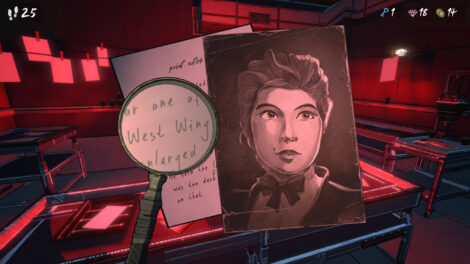
PHOTO PROVIDED
This promotional image for "Blue Prince" shows an example of lore that you can find laying about one of the various rooms of the house -- and the usefulness of the magnifying glass item.
Full disclosure: my friends and I have been absolutely consumed by this game in our free time lately. We've been playing it couch co-op, so whenever we are together and have a few hours to do a run or two, it's been the go-to.
"Blue Prince" is a pretty special game. It's not often that you get to play a game that you can confidently say will inspire imitators -- if not a whole new genre -- but this is one such example.
Think of it like a cross between a puzzle book and a roguelike: there is a persistent world, with unlocks that persist between runs. Most of those unlocks are associated with solving puzzles. But the gameplay is pure rogue fun.
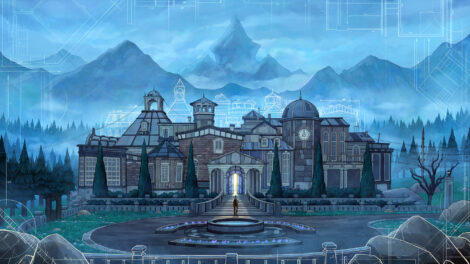
The setup: the protagonist of the game has been willed the Mt. Holly Estate by his great uncle. Mt. Holly is a weird, weird mansion where the rooms in the house change their location every day (in gameplay terms, you are drafting the house as you explore it, with the only fixed points being the entrance hall at the bottom and the antechamber at the top). Your original goal is to find the house's 46th room, which is a puzzler because the house's map board only has space for 45 rooms.
Amidst all of it is layer upon layer upon layer of puzzles involving the previous staff at the estate, family secrets, and conspiracies that stretch the world the game is set within.
There are paintings with ominous meanings, hidden safes with mysterious codes, word puzzles and music puzzles and so many more. And, many of those puzzles are themselves modified by a wide range of items that you can find within the manor each day, like the magnifying glass, the shovel, the sledgehammer and so forth.
As time passes and you get more comfortable with the game -- and get more persistent unlocks --you eventually begin to be able to target specific rooms or regions of the estate, which allows to you actually feel like you have a progression system that isn't wholly random despite fundamentally relying on the rooms the house serves up.
This is absolutely a game where you want to go in as blind as you can, because the less you know about it, the more rewarding the experience is. So with that said and because I'm trying specifically not to reveal too much, here's an example narrative of a day in "Blue Prince:"
You load in, and the camera flies over the Estate's grounds and drops you in the Entrance Hall. You walk forward, take your allowance -- a few gold coins to get you started -- and are confronted by three doors, one on each side and one to the front. You can also choose to head backwards, out the front door, and explore the grounds. If you do that, you will find various locked gates and barred entrances, with little else to do yet.
Let's say you open the door to your right. You are presented with three options: an orange hallway that connects straight through, a purple bedroom that hooks to the north and a kitchen that costs a gem to pick -- what's a gem?
You take the hallway and step in. You notice that the step counter in the top left corner of your screen drops from 50 to 49. You see, you have a limited number of steps each day with which to explore, and when that number hits 0, the day ends and you must start over with a new house.
As you open more and more doors and more and more time passes, you eventually end up the bottom half of a house. Some doors are locked and require keys. Other rooms are red and affected your house in a variety of negative ways. Perhaps you've found a few shops along the way where you've been able to buy items or food to increase your steps for the day. Maybe you find a room that gives you a bonus for each purple room you've taken, revealing that the different room types are draftable archetypes.
And, throughout all of it, the puzzles. The letters and notes that seem commonplace. The shifting paintings on the walls that must mean something, but how? The portraits of stern, nameless family members sitting on the mantles and tables, watching you knowingly but only gradually revealing their secrets. Rooms where you can tell there is some hidden path or doorway that you can just barely see through cracks in the walls, but with no obvious way to unlock it.
Hours pass. In-game days roll by. You figure some stuff out, and start to understand how the game's puzzles tend to work -- but all that does is reveal more puzzles tantalizingly out of reach, things that maybe you never realized were significant at all.
Very little of this game is accidental or noise.
You are expected to keep notes, and I highly recommend playing this game with a friend, or several, both to help keep track of things and also to provide a wider range of abilities to solve the wide range of puzzles present in the game.
I'll leave you with perhaps the most remarkable thing about this game to me. It wasn't made by some sprawling studio with tons of resources available. It was made primarily by one man's vision: Tonda Ros, who developed the game with limited assistance over eight years using a combination of his income and savings, as well as his ad revenue from the website Mythic Spoiler, which is a venue for collecting and displaying newly released cards for the trading card game Magic: The Gathering.
This allowed him to commission art, music, and other assets to help while he developed the bulk of the game in the Unity engine.
I cannot recommend this game highly enough. It's deep, genre-creating, brain-busting, supports a small studio, and is just, generally, fun.
If you want to check it out, "Blue Prince" is available on Steam, PS5 and Xbox. As of this writing, it sports a 92/100 on Metacritic and boasts a wide range of critical acclaim.
Do note that the puzzles can range heavily in difficulty and that some can trend to the point of being frustratingly hard -- but other than that, there's no objectionable content in this game whatsoever, making it appropriate for all ages.
------
Arianna McKee is the Design Editor at The Express.