
The landscapes of western North Carolina: Penn State Extension, Master Gardeners conclude trip
-
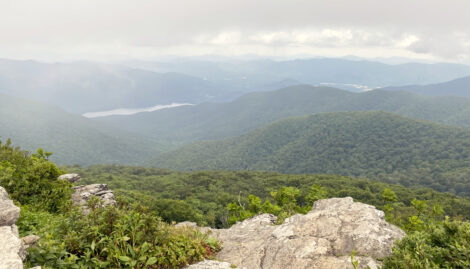
- PHOTO BY TOM BUTZLER The view from atop Craggy Gardens is pictured above.
-

- PHOTO BY TOM BUTZLER Penn State educators, specialists, and Master Gardener coordinators tour Biltmore Estate’s horticulture history.
-

- PHOTO BY TOM BUTZLER This original design by Frederick Law Olmsted had water features flanked by walls and hedges. Notice the rows of tulip poplars on the right. The water used to feed the pools still uses 1895 technology, constantly flowing in and out.
-
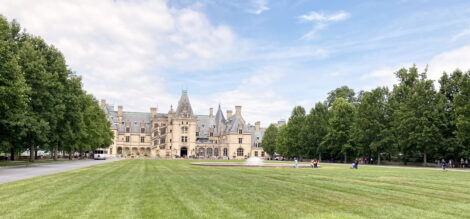
- PHOTO BY TOM BUTZLER Tulip poplars line the esplanade (a significant, level open area) to draw one to the Biltmore house.
-
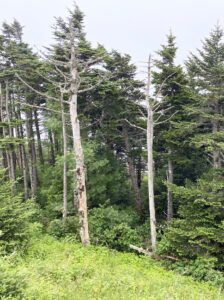
- PHOTO BY TOM BUTZLER Pictured is a view of stands of dead fir and spruce, caused by air pollution and insect infestations, atop Mt. Mitchell.
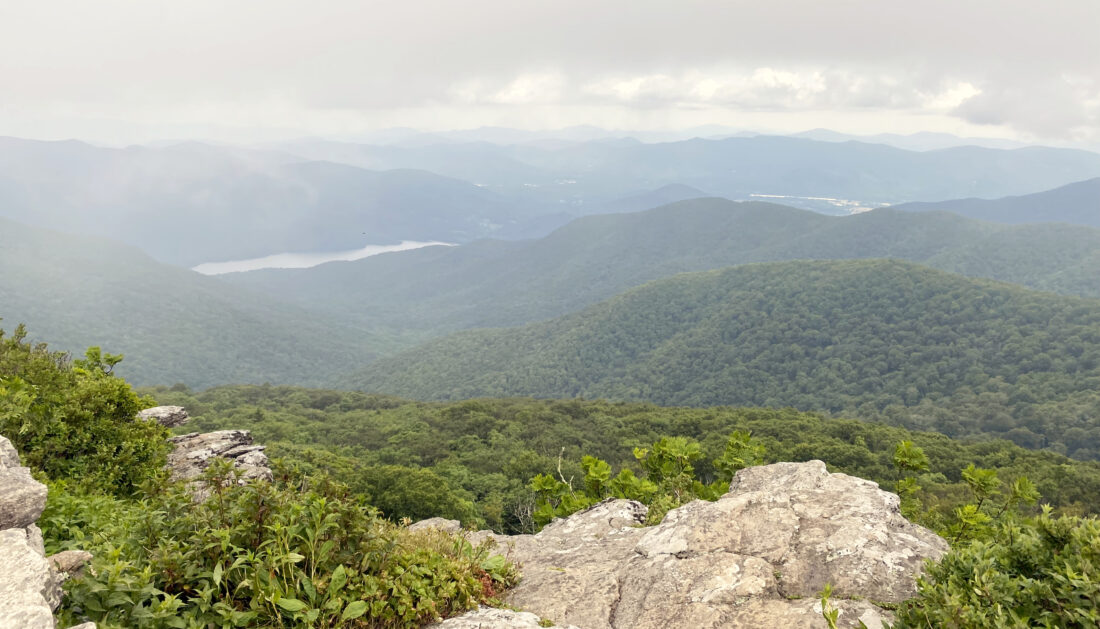
PHOTO BY TOM BUTZLER The view from atop Craggy Gardens is pictured above.
The COVID pandemic has dramatically changed American lives and it will take time to tell if we will revert to our pre-pandemic activities. But one of the current changes is the increased interest in being out in our managed and unmanaged landscapes. People want to connect to plants. Penn State Extension’s professional development trip to western North Carolina gave us a glimpse on this increasing interest.
A trip to western North Carolina and Asheville is only complete with a visit to the Biltmore Estate. George Vanderbilt built the historic house in the late 1800s and spared no expense. According to Biltmore’s website description, the structure spans 175,000 square feet, more than four acres of floor space, and 250 rooms, including 35 bedrooms, 43 bathrooms, and 65 fireplaces.
But with this type of structure, the grounds had to match. Renowned American landscape architect Frederick Law Olmsted was brought in to design seventy-five acres of formal and informal gardens. Biltmore’s Director of Horticulture, Bill Quade, gave us a personalized tour of the gardens and explained the history of the grounds.
Insider knowledge always makes a tour much more intimate and exciting. For example, Bill talked about the esplanade of trees in front of the house. The original design by Olmstead had two rows of tulip poplars (Liriodendron tulipifera) on each side of the great lawn that would draw the eye to the structure. The trees planted, starting in 1895, were mammoth and magnificent after several decades of growth. But over time, they were slowly succumbing to disease and weather events. Instead of replacing trees as they perished, the decision was made to remove and replace all remaining trees. There was never any question about what was going back in as the estate tried to preserve the original design and concept. Tulip poplars, started in a nursery several years previously, were brought in and planted in 2004.
To illustrate the detail that goes into maintaining the designers’ vision, visitors can take a peek into the gardens below the esplanade. The shrub garden contains over 500 species of plants, shrubs, and trees, many of which were popular in the 19th century. While the rose garden has some modern varieties, the estate’s collection of heirloom roses includes the same varieties initially purchased for the grounds in the late 1890s.

PHOTO BY TOM BUTZLER Penn State educators, specialists, and Master Gardener coordinators tour Biltmore Estate’s horticulture history.
If you are looking for a Pennsylvania connection, Gifford Pinchot, before he was a two-term PA governor in the 1920s, was a forestry manager of the 125,000 Vanderbilt estate. His role was to develop a plan for managing and conserving Vanderbilt’s woods. These forested holdings became known as the birthplace of American Forestry.
On the last day of our trip, we ventured into the natural or unmanaged landscapes of western North Carolina. This tour started with an entrance into the Blue Ridge Parkway outside Asheville. The road is a linear park that stretches 469 mountainous miles from Waynesboro, Virginia, to the Great Smoky Mountains National Park in North Carolina. While there are numerous sights and experiences along the way, we chose to visit Craggy Gardens and Mount Mitchell.
Our destination for the afternoon was the highest point east of the Mississippi, Mount Mitchell. The Penn State Extension Educators started the climb after a quick stop at the Southern Highland Craft Guild Folk Art Center at milepost 382. During the 32-mile climb, observing the change in tree species was interesting. At the lower levels, trees, such as oaks, were dominant. But as we gained elevation, the birches and beeches were the principal trees. And slowly, as we reached higher heights, the deciduous trees turned into spruce-fir forests.
Along the way, the group stopped at Craggy Gardens. A short .75-mile hike on the Craggy Pinnacle Trail led to spectacular panoramic views of numerous peaks. But the walk itself is just as appealing. Catawba rhododendrons cover the hillside. When in flower (we just caught the very tail end), the slopes are awash in color. Because of the exposed sites (strong winds, ice storms, etc.) and shallow soils, the deciduous trees are twisted and gnarled, adding a haunting visual to the hike. There are also stands of mountain laurels, blueberries, and numerous wildflowers.
The group then traveled upward to Mt. Mitchell State Park. From Craggy Gardens onward is the start of the transition zone from deciduous trees to conifers. But once atop Mt. Mitchell, the trees were all Fraser firs and red spruce. At various sites, patches of dead, older trees stood throughout Mt. Mitchell State Park. Plant life on this peak experience many of the same stressors as Craggy Gardens but with a few others. For the past several decades, the balsam woolly adelgid has been killing the firs in great numbers. Once the infestation progresses, the trees respond by plugging up the wounds, inadvertently reducing water flow and nutrients. Eventually, the needles drop.

PHOTO BY TOM BUTZLER This original design by Frederick Law Olmsted had water features flanked by walls and hedges. Notice the rows of tulip poplars on the right. The water used to feed the pools still uses 1895 technology, constantly flowing in and out.
And both the firs and spruces have had issues dealing with air pollution issues. Sulfur dioxide from decades of coal-burning power plants and nitrogen oxides from vehicle emissions mix with moisture to form sulfuric and nitric acids. The conifers bathed in the acidic clouds (a high elevation with many cloudy days) caused a loss of nutrients in the needles and weakened them to winter damage. In addition, the change in soil pH from acid rain inhibited the ability of certain nutrients to be taken up by the roots. Also, low-level ozone (from gaseous vapors, solvents, heavy metals, etc.) allows ultraviolet rays to burn the needles, altering photosynthesis and other biological processes.
Touring the world of horticulture in western North Carolina was a great learning opportunity for the Penn State educators, specialists, and Master Gardener coordinators. Seeing how others manage plants and related activities in different parts of the US provides examples of ingenuity, entrepreneurship, and scientific advances. We hope to bring some of the knowledge we gained back to Pennsylvania.

PHOTO BY TOM BUTZLER Tulip poplars line the esplanade (a significant, level open area) to draw one to the Biltmore house.
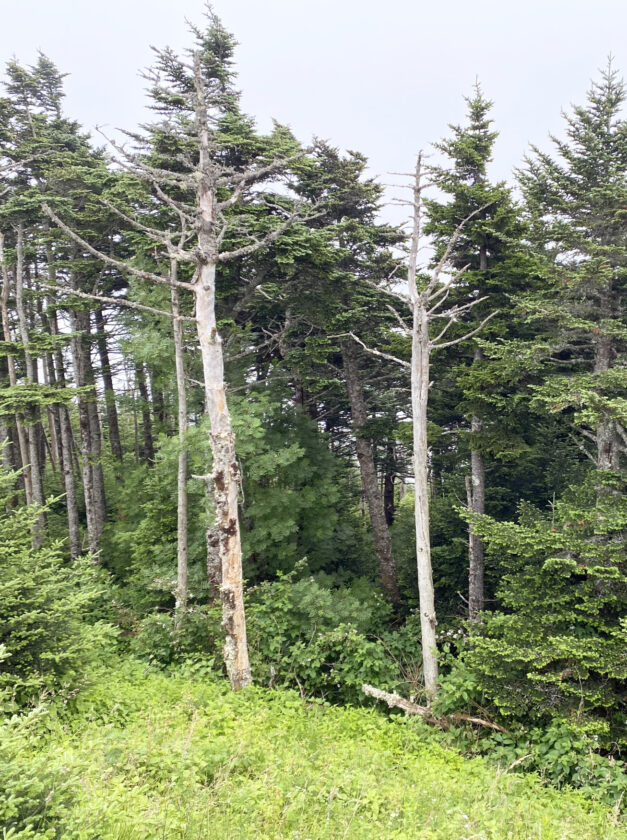
PHOTO BY TOM BUTZLER Pictured is a view of stands of dead fir and spruce, caused by air pollution and insect infestations, atop Mt. Mitchell.
Garden
Annuals or perennials?
Soil is the foundation of your garden. Keep it healthy!
How to save money on garden gear with some creative recycling
Nobody said vegetable gardens must be in the backyard. Put them out front if it’s sunny
Master Gardeners open Garden Hotline for the 2026 season
7 signs of spring allergies
METRO — Few things are more deflating than finally venturing outdoors after a long winter of cabin fever, only to ...