
Harvesting joy in my vegetable garden
Trending
Summer brings many joys, and one of my favorites is fresh vegetables from my garden.
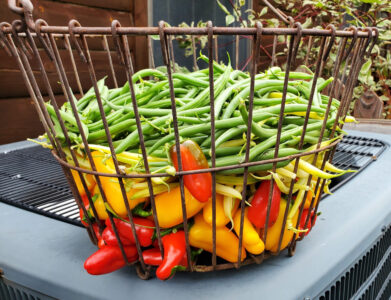
For the past several weeks, I've been harvesting lettuce, peppers, broccoli, cabbage, kale, onions and garlic. I just noticed a few red grape tomatoes which I'll soon be able to pick and I'm looking forward to celery, beans, carrots and zucchini later in the season.
What's so special about growing my own vegetables when I could easily go to a local grocery store and buy them? A lot.
For one, they couldn't be any fresher. It takes about a minute to pick a head of lettuce and bring it into my kitchen. It's fresh and crispy and full of flavor. Freshness makes a difference in both flavor and texture in other vegetables as well. A freshly picked stalk of celery is not only crisp and tasty, it has a delicious fragrance that I've never found in store-bought celery.
By planting my own vegetables, I can select the varieties I want to grow. Romain is my husband's favorite lettuce, so I plant plenty of that, and I stagger the plantings so all the heads don't ripen at the same time. I also plant several types of Salanova lettuce to give us a nice variety of colorful, little leaves for salads. Salanova varieties usually produce dense heads of small leaves, which are easy to remove from the core. Both red and green types are available, and textures vary from soft butterhead to crispy depending upon variety.
We have favorite cultivars of other vegetables, including Lunchbox peppers and Bolero carrots, which I plant every year.
Having vegetables available in the garden cuts down on the number of trips I have to make to the grocery store and farmers' market, saving both time and money. It also helps with meal planning because we use our vegetables as they ripen. If the green beans are ready, then it's a pretty good bet we'll be having green beans for dinner. This usually works well unless I overplant and have too much ripened all at the same time. When that happens, I often share the extra produce with friends and neighbors. Sometimes I freeze or can it.
Another benefit of growing my own vegetables is knowing exactly how they were grown.
I avoid using insecticides and herbicides, so I don't have to be concerned about pesticide residues. We're also careful about garden sanitation and use only compost and organic fertilizer. Our vegetable garden is fenced in to keep groundhogs, racoons and other wildlife out.
Growing vegetables can be very rewarding, but there are many things to consider before getting started.
Location is key, because most vegetables require full sun for at least eight hours per day and preferably more.
Access to water is also important, since vegetable plants need plenty of water, especially when newly planted and during dry spells. Consider having the soil tested to determine if it can provide the necessary nutrients or if it needs to be amended before planting.
In Clinton County, soil tests are available through both the Conservation District and Penn State Extension.
Give some thought to the time and effort that will be needed to plan, plant and maintain the garden and make sure you are willing to make that commitment. Also consider the cost. While transplants and seeds can be relatively inexpensive, other items, such as rakes, shovels, garden hoses, fencing and fertilizer can add up. I often recommend starting small and expanding the vegetable garden as you gain experience.
As with most undertakings, the more knowledge you have, the better your chances of success, so it's a good idea to learn as much as possible before getting started. Fortunately, there are plenty of helpful vegetable gardening resources.
Beginner's guides are available from North Carolina State Extension at content.ces.ncsu.edu/home-vegetable-gardening-a-quick-reference-guide and from University of Maryland Extension at extension.umd.edu/resource/how-start-vegetable-garden/.
Information on managing pests is provided by Michigan State Extension at www.canr.msu.edu/resources/ipm_smart_pest_management_for_the_vegetable_garden.
A detailed guide to vegetable gardening from Penn State is available in both print and digital format. It can be purchased online for $10.00 at extension.psu.edu/vegetable-gardening.
Penn State Extension Master Gardeners provide vegetable gardening workshops and answer questions through a garden hotline. In Clinton County call (570) 858-0198 or send e-mail to ClintonMG@psu.edu.
If you've never grown your own vegetables, I hope you'll consider giving it a try. And if you have questions, please don't hesitate to ask.
-- -- -- --
Debra C. Burrows, PhD is a retired Penn State Extension Educator and a certified Master Gardener. She can be reached at dcb3@psu.edu.