
Annuals or perennials?
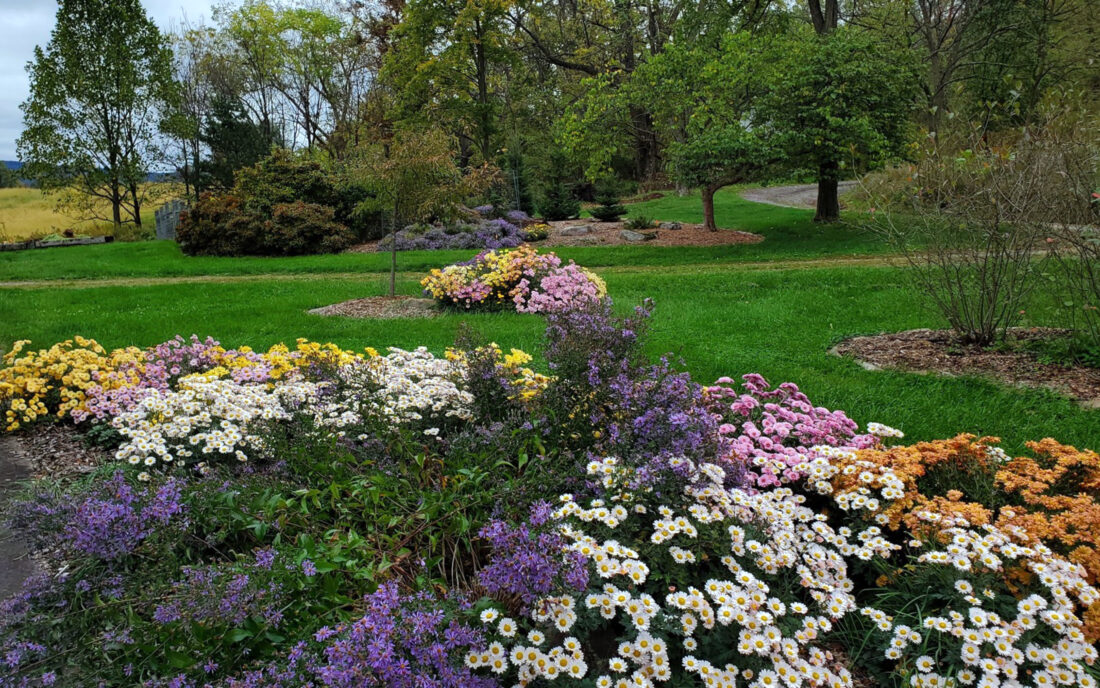
PHOTO BY DEBRA BURROWS Perennial chrysanthemums and asters return each year to add late-season color to this Clinton County landscape.
With the arrival of spring, many gardeners are thinking about what to plant in beds and borders for the upcoming growing season. Their personal preferences, existing site conditions and the amount of time and attention required to maintain the plants play a part in their decisions. One important consideration is whether to plant annuals or perennials. Becoming familiar with the characteristics of each can help with those decisions.
Annuals
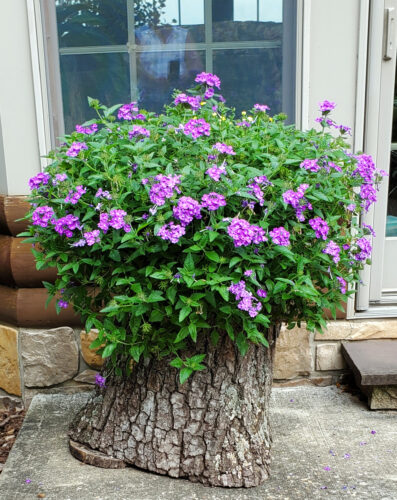
Annuals are plants that complete their life cycles in a single year. Seed germination, growth, flowering and seed production occur within a matter of months and then the plant dies. Annuals are valued for their long blooming periods, often several months and right up until frost. They can be very effective at bringing bright splashes of color to beds, borders, and containers such as hanging baskets and window boxes. Examples of annuals include marigolds, petunias, ageratum, snapdragons, and alyssum, just to name a few. They are available in a variety of colors and heights, with some preferring full sun while others thrive in shady conditions.
Some might say that the biggest drawback to planting annuals is that they are just that: annuals. They live for only one year and must be planted again in each subsequent year. That means incurring the cost of seeds or transplants as well as performing the labor required to plant and establish them every year. In addition, some annuals require deadheading to encourage continuous flowering.
Perennials
Perennial plants can live for years and even decades. The variety of perennials available to gardeners in Clinton County, which falls in USDA Horticultural Zones 5 and 6, is extensive, making it possible to find colors, heights and habits that will work well in locations ranging from sunny and dry to moist or shady.
Perennials tend to bloom for a shorter period than annuals, usually about one to four weeks. That doesn’t mean continuous color is impossible, but it does require a little extra planning. Season-long color can be achieved by planting a variety of perennials that bloom at different times so that when one group completes its bloom cycle another begins. In my own gardens, flowering bulbs and creeping phlox are followed in late spring by the blooms of irises, peonies and baptisia. They, in turn, are succeeded by butterfly weed, liatris and coneflowers as well as lilies and tall phlox. Asters, anemones and chrysanthemums flower in late summer through fall, providing three seasons of color.
Because perennials can last for years, it’s important to ensure that the soil where they will be planted can support them over the long term. A soil test, available from local Penn State Extension or Conservation District offices, can help determine what, if any, soil amendments will be needed. Once planted in a suitable location with plenty of nutrients, many perennials will grow and multiply, decreasing the need to purchase additional plants.
Biennials
In addition to annuals and perennials, there is a third, but lesser-known group of plants called biennials, which have a two-year life cycle. During the first year, the plants develop their root systems and foliage, but do not produce flowers. Flowers appear during the second year, after which the plant dies. Examples of biennials include foxgloves, hollyhocks and forget-me-nots.
Additional information, including color and height for a variety of annuals and perennials is provided by University of Kentucky Extension at www.rs.uky.edu/consumer/extension_pdfs/ho102.pdf .
These days, there are plenty of choices, and it’s easy to be overwhelmed. Just remember, no matter what you choose, it will be an improvement over a patch of lawn or an empty container, so don’t be afraid to experiment. Trial and error are an integral part of gardening, and you will learn from the experience. Happy spring!
— — — —
Debra C. Burrows, PhD is a retired Penn State Extension Educator and a certified Master Gardener. She can be reached at dcb3@psu.edu.
Garden
Annuals or perennials?
Soil is the foundation of your garden. Keep it healthy!
How to save money on garden gear with some creative recycling
Nobody said vegetable gardens must be in the backyard. Put them out front if it’s sunny
Master Gardeners open Garden Hotline for the 2026 season
7 signs of spring allergies
METRO — Few things are more deflating than finally venturing outdoors after a long winter of cabin fever, only to ...