
Growing Tips: The effects of excessive heat on plants
Trending
Summer has just begun, but here in central Pennsylvania, we've already experienced two heat domes that brought extended periods of unusually high temperatures and unrelenting sunshine. As a result, many of us have been sweltering and so have our plants. While humans can get away from the heat by going into an air-conditioned building or taking a dip in the pool, plants don't have that luxury. They are literally rooted in place and must endure it.
During extended intervals of very hot weather, many plants will begin to show signs of heat stress. Some will stop forming flowers or will drop the buds that have already formed. Others will wilt. Some curl their leaves in response to high temperatures. This is particularly noticeable on corn and tomato plants, which roll up their leaves to reduce the amount of surface area exposed to heat and sun. Vegetable plants may stop producing or, if the fruit is already present, it may not ripen. Tomato plants stop making lycopene, the pigment that causes red coloration, when temperatures exceed 85 degrees Fahrenheit. Some vegetables, such as lettuce, broccoli and carrots develop a bitter taste or go to seed early. Heat stress weakens plants and makes them more susceptible to insect damage.
Excessive heat can interfere with photosynthesis, the process by which plants convert sunshine, water and carbon dioxide into chemical energy. If photosynthesis is disrupted, the plant may not have the energy needed to develop properly. It may not produce as much nectar as a healthy plant and the nectar it does produce may not be as sweet, making it less attractive to pollinating insects.
Pollinating insects themselves can be negatively affected by extreme heat. Many are less active because of the high temperatures. Larvae may die off before reaching adulthood. Those that survive may be malformed, unable to reproduce or have neurological problems, all of which affect their ability to pollinate. A decrease in pollination can result in a decrease in flowering, as well as fewer vegetables, fruits and nuts.
While plants cannot pick up and move to a cooler spot when heat waves arrive, there are some things gardeners can do to help them get through the hot weather.
One of the most important is making sure plants have adequate moisture available to them. How and when water is provided are important considerations. Deep watering is much more effective than shallow watering. A good soaking several times per week encourages plant roots to spread down into the soil instead of remaining near the surface. Deeper roots are better able to anchor the plant and support its growth over the long term. Soaker hoses and drip irrigation systems are more efficient and effective than overhead watering. They allow water to go directly to the plants' roots rather than sprinkled above where much of it can run off or be lost to evaporation. If watering with a hose, it is best to place a gentle stream of water at the base of the plant rather than on the leaves.
Watering plants early in the morning is recommended. During times of excessive heat, container plants may need more frequent watering and should be watched carefully for signs of heat stress. During our most recent heat wave, a large pot of annuals located in full sun on my porch needed water three times per day instead of once each morning.
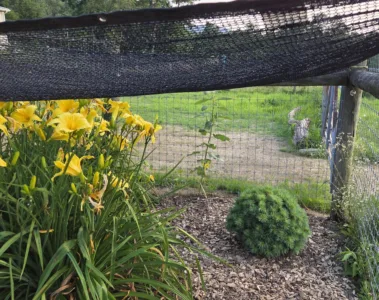
Shading plants from hot sun can help them endure extremely hot weather because shaded areas can be several degrees cooler than those in full sun. Container plants can be moved to locations where they will receive partial shade until the heat wave passes. Garden beds can be cooled by hanging shade cloth, a mesh-like fabric that limits the amount of sun that can pass through it. It's classified by the amount of sun that it blocks. For example, 30% shade cloth blocks 30% of the sun's rays, and is suitable for using over vegetables and other plants that usually thrive in full sun. It cools the area underneath but still allows enough sunlight to reach the plants. I use 30% shade cloth to extend the life of cool season vegetables such as lettuce, broccoli and cabbage. This year I'm using it over some perennials beds as well. Shade cloth is available in various percentages and in multiple sizes as well as long rolls that can be cut to size. It can usually be found at garden centers and online.
Adding mulch to garden beds helps conserve moisture and keep soil temperatures down. If using soaker hoses, they should be placed underneath the mulch layer. Planting, fertilizing, pruning and mowing should be avoided during times of excessive heat because they place added stress on plants.
Additional information on dealing with garden heat stress is available from Oregon State Extension at extension.oregonstate.edu/catalog/em-9556-heat-wave-garden-how-identify-prevent-heat-stress-plants. Kansas State Extension provides detailed information on using shade cloth at https://www.johnson.k-state.edu/programs/lawn-garden/agent-articles-fact-sheets-and-more/agent-articles/vegetables/using-shade-cloth.html
-- -- -- --
Debra C. Burrows, PhD, is a retired Penn State Extension Educator and a certified Master Gardener. She can be reached at dcb3@psu.edu.