
Choosing a real Christmas tree? Extension expert gives tips for selection, care
Trending
UNIVERSITY PARK -- From choosing a tree at a local farm to enjoying its fresh, woodsy scent at home, real Christmas trees are part of many families' holiday traditions. But choosing the right tree and keeping it fresh throughout the season takes a little planning.
Kelly Piccioni, horticulture educator with Penn State Extension, offered tips for selecting and caring for a real Christmas tree.
-- Consider your space and decorating plans. "Think about where the tree will be displayed, how much room you have, the types of ornaments you'll hang and how long you plan to keep the tree up," she said.
-- Find a species that fits your needs. Different species offer unique characteristics, from fragrance and needle texture to branch strength and needle retention. Douglas-fir and Fraser fir are among Pennsylvania's most popular choices. Douglas-fir has soft needles, a full appearance and a traditional Christmas tree fragrance, making it a good choice for lighter ornaments.
Fraser fir offers excellent needle retention, sturdy branches for heavier ornaments and a natural shape. Canaan fir has attractive foliage, good needle retention and a classic Christmas tree appearance. Some Pennsylvania farms also offer Turkish fir and hybrid firs.
-- Visit a local Christmas tree farm. Growers can help people select a species that fits their needs. "Purchasing directly from a farm supports Pennsylvania agriculture and often provides the opportunity to select a freshly harvested tree or cut one yourself," Piccioni said. "If your tree has been drilled for a pin-style stand, ask the grower about proper setup."
-- Check for freshness. When selecting a precut tree, look for healthy, flexible needles and branches. "Gently run your hand along a branch to see whether the needles remain firmly attached," she said. "Some interior needle shedding is normal, but excessive loss of green needles may indicate the tree is drying out."
-- Store it properly. Piccioni advised keeping the tree in a cool, shaded location protected from wind, with the trunk in water until it's ready to be brought inside and decorated.
-- Keep it watered. Choose a stand that holds at least one quart of water per inch of trunk diameter. Check the water level daily. "Trees can take up a surprising amount of water, especially during the first few days," she said. "Always keep the water level above the base of the trunk. Plain water is all you need. There's no need to add sugar or other mixtures."
-- Avoid heat sources. Keep the tree away from fireplaces, heating vents, radiators and other heat sources. LED lights are a good option because they produce less heat than traditional incandescent lights, Piccioni added.
Behind the holiday tradition
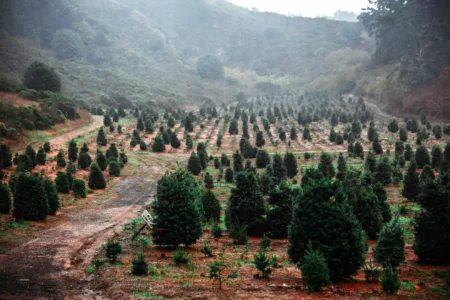
Growing a Christmas tree takes more work than consumers may realize.
"A Christmas tree doesn't simply get planted and grow into that beautiful, symmetrical shape on its own," Piccioni said.
Depending on the species, growing conditions and desired size, producing a marketable tree can take seven to 10 years or longer. During that time, growers manage weeds, insects, diseases, soil fertility and weather-related challenges. Trees typically are shaped annually to develop the full appearance consumers expect.
According to the Pennsylvania Christmas Tree Growers Association, Pennsylvania ranks third nationally in the number of Christmas tree farms. More than 1,400 farms cover nearly 31,000 acres and produce about 1 million cut trees annually.
Christmas tree farms also provide environmental benefits. Trees absorb carbon dioxide and provide wildlife habitat. After the holidays, real trees can be recycled into mulch or reused for other purposes. Growers plant one to three new seedlings for every tree harvested, according to the association.
Penn State Extension supports growers with research-based information, including its Pennsylvania Christmas Tree Scouting Reports, which provide timely updates on insect and disease activity, growing conditions and seasonal management considerations.
"Many insect pests have relatively narrow management windows, and identifying problems early can make a significant difference in tree quality and help growers make more targeted management decisions," Piccioni said.
Aaron Grau, executive director of the Pennsylvania Christmas Tree Growers Association, emphasized the reports' usefulness.
"The scouting reports undoubtedly help growers address these challenges, and the reports are welcomed communications on which many of our growers rely," Grau said.
Extension educators also visit farms, help growers identify emerging issues, offer educational programs and field demonstrations and connect growers with University researchers and industry partners. Extension works closely with the Pennsylvania Department of Agriculture and the Pennsylvania Christmas Tree Growers Association.
"One of the things I value most about Extension is that the relationship works both ways," Piccioni said. "Growers bring us questions and observations from their farms, and those conversations help shape our scouting efforts, educational programs and research priorities."
Piccioni also emphasized the work and people behind each Christmas tree.
"When someone purchases a real Christmas tree, they're supporting far more than a seasonal product," she said. "They're supporting local farms, agricultural businesses, rural communities and families who have dedicated generations to growing them."