
Trending
You have your child's back in all things -- supporting them at home, in school or on the field. And when you get them the medical care they need, you literally have their back: Early detection of scoliosis is key to keeping their spines strong and healthy. Here's what to look for.
Scoliosis is a condition that causes the spine to curve. Curves may take an 'S' or 'C' shape when viewed from behind, instead of appearing straight. They can range from mild to severe, and they can affect different areas of the spine.
Scoliosis can develop at any age, but it's most commonly diagnosed in adolescents.
Types of scoliosis include:
Idiopathic scoliosis
This is the most common type of scoliosis. It has no known cause, but it's believed to run in families. Depending on when idiopathic scoliosis is diagnosed, your child's healthcare provider may refer to it by different names.
-- Infantile scoliosis - diagnosed before age 3
-- Juvenile scoliosis - diagnosed between ages 4 and 10
-- Adolescent scoliosis - diagnosed between ages 11 and 18
-- Adult idiopathic scoliosis - diagnosed after age 18
Congenital scoliosis
This type is present at birth. Congenital scoliosis happens when the vertebrae don't form normally during fetal development.
Neuromuscular scoliosis
This type of scoliosis occurs in people with underlying neuromuscular conditions. It's typically found with neurological or muscular conditions like:
-- Cerebral palsy
-- Muscular dystrophy
-- Spina bifida
No matter the type, spotting scoliosis depends on recognizing the signs.
If your child has scoliosis, they may have:
-- Shoulder blades that stick out
-- Uneven waist
-- One leg that's longer than the other
-- Shoulders that aren't level
-- A rib hump when bending over
-- Posture changes
-- Occasional back pain
Your child may also lean to one side.
Scoliosis in children typically gets diagnosed through a combination of methods. First is a physical exam. Your child's healthcare provider may ask your child to bend forward to check for an uneven waistline or shoulders. If they find asymmetry in their back, they'll order X-rays.
X-rays for scoliosis diagnosis are taken while the child is standing up to get images from the front and the side. This takes a measurement of the curvature of the spine in degrees. It also allows doctors to assess the entire spine to see where the curvature is.
It is also possible your provider will recommend a bone age study. This helps determine how much growing your child has left and the risk the scoliosis will progress.
During this test, technicians take X-rays of your child's hand and wrist. Those images are compared to other images of normal bone development to calculate bone age.
Lastly, your healthcare provider may order additional imaging, including a CT scan or MRI. These types of imaging show the spinal cord, discs and other soft tissue around the spine.
Most scoliosis is mild and doesn't cause symptoms. Treatment depends on the type and severity, as well as your child's age and overall health.
For children with small curves who are still growing, regular checkups can help monitor any progression of their curve.
For moderate curves (25 to 40 degrees), your child's provider may recommend a back brace. This brace will be custom fit to their body and worn for a set amount of time each day. The brace won't correct the curve, but it can stop it from progressing further.
Children are sometimes prescribed a special kind of physical therapy aimed at strengthening the core muscles and stretching the hamstring muscles to help with scoliosis. A physical therapist will build a specific treatment plan with exercises designed to strengthen muscles in the back and core.
If your child has a more severe curve (greater than 40 degrees), their healthcare provider may recommend surgery. A type of surgery called spinal fusion is used to correct the curvature and stabilize the spine. This keeps the curve from worsening.
Because your child is unique, their provider will create a personalized treatment plan to help manage their scoliosis. Specialists will have their back at every step so they can focus on what's important to them -- being a kid.
-- -- -- --
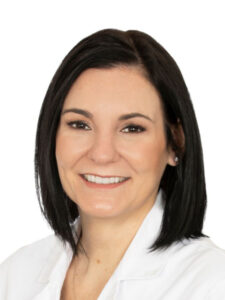
Meagan Fernandez, DO, is a pediatric orthopaedic surgeon at Geisinger.