
Trending
I am beginning my 20th year in the hearing aid industry, and the technology has changed dramatically.
In this article, I will look back at those advances and share a few exciting ideas now in research and development among major hearing aid manufacturers. First, however, I want to clear up a rumor: I am not retiring.
Last year, when I turned 70, I mentioned in an Express article that I planned to work a shorter week. Most weeks, I now work Monday through Thursday, with an occasional half day on Friday and, at times, a few Saturday hours after my traditional breakfast at the Texas.
Hear it here, and hear it loud: I am not retiring. As I turned 71 on July 18, I am considering future plans. Even if I were to sell my practice someday, I would likely work part time for the new owner. For now, I remain available each week.
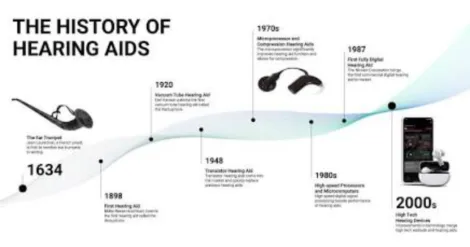
Over the past 20 years, hearing aids have changed astonishingly. From 2000 to 2011, the industry had largely moved from analog circuits to digital processing, but programming remained fairly basic.
Devices used early multi-channel compression to make soft sounds audible and loud sounds comfortable. Still, separating speech from heavy background noise was a major challenge, especially in busy places such as restaurants.
Hearing aids during this period also relied heavily on disposable zinc-air batteries, which meant frequent changes and ongoing costs.
From 2012 to 2017, the wireless and connectivity revolution took off. Hearing aids gained true wireless synchronization between the left and right instruments, allowing them to work together as one system to balance volume and better locate sounds in a room.
Made-for-iPhone 2.4 GHz Bluetooth streaming also arrived, letting users stream phone calls, videos and music directly to their ears without a bulky neck-worn relay device.
From 2018 to 2022, lithium-ion rechargeability and universal streaming moved the industry forward again.
Disposable batteries quickly began giving way to reliable built-in rechargeable cells, similar to the way we charge smartphones.
Advances in universal Bluetooth protocols also expanded direct, hands-free streaming to Android devices. At the same time, sound-processing algorithms became much smarter, automatically recognizing listening environments and adjusting settings without requiring the wearer to press buttons or change controls.
Since 2023, we have entered the modern era of deep neural networks and onboard AI (artificial intelligence).
Today, hearing aid technology has reached an exciting new level. Premium devices now use advanced AI and onboard deep neural networks (DNNs). Rather than simply reducing background noise by lowering entire frequency ranges, these systems are trained on millions of real-world listening situations. They can quickly identify, clarify and prioritize human speech in real time, greatly reducing the effort the brain must use to listen. That is remarkable progress -- but what comes next? Over the next two decades, hearing aids will continue moving beyond basic amplification toward smart, health-focused wearable technology.
With advances in AI, Bluetooth LE Audio and miniaturization, these devices will become more proactive, discreet and seamlessly integrated into daily life.
Major research and development efforts are focusing on several key areas:
-- Predictive Artificial Intelligence: Next-generation AI will do more than respond to background noise. It will use machine learning to anticipate listening needs and adjust settings before the wearer reaches for the controls.
-- Expanded Auracast Access: With Bluetooth LE Audio, public places such as airports, theaters, gyms and museums may broadcast sound directly to compatible hearing devices, making announcements, performances and exhibits easier to hear.
-- Integrated Biometric and Cognitive Monitoring: Because the ear is an excellent place to measure vital signs, future hearing aids may also track body temperature, heart rate, sleep quality and possible changes in cognitive health through speech and listening patterns.
-- Invisible and Durable Designs: Advances in micro-engineering and 3D ear scanning will lead to smaller, nearly invisible, custom-fit devices made with durable materials that resist water, sweat and everyday drops.
-- Mainstream Wearables Convergence: The differences among prescription hearing aids, over-the-counter devices and consumer smart earbuds will continue to narrow. New technologies, including xMEMS silicon speakers, may improve music quality while preserving clear speech understanding.
Still, most patients are less concerned with how the technology works than with whether it helps them hear better.
Call a hearing professional soon to begin your journey toward better hearing with truly amazing technology.
-- -- -- --
Jeff Bayliff is owner of Hear the Birds Hearing Aid Center in Lock Haven.