
KC school board seeks public’s input as decisions loom on closing schools
Trending
MILL HALL -- Keystone Central School Board member Roger Elling insists that, amid crises of leadership and budgeting, "people are not hearing us."
It summed up the mood at Thursday night's meetings: The frustration pervading both the school board and community, the fear of what a final, 2018-2019 budget might hold, and the need to place everything -- even the kitchen sink -- on the bargaining table.
At the budget planning meeting, the board received information they requested previously: What would be the dollar and human impact be if the district closes three schools.
The administration delivered.
Business manager Susan Blesh presented the board with two consolidation options, differing only in how remaining buildings would be used.
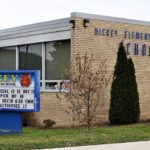
The administration's options put Bucktail Area Middle-High school, Dickey and Liberty Curtin elementary schools on the chopping block.
The options – called Option 1 and Option 2 – would involve some buildings hosting different grade ranges of students than they currently do.
Further, both options would cause a notable rise in the number of students per classroom -- potentially to as much as 31 kids in the same room.
Option 1 would have Central Mountain Middle School move to hosting grades 5-8, while Central Mountain High School would remain 9-12. The elementary goal would be to have Mill Hall serve K-4, as well as Robb and Woodward. Renovo Elementary would become K-5.
This would also influence Title I programming, as 5th grade would no longer be offered Title I services.
Option 2, then, would also see Central Mountain Middle School as changing to 5-8, but Central Mountain High School would stay the same. The elementary breakdown would feature Robb hosting Kindergarten, 1st and 2nd grades; Woodward would host only 3rd grade, and Mill Hall would only host 4th grade.
Option 1 would reduce the teacher population by 54, counselors by 1, administration by 1, secretaries by 2, and support positions by 7.
Option 2 is almost the same, with teachers being reduced by 53 instead of 54 as the sole difference for staff reductions.
It was stressed that these options are still just that: Options for the school board to consider as it tries to balance what – as of now – appears to be a $10 million budget deficit heading into the 2018-2019 fiscal year starting next July 1.
The administration was asked by the board to present a picture of a possible future where three buildings are closed.
That was done last night … to great concern by both board members and community members in attendance.
No schools are currently set to be closed, and no decisions have been made.
However, that might change if no other options are presented.
As Elling said, "If we don't hear anything, some of these things are going to happen."
He noted that he has asked publicly for email feedback from teachers.
"I got three emails," he said.
"We're asking now so that we don't have to do this stuff. We need to hear from you," he continued. "Three emails is not going to give us more cuts than we have now. We need ideas."
With all task force recommenations discussed on Nov. 16 being implemented into the new budget – but not including closing any schools – the deficit drops to $2 million ($2,090,730), according to the preliminary budget presented by Blesh at Thursday night's meeting. That budget also now includes a $32,883 Title IV grant, which was recently obtained by the district.
It also includes a 3.3 percent real estate tax increase, but does not include any state-approved exceptions revenue, which the administration is hoping will make up some of the remaining deficit. The amount of exceptions revenue, if any, will not be known until early next year, however.
However, getting to the $2 million deficit still means cutting teachers and administrators, a wage freeze, pay cuts, eliminating programs, while also offering a lucrative early retirement incentive.
Here are the options within the preliminary budget:
r $1.6 million in cuts to the operating budget, including a 25 percent reduction to the classroom budget. This item also includes $370,000 in cuts to the administration budget, $282,000 in cuts to the technology budget, utility savings of $224,000, $6,000 in savings from the security budget, $320,000 savings from capital project transfer, and $57,000 in cuts to the athletic budget, all of which were task force recommendations.
r $216,000 in savings from reducing CTE programs by three, due to two staff members leaving and their positions being attritioned out.
r An additional $1.8 million in savings through other attrition, including four elementary positions, five secondary positions, six anticipated retirements, a secretary position merger, a reduction of a band advisor, five PSO retirements, and elimination of the summer paint crew -- all of these, again, were recommendations by the task force. It should be noted, however, that one of the anticipated retirements is in the music program and would result in the elimination of the elementary strings program if not replaced. All of these were task force recommendations.
r Program changes totaling around $1.65 million, including changes to the enrichment and IST elementary programs, changes to the physical education elementary program, eliminating Pre-K, and eliminating librarians and a library assistant, although Blesh noted that one librarian would have to stay, not included in this total. Changing enrichment and IST, as well as removing Pre-K, was recommended by the task force.
r Additional program changes based on enrollment of around $5.2 million, accomplished by removing secondary common prep period, reducing secondary electives, altering elementary class size and multiage, and reducing a guidance counselor position, all of which were task force recommendations. Not from the task force: the administration is also suggesting reducing secondary math by two teachers, reducing non-instructional administrative staff by four, and reducing instructional administrative staff by four.
r An early retirement incentive offering three years of family health care coverage to anyone retiring at the end of the 2017-18 school year, as long as the district received notification by March 1, 2018.
r Increasing athletic registration fees paid by students.
r District-wide pay freeze.
r Reduce coaches' stipends by 25 percent.
r Reduce club advisor stipends by 25 percent.
r Cap professional tuition reimbursement total at $250,000.
Following Blesh's presentation Thursday night, board members asked further questions of the administration and of each other.
One of the earliest questions was by Tracy Smith, who asked if either consolidation option would result in classrooms being taken away from arts, music, band, resources, and the like.
Blesh replied that neither option would result in this, as "we're maximizing the amount of space for those programs."
Eric Probert had some suggestions for cuts that he wanted looked into, including the communications/fundraising coordinator position, and the full-time district athletic director.
Elling also spoke up, wryly noting that he was "probably going to sound like the bad guy."
In the spirit of putting all options on the table, though, he asked, "Would it be possible to cut the entire CTE (Career and Technical Education) program - and how much would that save? Send those people to other CTE programs. Just to get an idea of how much it could save, if it would even save any."
He said that idea came from his feeling that the administration is "hacking at CTE positions" already. Elling has expressed concern about the reductions to CTE programming for months, both in the lead-up to the removal of the electronics program in May and again as the task force has recommended attritioning positions in three more CTE programs for the upcoming budget.
Elling's question received a lot of rumblings from the crowd of community members.
Charles Rosamilia then took issue with the idea of school closings, noting that "Sugar Valley's savings are probably zero today."
"The people at Bucktail are going to do the same thing (open a charter school), and we're going to be in the position where we have no savings," he continued.
Jeff Johnston replied to him, "We have to look at building closures now. We would have to start in January because of the process involved. If it's a dead issue, then say it. But then you're going to have to look at all of these other options."
Rosamilia's answer: "The only school I can see closing is Dickey because we've been failing those students. It would be a service to those students to close it. My own particular feeling is this: We always assume our taxpayers would not approve an increase. We've always just went to the index, which we are allowed to do without presenting it to the taxpayers. The taxpayers may well approve a tax increase well beyond the index. They might realize how bad things are. Let's figure out what we need, work it out, and go to the community and say we need this much money."
Johnston warned that this likely wouldn't be a popular idea.
"I can't see people voting to tax themselves," he said. "You want to put the onus on the taxpayers," Johnston continued.
"Let the taxpayers consider if they want to pay more to educate the children. That way we can look at them in the eye and say we wanted to do more," Rosamilia replied.
Jennifer Bottorf asked what would be the savings for closing one school instead of three.
"I was initially opposed to closing any schools," she said, but mentioned that teachers who have reached out to her have told her that "multi-aging (different age students in one class) is bad, as is putting more kids in the classroom, and closing a building would be preferrable."
The next program planning meeting will be held at 5 p.m. Thursday, Jan. 11, 2018, in the CMHS cafeteria.
That meeting will feature the "final" public discussion on the preliminary budget, with the board looking to vote to approve the preliminary budget on Feb. 1.
School board members' emails are publicly available on the Keystone Central school district's website, and The Express also lists them on Page A4 in today's edition.