
ICONIC CABIN MAKES MOVE
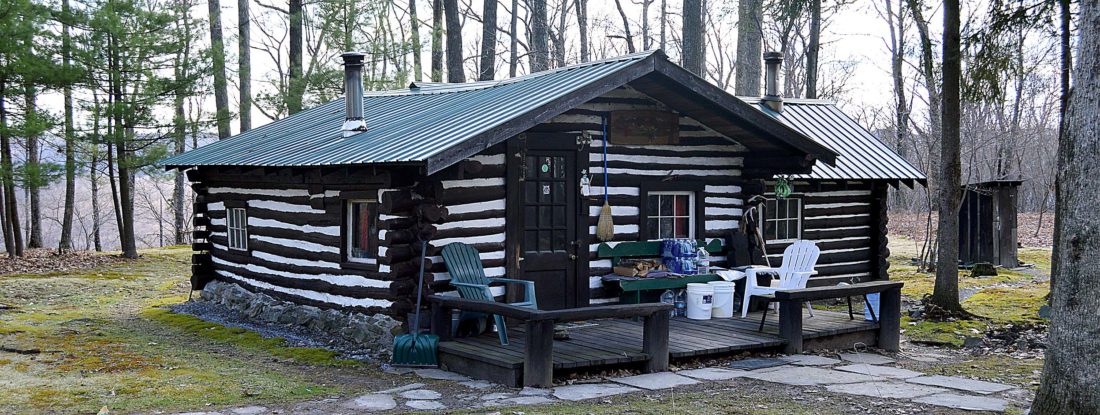
PHOTO PROVIDED The cabin of the late Bob and Dotty Webber has been relocated to the Pennsylvania Lumber Museum in Potter County.
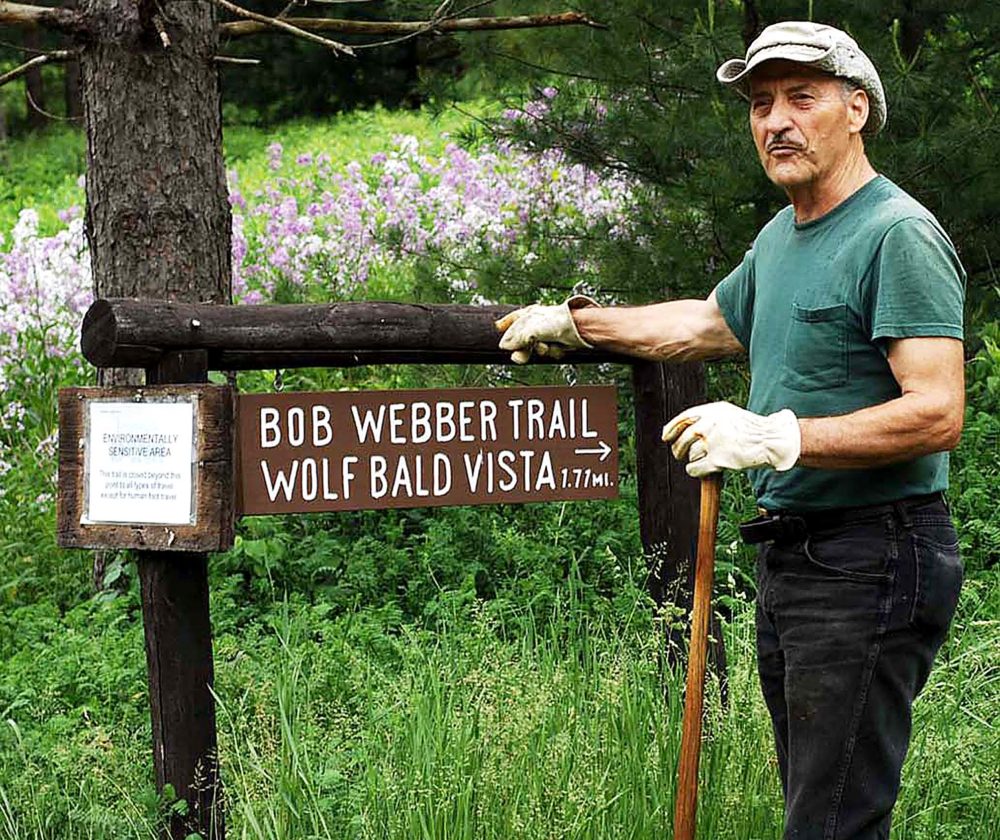
PHOTO PROVIDED Bob Webber was well known to enthusiasts of the great outdoors in Pennsylvania.
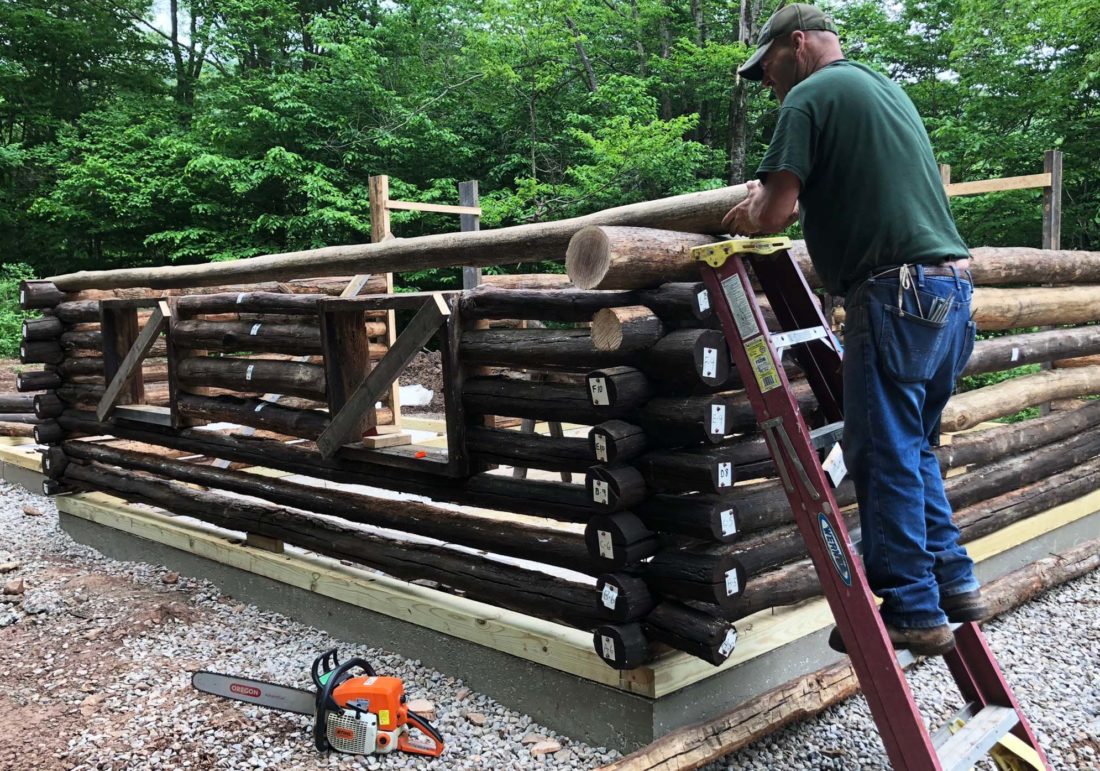
Photos Provided Workers are seen setting up the Webbers’ cabin at its new location at the Pennsylvania Lumber Museum.
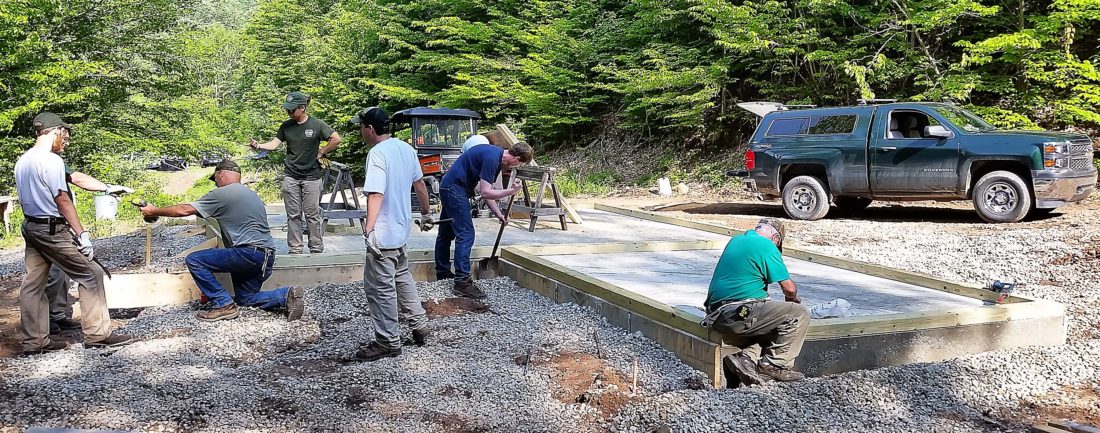
Photos Provided Workers are seen setting up the Webbers’ cabin at its new location at the Pennsylvania Lumber Museum.
PHOTO PROVIDED The cabin of the late Bob and Dotty Webber has been relocated to the Pennsylvania Lumber Museum in Potter County.
PHOTO PROVIDED Bob Webber was well known to enthusiasts of the great outdoors in Pennsylvania.
Photos Provided Workers are seen setting up the Webbers’ cabin at its new location at the Pennsylvania Lumber Museum.
Photos Provided Workers are seen setting up the Webbers’ cabin at its new location at the Pennsylvania Lumber Museum.
Trending
By JESSICA WELSHANS
Special to The Express
GALETON -- An iconic cabin sits amidst the forest of Pennsylvania. This simple, one-story home once belonged to Bob and Dotty Webber, a couple who lived there off the grid with no electricity and plumbing. The Webbers instead chose to surround themselves with mounds of books, a piano and a strong connection to the natural world outside their front door.
A tremendous effort is underway by the Pennsylvania Lumber Museum and the Department of Conservation and Natural Resources to ensure that the Webbers' legacy continues by preserving their home so the public can be educated and inspired by it.
Beginning in May the cabin was moved from its location near Slate Run and rebuilt on the site of the Pennsylvania Lumber Museum here.
A dedication ceremony will take place at noon July 7 during the annual Bark Peelers' Festival, described as a historical celebration of the wood hick and the traditional logging activities of the state.
Bob's name may sound familiar to some, as he could be considered the Pennsylvania State Forest equivalent to well-known outdoor personalities like Jim Bridger, Teddy Roosevelt, John Muir, Rachel Carson.
Bob served as a Pennsylvania forester for 42 years. He carved out, maintained and lead hikes on 50 miles of trails in the state. The Bob Webber Trail in Pine Creek Valley is named after him.
Even though he and his wife lived in a one-story cabin in the middle of the state forest, their love for others -- and the outdoors -- have affected people all over the world.
Dotty passed away in 2012, and Bob in 2015. After Bob's death, the cabin stood alone in the forest, still filled with stories left to pass on. A movement began in 2015 to preserve the home and its history.
THE PROJECT
"The idea of relocating the Bob and Dotty Webber cabin to the Pennsylvania Lumber Museum was first proposed to me by Sam Cooke, one of our museum board of directors members (the Pennsylvania Lumber Museum Associates)," said Josh Roth, site administrator for the Pennsylvania Lumber Museum, which is administered by the Pennsylvania Historical and Museum Commission.
Both Cooke and Bob Webber were retired foresters. Sam worked in the Tioga State Forest and Bob worked in the Tiadaghton at one time; they knew each other through this employment and became friends.
"In late summer 2015, Sam made mention of the fact that some folks at DCNR forestry were debating what to do with Bob's cabin after his passing," Roth said. "Sam, knowing that we had relocated a cabin built by the CCC (Civilian Conservation Corps) to the site in 1992, suggested to his former colleagues at DCNR that the Lumber Museum might be willing to accept the Webber cabin."
Roth was then put in contact with Jim Hyland, manager of Tioga State Forest, who was friends with Bob and had given the eulogy at Bob's funeral.
"Jim, along with Chris Gastrock, the manager of Tioga State Forest at the time, and Chris Nicholas, the manager of Susquehannock State Forest, convinced me of the merits of moving the cabin to the Lumber Museum, and worked with me to make a formal petition for the project to my supervisors at the Pennsylvania Historical and Museum Commission," Roth said.
A memorandum of understanding was drafted and signed in 2017, Roth said. This was to establish what each agency's role and responsibilities are for the project and how the project helps meet the educational and interpretive goals of each party's public mission.
Following the signatures on the memorandum of understanding between DCNR and PHMC, both agencies set about preparations to work through the permit application process with the Pennsylvania Department of Labor and Industry to get permission to rebuild the cabin at the museum, Roth said.
He explained that because the Webber cabin was both historic and idiosyncratic, there needed to be several variances in the standard building code "to be able to keep the original aspect and feel of the structure intact."
Once the approvals were in place last winter, construction was set to begin in the spring. The groundbreaking took place May 8, and the log structural elements went up around the first two weeks of June. The building will be under roof by the dedication on July 7, Roth said.
"Chinking and other finishing work will be done before the end of summer and exhibits and other interpretive work will be installed piecemeal as they are ready, with the first offerings likely in place by this fall," he said.
It is incredible to think of what could have happened to this cabin had someone not stepped in to preserve it.
"There is not a week that has gone by since the inception of this project in late 2015 that I and-or the museum staff have not been contacted by someone who is interested in the fate of the Webber cabin," Roth said. "We are flooded with phone calls, emails and personal visits from people who knew Bob and Dotty, and who are interested in seeing their legacy preserved and their story told to future generations."
The public offered overwhelming support to ensure the Webbers legacy was preserved, in the form of letters, advocacy, monetary donations and even offering to help with construction.
"The apparent number of people that hold the memory of Bob and Dotty Webber in elevated reverence, and the level of minor-celebrity that both achieved during their lifetime serve to pronounce their significance," Roth said.
WHAT TO SEE, HEAR, EXPERIENCE
When the Webber cabin is finished, visitors will enjoy a multifaceted educational experience.
It will be filled with furniture, tools, personal items and images of what life was like for Bob and Dotty living in the forest.
"The cabin will serve as a vehicle to discuss larger themes such as the history of trail hiking and other outdoor recreational activities in the Commonwealth, the development of DCNR as a government agency from the mid-20th century, and the challenges and benefits of living a more 'conservation-minded' lifestyle," Roth said.
Interpretive panels will be installed both within the cabin, and along hiking trails leading to and from the cabin elsewhere on site, he said. Other more object-heavy exhibits will be featured in the changing exhibit gallery on a regular basis, inside the museum visitor center, Roth said.
An audio-video presentation, featuring footage of Bob and Dotty Webber, also is planned.
"All of this will be done in phases, and offerings in the cabin will likely change and rotate through time," Roth said. "We also would like to start several Webber-themed programs and events using the cabin and the artifacts we have from his life. One suggestion was a Bob Webber cross-country ski race set along the surrounding trails in the Susquehannock State Forest. Other activities include organizing volunteers for trail maintenance in his memory, youth programs, oral history programs, and more."
WHY HERE
The mission of the Pennsylvania Lumber Museum is to educate the public about Pennsylvania's rich lumbering heritage and the ongoing care, management and recreational use of its forests.
"The life and works of Bob and Dotty Webber dovetail nicely with the second half of our mission," Roth said. "Together, the staff at DCNR Bureau of Forestry and I went over all of the pros and cons of relocating the cabin to the museum. In the end, we decided that the museum is an ideal location for the cabin for a number of reasons."
The cabin was unable to stay at its original location because it was too remote and inaccessible by DCNR.
"It would have been in constant danger of natural disasters, arson, vandalism, squatters and the like," Roth said. "Also, providing an educational and interpretive component to the cabin would have been more challenging. People hiking by the cabin on the nearby trails may or may not have been receptive to learning about what the cabin was and why Bob and Dotty Webber were unique and important to Pennsylvania forest history."
Its relocation to the museum made sense, as visitors are already primed for that type of learning experience, he said.
"We determined that many more people will get to visit the cabin and learn from it here at the museum as opposed to at its original location, or some of the other proposed locations that were kicked around at the beginning of the process," he said.
Project supporters are hoping visitors will walk away with a tremendous and influential experience.
"Being inside this small and spartan space will hopefully be a powerful experience for visitors," Roth said. "Museum guests will be asked to contrast the Webbers' lifestyle with their own, reflecting on the question: 'If the Webbers were able to live a life of extreme minimalism for 50 years, what small changes could I possibly make in my life to be more conservation-minded?'"