
Alice Paul — A force of nature

Photo Provided Alice Paul poses for a photo nearly 100 years ago.
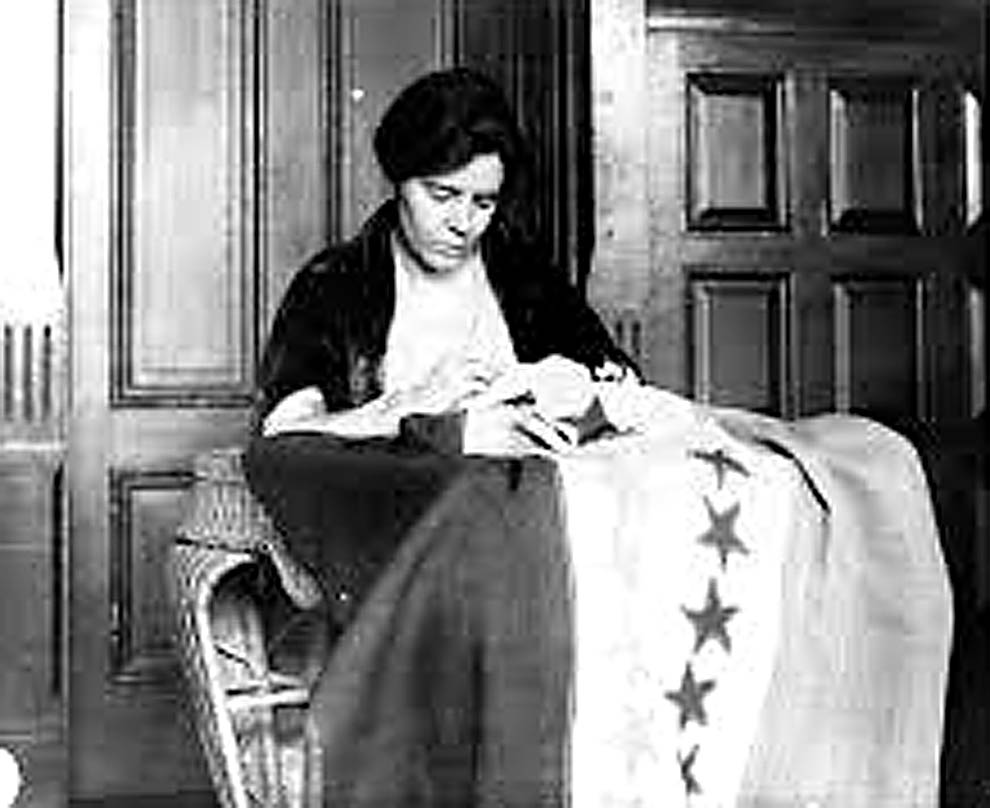
Photo Provided Alice Paul hard at work.
Photo Provided Alice Paul poses for a photo nearly 100 years ago.
Photo Provided Alice Paul hard at work.
Trending
Editor's Note: This is another in a series of articles on women's suffrage. The articles will be published in The Express throughout the year, leading up to the 100th anniversary of women's suffrage in the United States on August 26, 2020.
By KAREN ELIAS
For The Express
Like Susan B. Anthony and Elizabeth Cady Stanton before her, Alice devoted herself single-mindedly throughout her long life to the cause of women's equality. But unlike her predecessors, she believed that overcoming the inertia of those in power required dramatic, even radical action.
She often employed what seemed to be a natural ability to address a problem creatively. While working and studying in England as a young woman, Alice became a member of the Women's Social and Political Union (WSPU), the predominant suffrage organization in Britain. With another member of the Union, she decided to bring suffrage issues before the Lord Mayor of London by appearing at a banquet the Mayor was hosting for cabinet ministers. The two women disguised themselves as cleaning women, entered the building in the morning with the custodial staff, and then hid out until the start of the event. When the Prime Minister rose to speak, the women appeared, shouting "Votes for Women!", and shattered a pane of glass with a shoe. Alice stoically endured arrest, as she would many times in the future, believing that the publicity generated by her actions only furthered the larger cause.
EARLY LIFE AND
EDUCATION
Born in 1885, 65 years after Susan B. Anthony, Alice Paul had the advantage of having a mother who was a suffragist; in the company of her mother, Alice attended suffrage meetings where, at an early age, she took on a commitment to women's equality that would never leave her. Like many of the activists before her, she was also raised in the Quaker tradition. A descendent of William Penn, the Quaker founder of Pennsylvania, she was educated at Quaker schools – first at Moorestown Friends School where she graduated at the top of her class, and then at Swarthmore College where she earned a bachelor's degree in biology. After a brief stint as a social worker in New York City, she continued her education at the University of Pennsylvania, earning a Master of Arts degree in political science, sociology and economics.
In 1907, Alice moved to England where she continued her studies in sociology and economics and became involved with the British suffrage movement. Inspired by Emmeline and Christabel Pankhurst, prominent members of the WSPU, she came to believe that only women's equality, not charitable work, could cause societal change, and she began developing the confrontational tactics that would characterize her particular brand of activism.
At demonstrations, Alice would deliberately put herself in harm's way, using her beatings and arrests as ways to generate press attention and public sympathy. During their imprisonments, members of the WSPU began to employ hunger strikes, which served to further create public sympathy and gain them early release from jail. On Alice's third arrest, however, the warden ordered that she be force-fed twice a day, a procedure that she found torturous and that had a lasting negative impact on her health.
SUFFRAGE WORK IN THE U.S.
Alice was unbowed. With Lucy Burns, an American lawyer and her long-time ally, she returned to the United States in 1910, determined to bring British tactics to the American suffrage fight. She began by lecturing to Quaker audiences while at the same time pursuing her Ph.D. at the University of Pennsylvania. By the end of the next year, she had completed her dissertation on "The Legal Position of Women in Pennsylvania," earning her a doctorate in sociology.
She and Lucy soon proposed to the National American Woman Suffrage Association (NAWSA) that they work toward a federal amendment granting women the right to vote. NAWSA, believing that the Association needed to proceed more slowly, state by state, laughed at her plan. Alice decided to work on change from inside and quickly headed up the committee to organize the 1913 Woman Suffrage Procession, a parade scheduled for the day before President Wilson's inauguration and designed to put pressure on him by showing widespread support for suffrage. In only a few weeks, Alice succeeded in recruiting 8,000 marchers from across the country. The event, led by Inez Millholland, wearing a white dress and riding a white horse, was described as "one of the most impressively beautiful spectacles ever staged in this country."
The parade, with its grand display of banners, bands, and floats, drew a half million onlookers, but it soon degenerated into a near-riot as the crowd surged onto Pennsylvania Avenue and began heckling the marchers; the police presence was either unable or unwilling to control the hostile crowd. The resulting turmoil, seen as a direct result of police inaction, created public sympathy for the suffrage cause and marked a turning point. NAWSA vowed, after the parade, to work toward a constitutional suffrage amendment.
PICKETS AT THE WHITE HOUSE
NAWSA moved too slowly for Alice and, by 1916, she had left the Association due to disagreements over strategy and had founded a new organization, the National Woman's Party (NWP). She was frustrated by President Wilson's refusal to support a suffrage amendment and launched a campaign to raise public awareness and shame him into backing the cause.
She and the NWP decided to picket the White House in an act of civil disobedience. The campaign was well organized, with a total of 2000 women, known as the "Silent Sentinels," maintaining silent vigil in designated groups outside the gates, six days a week for over two years. The move was controversial, as she hoped it would be. The band of Sentinels, believing democracy should be realized here at home before we fight for it overseas, picketed the White House even through World War One, in spite of criticism that these actions were disloyal. The banners held by the women often quoted Wilson and addressed him directly ("Mr. President, How Long Must Women Wait for Liberty?"). They endured harassment and beatings from onlookers and received no help from the police. But their steadfast commitment to stand up for a righteous cause through peaceful protest, and their willingness to endure mistreatment in the service of that cause earned them the respect of the public.
NIGHT OF
TERROR
Things came to a head in the fall of 1917 after the suffragists were jailed for "obstructing traffic" and sent to the Occoquan Workhouse in Virginia. The conditions in the jail were harsh.The water and bedding were filthy, the food was infested with worms. Alice, who had begun a hunger strike upon her arrest in October, had been moved to the prison's psychiatric ward, where she was being force-fed through a feeding tube. On the night of November 14th, the Occoquan warden instructed his guards to teach the women a lesson. That night, known as the "Night of Terror," the women were kicked and beaten, their heads smashed against iron bedsteads. Lucy Burns was shackled to a doorframe and forced to stand with her arms above her head all night. Another woman, after seeing her cell-mate lose consciousness, had a heart attack and didn't receive medical treatment until morning.
The women persevered. They went on hunger strikes, refusing the prison food. Gradually, word was leaked to their fellow suffragists on the outside and, under public pressure, federal authorities released the suffragists from prison in late November. Two months later, President Wilson relented and announced plans for a federal suffrage amendment.
Alice and the NWP hadn't done it alone. The more traditional lobbying strategies employed by NAWSA, which continued up until Tennessee, the final state, ratified the 19th Amendment in August 1920, were also responsible for its passage. But tribute must be paid to Alice Paul as a fierce, single-minded, devoted pioneer, one of the first in our country to employ tactics of civil disobedience in the service of a noble cause. She was not only willing to endure personal sacrifice but was able to gather a brave band of women and inspire them to act in solidarity, overcoming resistance, hardship, and even physical abuse along the way.
Alice later earned a law degree in 1922, as well as a master of laws degree in 1927, and a doctorate in civil law in 1928, all from American University. She went on to work toward passage of the Equal Rights Amendment which, in 1943, was renamed the "Alice Paul Amendment." Today, new efforts are underway in Congress to secure final passage of the ERA.
She died in 1977 at the age of 92, living out her final days at a Quaker facility less than a mile from her chldhood home. She was inducted into the National Women's Hall of Fame in 1979.