
Battle for the Ballot: Afternoon tea launches American women’s rights movement

Collage Photo Caption: Source unknown, not able to verify Five women gathered at an afternoon tea in Waterloo, New York, decided to convene the first American women’s rights convention in nearby Seneca Falls on July 19 and 20, 1848. Out of that convention came an historic document, “The Declaration of Sentiments,” which demanded equal social status and legal rights for women, including the right to vote. The convention launched the women’s rights movement in America. From left are convention organizers Elizabeth Cady Stanton (with her daughter Harriot), Lucretia Mott, Martha Coffin Wright, Mary Ann M’Clintock, and Jane Hunt.
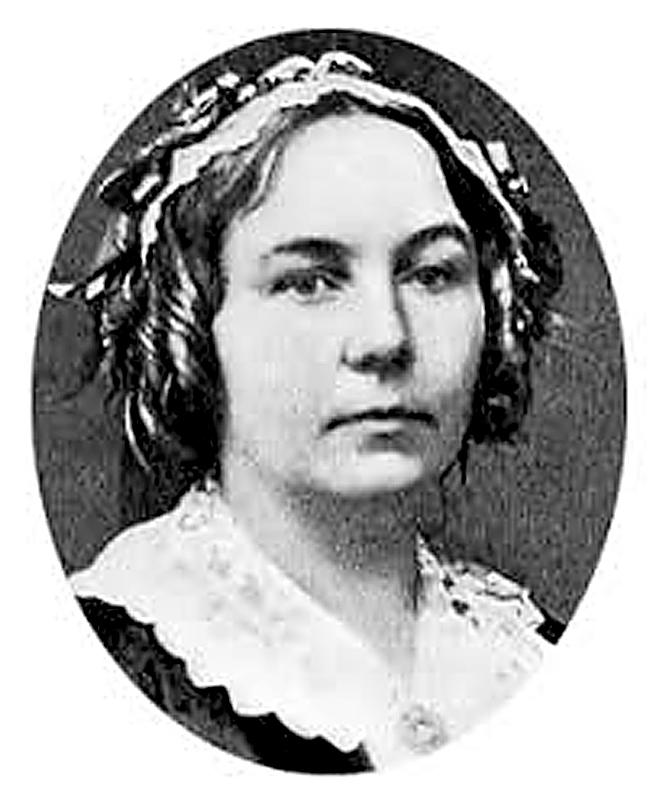
Library of Congress Elizabeth Cady Stanton was a women’s rights advocate and a driving organizer of the Seneca Falls Convention along with Lucretia Mott. “The Declaration of Sentiments,” written by Stanton, launched the battle for women’s rights and suffrage, the right to vote, in America. Seventy-two years later, Stanton’s goal would be realized through the Nineteenth Amendment to the United States Constitution in 1920, eighteen years after her death.
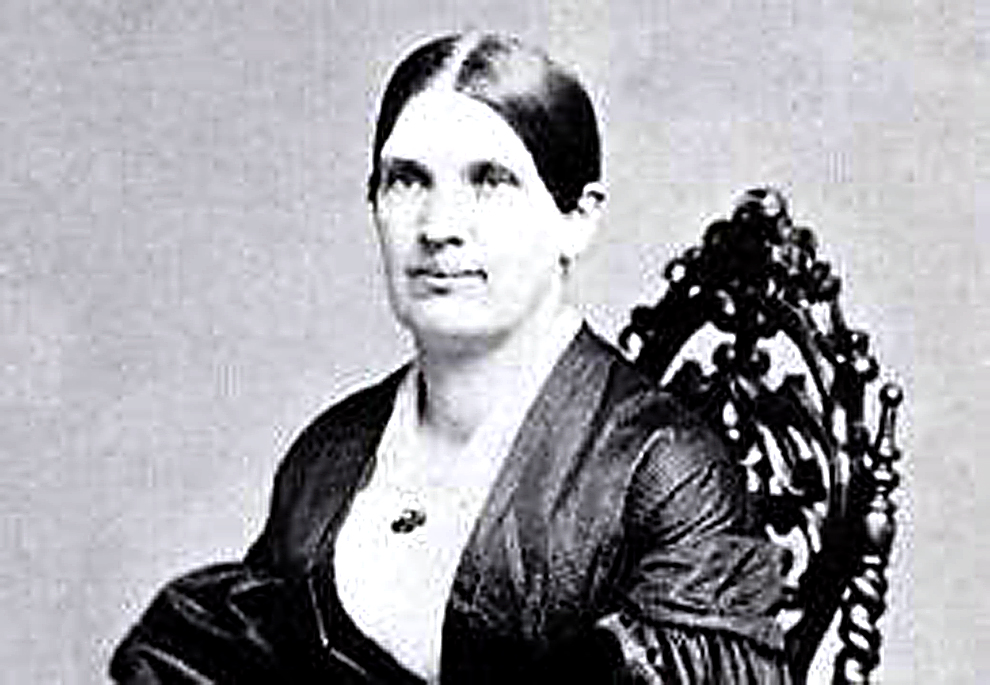
Library of Congress Philanthropist, abolitionist, and Quaker church reform advocate Jane Hunt hosted an afternoon tea in her Waterloo, New York, home to honor Lucretia Mott, who was visiting the area. Also attending the tea were Mott’s sister Martha Coffin Wright, Elizabeth Cady Stanton, and Mary Ann M’Clintock. As a result of their discussion during the tea the women decided to organize and hold a women’s rights convention in nearby Seneca Falls in 1848.
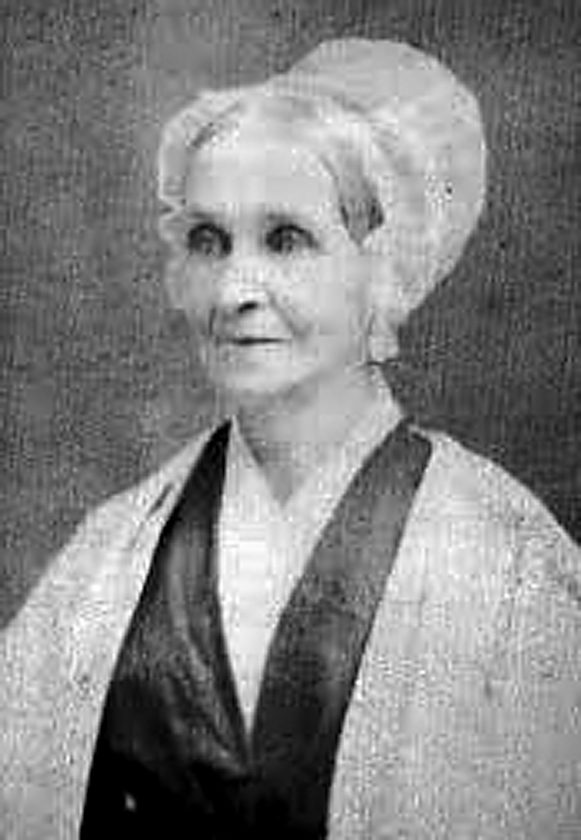
Library of Congress A Quaker anti-slavery, temperance and women’s rights activist, Mary M’Clintock, her daughters Elizabeth and Mary Ann, and Elizabeth Cady Stanton met in the M’Clintock home to write “The Declaration of Sentiments and Resolutions.” Mrs. M’Clintock also served as secretary to record the convention proceedings.
Collage Photo Caption: Source unknown, not able to verify Five women gathered at an afternoon tea in Waterloo, New York, decided to convene the first American women’s rights convention in nearby Seneca Falls on July 19 and 20, 1848. Out of that convention came an historic document, “The Declaration of Sentiments,” which demanded equal social status and legal rights for women, including the right to vote. The convention launched the women’s rights movement in America. From left are convention organizers Elizabeth Cady Stanton (with her daughter Harriot), Lucretia Mott, Martha Coffin Wright, Mary Ann M’Clintock, and Jane Hunt.
Library of Congress Elizabeth Cady Stanton was a women’s rights advocate and a driving organizer of the Seneca Falls Convention along with Lucretia Mott. “The Declaration of Sentiments,” written by Stanton, launched the battle for women’s rights and suffrage, the right to vote, in America. Seventy-two years later, Stanton’s goal would be realized through the Nineteenth Amendment to the United States Constitution in 1920, eighteen years after her death.
Library of Congress Philanthropist, abolitionist, and Quaker church reform advocate Jane Hunt hosted an afternoon tea in her Waterloo, New York, home to honor Lucretia Mott, who was visiting the area. Also attending the tea were Mott’s sister Martha Coffin Wright, Elizabeth Cady Stanton, and Mary Ann M’Clintock. As a result of their discussion during the tea the women decided to organize and hold a women’s rights convention in nearby Seneca Falls in 1848.
Library of Congress A Quaker anti-slavery, temperance and women’s rights activist, Mary M’Clintock, her daughters Elizabeth and Mary Ann, and Elizabeth Cady Stanton met in the M’Clintock home to write “The Declaration of Sentiments and Resolutions.” Mrs. M’Clintock also served as secretary to record the convention proceedings.
Trending
LOCK HAVEN -- On Sunday, July 9, 1848, philanthropist and abolitionist Jane Hunt invited four women to afternoon tea at her Waterloo, New York, home. Little did she realize that before the end of the day she would be one of the five originators of America's first Women's Rights Convention, an event of great historical importance that set the national stage for an organized women's suffrage movement in the United States.
Mrs. Hunt hosted the tea in honor of her friend from Philadelphia, noted abolitionist Lucretia Mott, who was in the area to attend the yearly meeting of Friends (Quakers). Also attending the tea were Mott's sister Martha Coffin Wright of Auburn, New York, Elizabeth Cady Stanton of nearby Seneca Falls, and Mary Ann M'Clintock of Waterloo. All of the women except Stanton were Quakers and all five supported the abolition of slavery.
Stanton and Mott had first met while attending the 1840 World Anti-Slavery Convention in London with their husbands. When female delegates were banned from the proceedings based solely on their gender and banished to sit mute behind a curtained visitors' gallery, Stanton and Mott were outraged. Not eager to return to the convention, Mott and Stanton spent the next nine days together and became fast friends. They had talked at length about unjust laws that harmed women, the social and religious degradation of women, and agreed to organize a women's rights convention when they returned to America.
Busy schedules and family responsibilities intervened with their plan. Mott was very active in civic work in Philadelphia and the abolition cause, while Stanton and her husband Henry Brewster Stanton promoted abolition support in Boston. By 1845, Elizabeth was the mother of three small children and busy raising her family. Eight years passed before the two women, who had remained in touch, were to meet again.
A HISTORY MAKING AFTERNOON TEA
At Mrs. Hunt's tea the women talked about the recent Boston Anti-Sabbath Convention, the yearly meeting of the Friends (Quakers) in Genesee, the National Liberty Convention, and the passage of the New York Married Women's Property Act in April of 1848.
While living in Boston, Stanton had hired help to assist with child care and domestic chores which allowed her to attend events and enjoy extensive intellectual and cultural stimulation. In Seneca Falls with no such help available for hire Stanton was overwhelmed by house work and child care experiencing first-hand the difficulties facing a typical wife and mother in a 19th century household. Later, in her autobiography, she wrote: "The general discontent I felt with women's portion as wife, mother, housekeeper, physician, and spiritual guide, the chaotic conditions into which everything fell without my constant supervision, the wearied anxious look of the majority of women, impressed me with a strong feeling that some active measures should be taken to remedy the wrongs ... of women... ."
During the tea Stanton shared her growing unhappiness, frustration, and her overall discontent with the conditions she felt limited women's lives. Mott and Stanton immediately returned to the topic they had often discussed while in London ... the propriety of holding a women's convention. With encouragement from Mrs. Hunt, Mrs. Wright, and Mrs. M'Clintock, Mott and Stanton decided to issue a call for a women's rights convention. An unsigned announcement was prepared and appeared in the Seneca County Courier a few days later:
WOMAN'S RIGHTS CONVENTION
-- A Convention to discuss the social, civil and religious condition and rights of women, will be held in the Wesleyan Chapel,at Seneca Falls, New York, on Wednesday and Thursday, the 19th and 20th of July, current; commencing at 10 o'clock a.m. During the first day the meeting will be exclusively for women, who are earnestly invited to attend. The public generally are invited to be present on the second day, when Lucretia Mott, of Philadelphia, and other ladies and gentlemen, will address the convention.
None of the women had ever organized a convention before.
THE DECLARATION OF SENTIMENTS
Stanton, Mrs. M'Clintock and her two grown daughters, Elizabeth and Mary Ann, met the following Sunday around a mahogany table (now in the Smithsonian) at the M'Clintock home to prepare the agenda for the convention.
They discussed writing a proclamation to organize and present their ideas in one clear, dramatic statement that would establish future guidelines for actions toward obtaining women's rights. Stanton suggested they model their proclamation on "The Declaration of Independence" which had been written by Thomas Jefferson and ratified on July 4, 1776, proclaiming independence of the thirteen American colonies from Great Britain. The women decided to call their protest proclamation "The Declaration of Sentiments."
Stanton, who was the main author of "The Declaration of Sentiments," adapted its opening paragraphs from "The Declaration of Independence" with several key differences.
First, where "The Declaration of Independence" speaks of "one people," Stanton cited "one portion of the family of man" to imply a concern for all humanity to include women not just men.
Second, "We hold these truths to be self-evident; that all men and women are created equal" replaced "all men are created equal" to support and assert women's equality in law, family, religion, education, politics, and jobs.
Third, Stanton changed Jefferson's wording, "it is the right of the people to alter or abolish" a government, to "It is the right of those who suffer from it to refuse allegiance to it, and to insist upon the institution of a new government." Stanton's purpose was to focus on the rights of people who suffer from an unjust government that has ignored or treated them unfairly. She proposed that women refuse to accept or support government dictates and instead work to create a new, fair government that will enable women to enjoy the natural rights to which they were entitled.
"The Declaration of Independence" identified the violation of the natural rights of citizens in the American colonies and cited twenty-six abuses that occurred under British rule. "The Declaration of Sentiments," cited sixteen abusive laws and practices in the United State that violated women's rights, to include:
--No voice in the laws
--No independent legal status or rights after marriage
--No custody of children in the event of divorce
--Denied access to education at colleges and universities
--Barred opportunities to enter most professions
--Different moral codes for men and women
--No equal pay for equal work
--No right to vote
Using "The Declaration of Independence" as a model for "The Declaration of Sentiments" was an excellent choice because it was a venerated document in our country's history and because in all fairness its principles should apply equally to men and women.
Elizabeth Cady Stanton wanted society and laws to change so that men and women would be given legal and social equity, most especially the right to vote. Women's right to suffrage was not popular nor was it generally supported in 1848.
Had Lucretia Mott participated in the drafting of "The Declaration of Sentiments" and the accompanying Resolutions the documents might have been quite different from those written by the more progressive thinking Stanton. Following the tradition of Quakers, Mott rejected participation in politics and did not consider obtaining the vote as a remedy for the oppression of women. In fact, when Mott learned that Stanton insisted that a resolution favoring women's suffrage, the right to vote, be included and brought before the convention, she warned, "Why Lizzie, thee will make us ridiculous! We must go slowly."
Henry Brewster Stanton, Elizabeth's lawyer husband, had provided her with "extracts from laws bearing unjustly against women's property interest." When he became aware that Elizabeth had added a resolution "that it is the duty of the women of this country to secure to themselves their sacred right to the elective franchise," he, like Mott, warned her that she would "turn the proceedings to a farce." Like most men at that time, Henry Stanton did not support women gaining the right to vote. He was so opposed that he left Seneca Falls to avoid being connected with promoting such an unpopular and outrageous cause as woman suffrage.
WOMAN'S RIGHTS CONVENTION -- DAY 1
On July 19, 1848, the women arrived at the Wesleyan Methodist Chapel just before 10 a.m. to a crowd of people waiting outside the church. A few hundred women and 40 men filled the church. The leaders decided to allow the men to stay but asked them to remain silent. By reversing their original plan that only women attend Day 1, the women's rights movement realized an important fact from its start that support for women's rights was not defined by gender.
Since social rules in 1848 considered it unseemly and unacceptable for a lady to conduct a public meeting, Mott's husband James agreed to chair the two-day event. James Mott called the first session to order at 11 a.m. Elizabeth Cady Stanton spoke about the purpose and goals of the convention:
"We are assembled to protest against a form of government, existing without the consent of the governed-to declare our right to be free as man is free, to be represented in the government which we are taxed to support, to have such disgraceful laws as give man the power to chastise and imprison his wife, to take the wages which she earns, the property which she inherits, and, in case of separation, the children of her love..."
Stanton encouraged everyone to participate in the discussion and read aloud "The Declaration of Sentiments" paragraph by paragraph. The document was discussed at great length, re-read several times, and amended.
The 11 resolutions were then read aloud and discussed. After an address by Elizabeth M'Clintock the meeting adjourned until 10 o'clock the next morning.
WOMAN'S RIGHTS CONVENTION -- DAY 2
On July 20, 1848, the second day of the convention, Stanton read the amended "Declaration of Sentiments" which was adopted unanimously late in the morning.
In the afternoon the eleven resolutions on women's rights were each voted on individually. All passed unanimously except for the ninth resolution which Stanton had added regarding women's right to vote. Those who opposed support for women's suffrage like Lucretia and James Mott "feared a demand for the right to vote would defeat the others they deemed more rational and make the whole movement ridiculous."
Stanton argued that without a fundamental right to vote the principle of equality for women would not be taken seriously. Frederick Douglass, former slave and abolitionist editor of the "North Star," gave an impassioned speech arguing that "right is of no sex" and that women were "justly entitled to all we claim for man" which he stated had to include the right to vote. After lengthy and heated debate, the ninth resolution eventually, but barely, passed.
Some 300 people had attended the two-day Women's Rights Convention held in Seneca Falls.
They sat inside a stuffy hot church in July for 18 hours of speeches, debates, and readings. A total of 100 people, 68 women and 32 men, signed the final draft of "The Declaration of Sentiments and Resolutions."
The Seneca Falls Convention launched a national discussion about women's rights in America and established the agenda for the next 72 years as women lectured, paraded, marched, were imprisoned, and fought determinedly for women's rights, including the right to vote.
On August 26, 1920, Elizabeth Cady Stanton's vision was fulfilled when the Nineteenth Amendment to the U.S. Constitution was ratified, giving American women the right to vote!