
Moratorium is blessing and roadblock for area organization
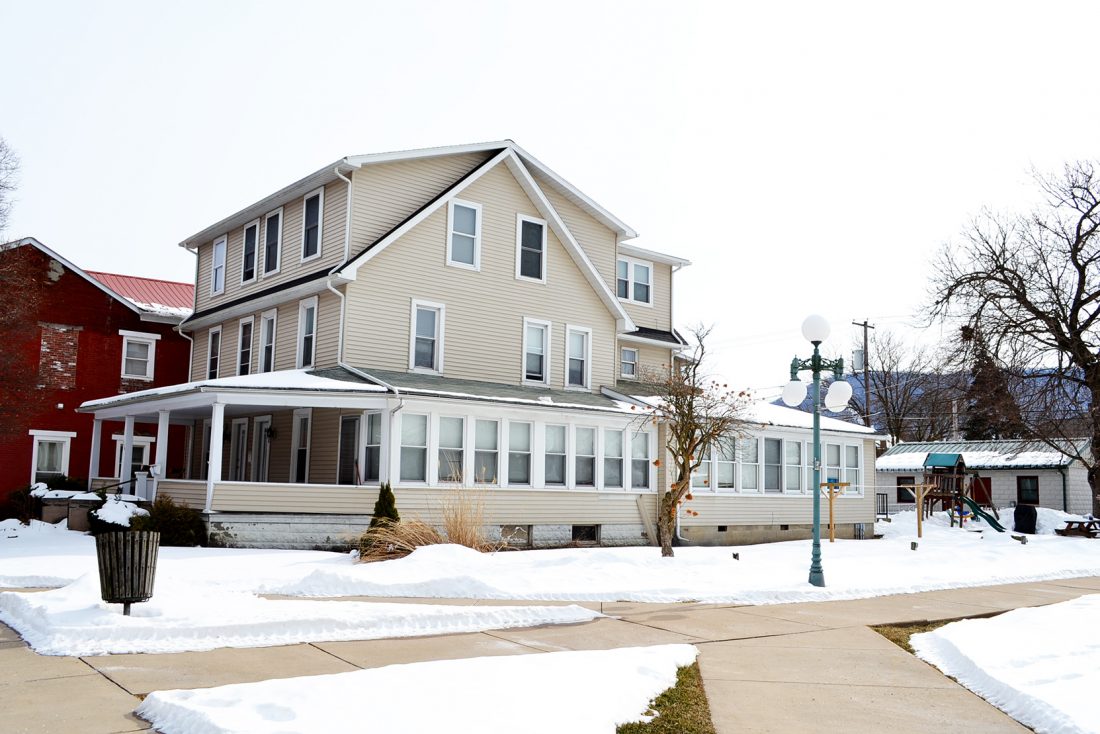
LANA MUTHLER/THE EXPRESS The Life Center and Merit House, located at 330 E. Main St., Lock Haven, is where the Clinton County Housing Coalition offers county residents a place to stay when facing homelessness.

Jeff Rich

Keshia Conway

Jackie Condor

Richard Reinberg
LANA MUTHLER/THE EXPRESS The Life Center and Merit House, located at 330 E. Main St., Lock Haven, is where the Clinton County Housing Coalition offers county residents a place to stay when facing homelessness.
Jeff Rich
Keshia Conway
Jackie Condor
Richard Reinberg
Trending
LOCK HAVEN -- Homelessness.
It's a word that looms over many jobless renters' heads as they struggle to pay their rent during the COVID-19 pandemic.
This threat is being kept at bay for now with an eviction moratorium, first put in place in September of 2020 by the Center for Disease Control (CDC), to prevent landlords from evicting renters due to non payment. However, this solution is only a temporary fix to a growing problem.
The moratorium can be a blessing but also a road block for organizations such as the Clinton County Housing Coalition (CCHC) which offers housing assistance to county residents.
The CCHC offers a variety of assistance, including temporary housing -- The Merit House and Life Center -- and financial help. Although the organization can still house those who are homeless, offering rental assistance has become complicated.
"We have funding for people experiencing literal homelessness and then we have funding for people facing an eviction," CCHC Senior Case Manager Keshia Conway said, "which is where the moratorium has helped our clients but kind of tied our hands quite a bit from being able to offer that assistance."
Coordinated Entry Regional Manager Jackie Condor said CCHS is federally funded through Housing and Urban Development (HUD) and requires strict guidelines be met.
Condor said CCHC offers rapid rehousing and homelessness prevention programs.
"Our rapid rehousing dollars are specifically dedicated to households that are experiencing literal homelessness," she said.
Condor further explained that the definition of literal homelessness is defined by HUD and includes "people who are staying at households not meant for human habitation, in an emergency shelter or hotel/motel paid for by a charitable organization" and would not include homes that are doubled up with family or friends. The exception to this rule is if someone is experiencing or fleeing domestic violence.
CCHC's rapid rehousing dollars are split into two categories: Assistance to those who are homeless and those who are at risk of becoming homeless. The organization has a 14- to 21- day window to assist those dealing with the former per HUD.
Due to the moratorium, most tenants are not at risk of being evicted from their homes.
"The moratorium has really bound our hands behind our backs as far as our ability to be able to spend that funding for people right now because evictions can't happen," Condor said.
Conway noted that some landlords have been able to file for evictions for two reasons.
The first is a tenant failing to present their landlord with a declaration from the CDC which states they are trying to pay back rent.
"The tenants are responsible to print that document," Conway said. "The problem is the tenants aren't aware of the declaration so landlords are still getting away with filing for eviction and the magistrate is honoring that."
Those who wish to print off a copy of the declaration can visit www.cdc.gov.
The second is landlords are beginning to find other reasons to evict tenants, such as smoking in the unit or having a prohibited pet, Conway said.
"I think landlords and tenants are looking through two different scopes, understandably. The issue is when they go to the magistrate what scope they're going to look through," Conway said.
Although the moratorium is designed to protect tenants, it has also created another problem -- back rent.
The moratorium has created a large backlog of rent payments for many tenants which provides another hurdle for CCHC.
"Our funding specifically restricts us to helping up to six months in a year," Condor said. "We're facing this potential challenge of not being able to help our community members be able to pay their back rent if they've not been able to pay for the last year that this moratorium has been in effect."
CCHC is able to pay up to $750 in back rent for a tenant for up to six months.
Conway recently received a call from a resident who said they owed $9,000 in back rent.
"That's just a lot of money that's probably more than six months worth," Condor said.
Conway said the floodgates have already opened for those who need assistance regarding back rent.
"I probably have had about a dozen people that have been referred to me for rental assistance. It's so, so difficult because… there's no prioritization for these people. It's first come first serve," she said.
The challenges CCHC face, and similar organizations nationwide, have created a recipe for a potential influx in the homeless population.
"We can't spend money and we know there are people that need it. If these people do end up getting evicted, our homeless population will be growing and we do not have the means to shelter that many people," Conway said.
Condor said they have 41 households on their coordinated entry list who are experiencing literal homelessness or fleeing or attempting to flee domestic violence.
"That's quite a bit of households. And that doesn't include those that might become homeless due to late rent," she said.
Currently, both the Merit House and Life Center are housing at 50 percent capacity. The Merit House is an overnight shelter while the Life Center offers residents a longer term place to stay while they work to get permanent housing.
"Our shelters have been consistently full, we're operating a 50 percent capacity… we've been full almost always with the exception of a couple of nights until we can get an intake done," Conway said.
With the decrease in capacity, the Lock Haven Motel has offered some rooms for those in need.
"They've been very, very cooperative and accommodating and I can't say enough good things about how they've chipped in and been able to help us out," CCHC Vice President Jeff Rich said.
However, that does come at a cost to the CCHC.
In a regular year, CCHC would hold a variety of fundraising events such as their annual daddy, daughter dance as well as bus trip to New York City in December and a few food sales. All of these were canceled due to the pandemic.
Rich said the best way to help CCHC is through monetary donations.
"We get a lot of folks that do help us with things, like blankets and clothing and shoes but all in all monetary donations give us the flexibility to address specific needs," he said. "At any point in time we might have a bunch of kids and couple of parents and what we have available clothing-wise doesn't match and we like to get them what we need."
Another source of funding did became available late in 2020 from the Pennsylvania Housing Financing Agency which received CARES Act funding which assisted in funding back rent for residents.
CCHC was able to provide about $193,000 worth of funding to help Clinton County residents pay for back rent.
Rich said another round of this funding could be available again soon.
"We believe that the program will be started up again because Pennsylvania received about $823 million in round two of the CARES Funding. We suspect that they'll put some of that towards this program again," he said.
Condor encouraged anyone who may be facing possible eviction and homelessness to call the organizations entry hotline 211.
"Always be calling 211 if you're experiencing a housing crisis. That's really the front door for all of our services. If they end up just calling the Life Center… they're going to be directing them to 211 anyhow," she said.