
The Flood of 1972
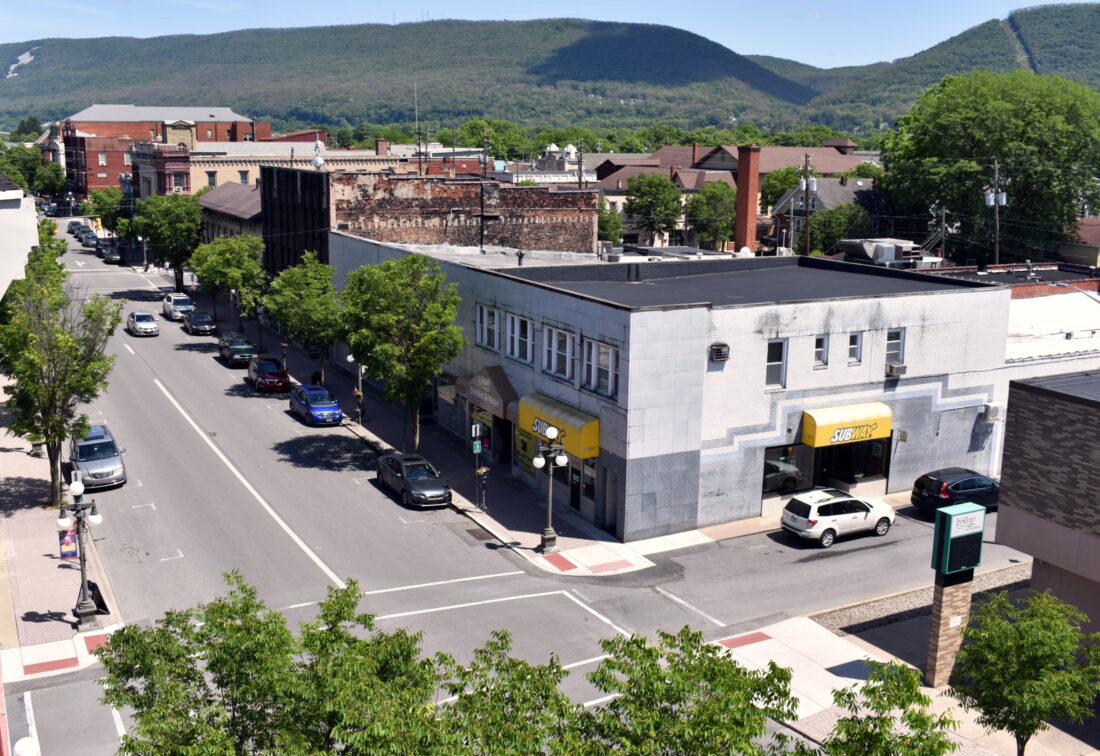
LAURA JAMESON/THE EXPRESS The view of Main St. in Lock Haven today.
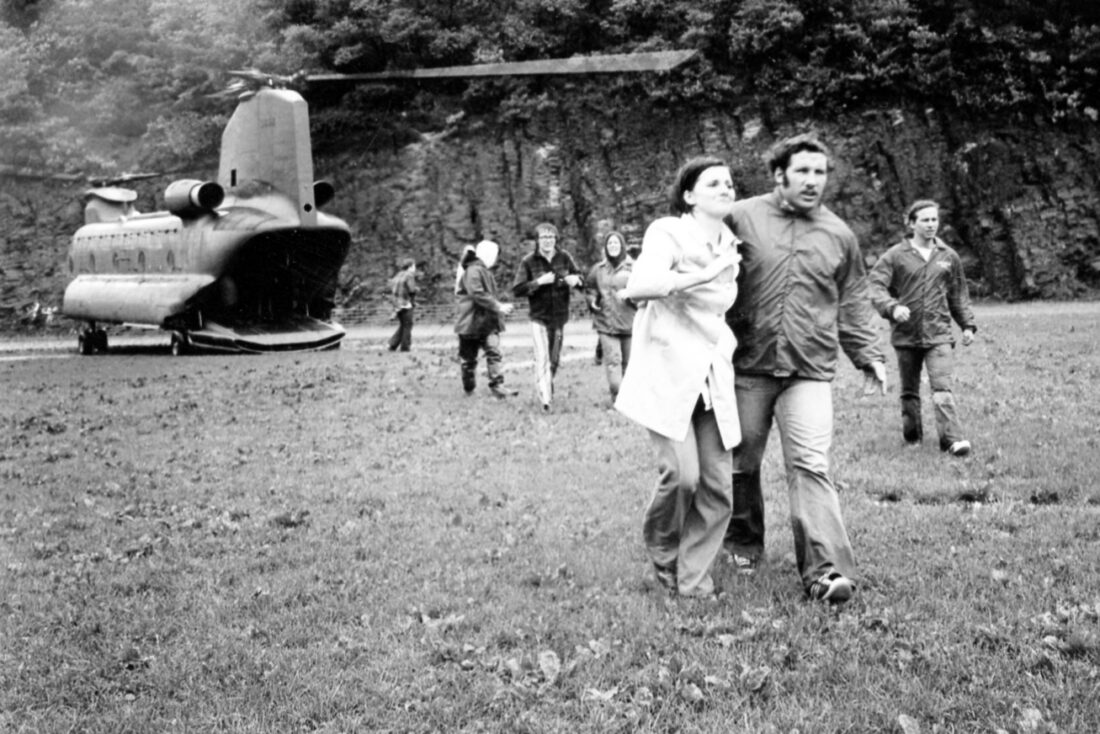
EXPRESS ARCHIVES, LEFT Survivors depart from a helicopter.
LAURA JAMESON/THE EXPRESS The view of Main St. in Lock Haven today.
EXPRESS ARCHIVES, LEFT Survivors depart from a helicopter.
Trending
"I remember a flood," I said.
It was a few years ago, and I was visiting my father. We were talking over some family history, and I had a very vague recollection of flooding.
"I was maybe three years old," I said. "I remember being at my grandfather's house, with the river up, almost to the porch. I remember the water going down, dead fish in the meadow."
"Oh, that was when we got trapped at your grandfather's place," my Dad replied. "It was during Hurricane Agnes."
"I witnessed Agnes?" I asked.
It was a surprising thing to find out about my own past. For a long time, I'd been reading about Hurricane Agnes, which came to Clinton County in June of 1972. Most of the locals who were alive at that time still remember it well--The '72 Flood.
It happened 50 years ago, and at the time, I was three years old and trapped on a farm in Montgomery County. If I'd realized I'd be writing about it half a century later, I'd have taken more notes.
The hurricane came up the coast, basically hitting a whole bunch of places as it got closer. There was some speculation that it was going to change course before it got to central Pennsylvania, but it did not. Hurricane Agnes hit Clinton County on June 22, and between 10 and 11 a.m., the river banks at Lock Haven were filled at 21 feet of water. It began to come over the bank on the east end, near Piper Airport.
Initially, Mill Hall was the hardest community hit, taking on 31.3 feet of water. Fishing Creek overflowed in the most damage since the 1889 Flood, and two bridges over Fishing Creek were washed out. The Express reported,"The flood took a number of lives in the Rote-Salona-Mill Hall area."
Here in Lock Haven, we reacted the way we always do: With a sense of competence and adventure, and a hint of insanity. On Friday morning, after the waters rose, a man on Walnut Street refused to be evacuated from his house, firing a rifle at anyone who tried. The newspaper reported that, so far, no one had been actually injured.
The flood waters seem to have stopped at Jones Street, everything below that being covered. In the lowest levels downtown, the floods were about eight feet above street level.
Castanea and Flemington were both somewhat cut off, with the bridges weakened. Not completely destroyed, but unsafe enough that the authorities closed them to travel. The extended care unit at the Lock Haven Hospital, very new at the time, was the first place to be used as an emergency center for evacuated flood refugees. Others soon followed, including Woolridge Hall and Bentley Cafeteria at Lock Haven University. One woman said that she and her family were caught in chest-high water before being evacuated by boat to the emergency center. A special kitchen was set up in Dickey Elementary School to feed the displaced people.
A sort of rescue center was set up at the corner of Bellefonte Avenue and Jones Street. Every boat in the community came out to assist with rescues. Don Spangler, a local car dealer, went out to find a family on the Island Road. After a considerable search, he found them hiding in the rafters inside their barn.
On the corner of Henderson and East Bald Eagle, a canoe was found inexplicably impaled on the top of a stop sign. All of the mail in the post office was rescued except for a pile of Sears catalogues that nobody wanted anyway.
The sheriff at the time was John P. Boyle. He and his wife were trapped in the jail on Church Street with 16 prisoners. They moved up onto the second floor for the duration, as most people were trying to do in Lock Haven. Meanwhile, at city hall, police officers coordinated rescue calls by manning the telephones for five straight days without sleeping. A few other cops went out to arrest three looters, names unknown, on Main Street.
By Tuesday, June 27, it was reported that the waters were lowering, and people got busy cleaning up after the flood. This was a huge job, affecting Lock Haven, Mill Hall, Renovo, and Jersey Shore particularly.
"Gone too with the flood waters is the look of hopelessness and total despair on the faces of the flood victims," reported The Express. "In its place is a look of determination, the look of people pulling themselves up from the mud, from the devastation of three days of flooding."
------
Lou Bernard is a Lock Haven resident with a keen interest in the history of this area. He is adult services coordinator at Ross Library and may be reached at loulhpa@gmail.com or 570-660-4463.