
Change at UPMC will have impacts on local EMS
Trending
LOCK HAVEN -- Area emergency medical service departments are coming together to come up with a game plan in the wake of UPMC's upcoming changes to its care model in Lock Haven.
According to some representatives, EMS companies were not informed of UPMC's shift to an Outpatient/Emergency Room model until it was publicly announced.
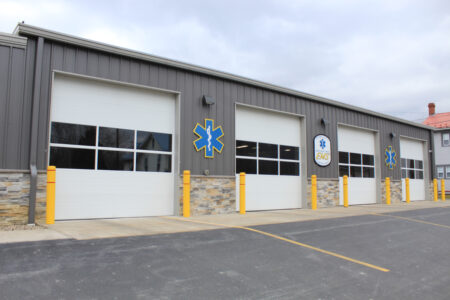
"It's definitely an active situation that we're all working on right now," Kim Shainline, Chief Operations-Paramedic at Flemington Goodwill Hose Ambulance Association, said. "All the services in the county have been in contact with one another about what sort of things we need to plan on."
Those potential changes involve longer transport times, higher fuel costs and potentially providing less non-emergency transport services.
With transport times, Shainline noted that area hospitals -- such as UPMC Williamsport -- are seeing "an insane amount of people being admitted."
"We can wait an hour or an hour and a half for a bed to open up in the emergency room in Williamsport," she said.
Shainline noted that her department has seen an increase in 911 emergency calls in the last two years as well, due to the pandemic.
"We've seen a 10 percent increase. So we already have that we're dealing with," she said.
Shainline said representatives from UPMC met with area EMS representatives recently to discuss a plan going forward.
"With the stand-along ER that (they're) looking at, obviously they have to be able to transfer patients to other facilities," she said. "They're looking for options on how they're going to be able to do that in ways that support them."
Patti Jackson-Gehris, President of UPMC Northcentral Pa., spoke with The Express about the challenges rural communities face with transportation and the healthcare systems intent to work with area service providers.
"Transportation in rural communities is an ongoing challenge. Every three years, when we do our community health needs assessment in the rural communities we serve in North Central Pa.," Jackson-Gehris said. "Transportation always rises to the top as an issue in our communities. We're going to address this."
When it comes to non-emergency transportation, typically, Goodwill Hose and other services -- such as Lock Haven EMS -- provided this service.
With the potential challenges that come with a shift in UPMC's model, Jackson-Gehris said the system will continue to work with the community.
"We're working with the regional EMS providers. We have signaled to all of the elected officials that we want to partner to figure out how to address transportation in rural communities," she said. "Not just for transport to the hospital, but for doctors appointments and the other types of care they need."
Jackson-Gehris said UPMC's approach will be to utilize its own service while continuing to partner with county providers.
"We have our own EMS. We will partner with regional EMS providers, we will partner with Bucktail (Medical Center) and we will partner with the elected officals to come up with a solution," she said.
Although UPMC's willingness to work with regional services is helpful, for these services like Goodwill Hose, the window to come up with a solution can feel strained.
"Ninety days is not a long time to figure that out," Shaineline said following the initial announcement. "I feel like we're behind the 8-ball."
Shaineline noted Goodwill Hose may need to look into increasing its staff to meet needs if necessary.
"That's the downside of rural emergency medicine and rural medicine period. We know we have an aging population base, and it's not able to be continously sustained," she said. "But we still have a lot of people here that need those services."