
Geisinger change to allow local control; ‘Turbo-boost’ rural healthcare
Trending
Much of it boils down to providing medical care "upstream" rather than "downstream."
Downstream refers to medical care given in the emergency room or hospital, where patients tend to be much sicker and the care costs much more.
Upstream refers to things including preventive care, caring for older people in their homes before they get sick enough to need the hospital, or even helping people eat better in order to head off diabetes and heart disease and all the pain and expense that goes with them.
Becoming better at delivering that approach is the main reason Geisinger Health plans to become the first member of a new health system being launched by California-based Kaiser Foundation Hospitals.
The union will give Montour County-based Geisinger access to funding, technology and expertise aimed at providing the so-called "value-based" health care, according to Dr. Jaewon Ryu, the CEO of Geisinger.
Ryu will be the CEO of the new system, a non-profit called Risant Health.
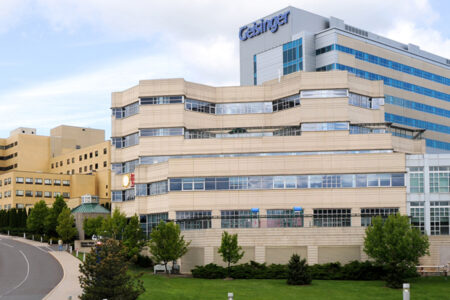
Danville-based Geisinger has 25,000 employees and hospitals in nine communities in central and northeastern Pennsylvania, including Scranton, Wilkes-Barre, Bloomsburg, Jersey Shore and Shamokin.
It also includes Geisinger Commonwealth School of Medicine and Geisinger Health Plan, a health insurer.
Ryu last week said no major changes are planned for those facilities and Geisinger will retain local control.
"It takes everything that people are familiar with and love about Geisinger and builds on that to bolster it and sort of give it that turbo-boost, if you will, enhancing all those capabilities that I described earlier," he said of the transaction.
He said it won't involve any layoffs. However, in pursuit of efficiencies to improve quality and lower costs of health care, Geisinger over time will "look at staffing models of tomorrow as opposed to only staffing models of yesterday," Ryu said.
Geisinger was founded in 1915 in Danville, about 70 miles north of Harrisburg. It was conceived by Abigail Geisinger, whose husband earned a fortune from local iron and production of railroad rails. Her goal was to give working people access to medical specialists that weren't available at nearby small-town hospitals.
Even then Geisinger was considered innovative in that it directly employed doctors and paid them salaries rather than payment based on volume.
Geisinger also became an innovator in having its own health insurance arm, although there has been a trend of hospitals owning or partnering with health insurers.
Ryu said Geisinger's devotion to innovation that delivers both health and financial benefits to its patients and communities gives it much in common with Kaiser, which includes hospitals, doctors and a health plan. He said that's what led to a health system from rural Pennsylvania joining forces with a sprawling California entity.
With Geisinger being the first hospital to join, it will play a key role in setting the course for Risant, officials said.
The plan is for Risant to eventually include up to seven, like-minded systems around the country, according to Ryu.
Ryu said there is no price tag for the transaction; a Geisinger spokeswoman said no money will change hands.
In explaining the financial nature of the transaction, Ryu said that, with two non-profits, "it's all about what enhances your ability to deliver on the mission in the most robust and fastest way."
Kaiser, meanwhile, plans to invest up to $5 billion over five years to provide technology, tools and expertise to benefit Risant.
Joining Risant will amount to "doubling and tripling down and bolstering the programs we have, but also bringing new capabilities, whether it's consumer insights, or digitally enabled things, tools for providers, patients and [health plan] members, or data and analytics," Ryu said.
"We know that all of these things play a pivotal role in the future of health care and even the current day of health care, and when you are able to invest in those kinds of capabilities and weave them into your clinical programs, we've seen tremendous things happen."
The transaction won't become final until it's approved by federal and state agencies. Geisinger on Wednesday said it didn't know how long approval will take.