
Bellefonte hosts exhibit honoring Holocaust victims
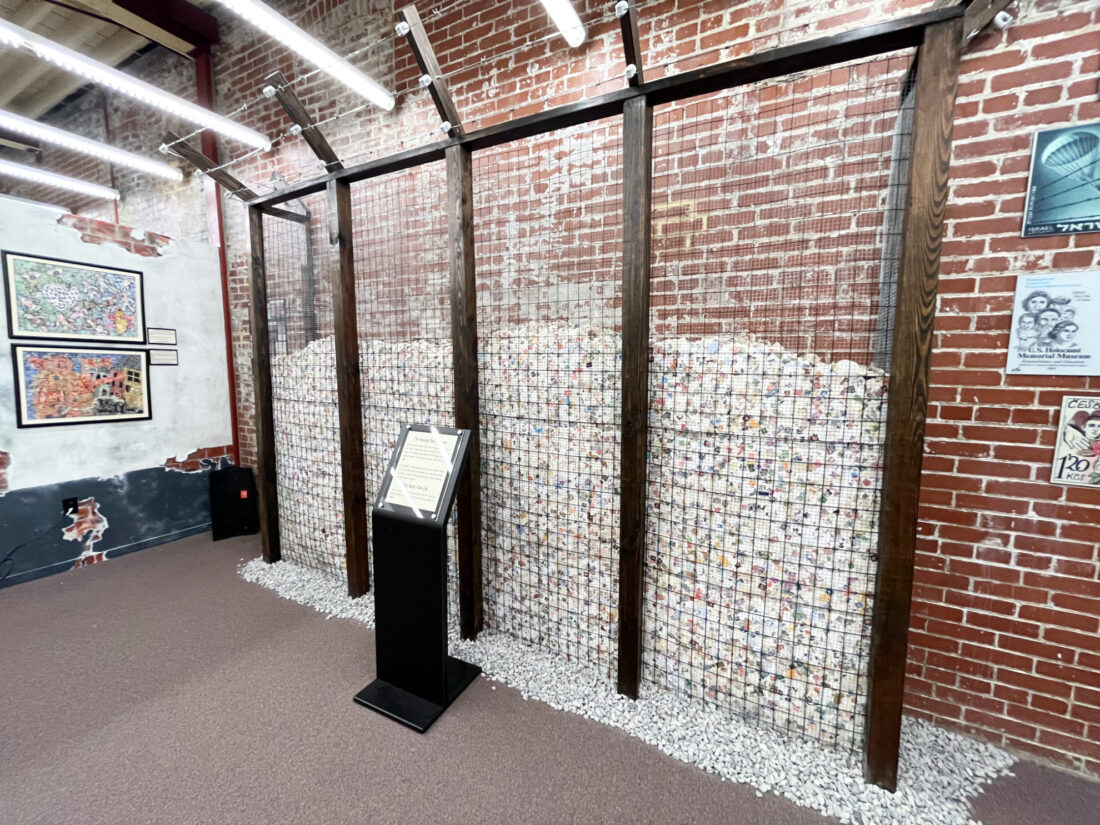
BREANNA HANLEY/THE EXPRESS The display of 11 million stamps is pictured.
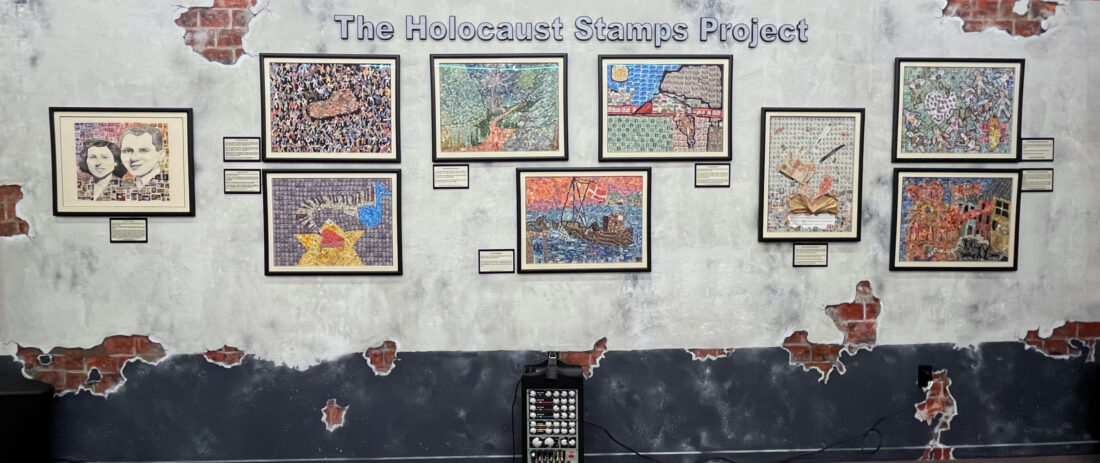
BREANNA HANLEY/THE EXPRESS A a wall depicting aspects of the Holocaust Stamps Project is seen.
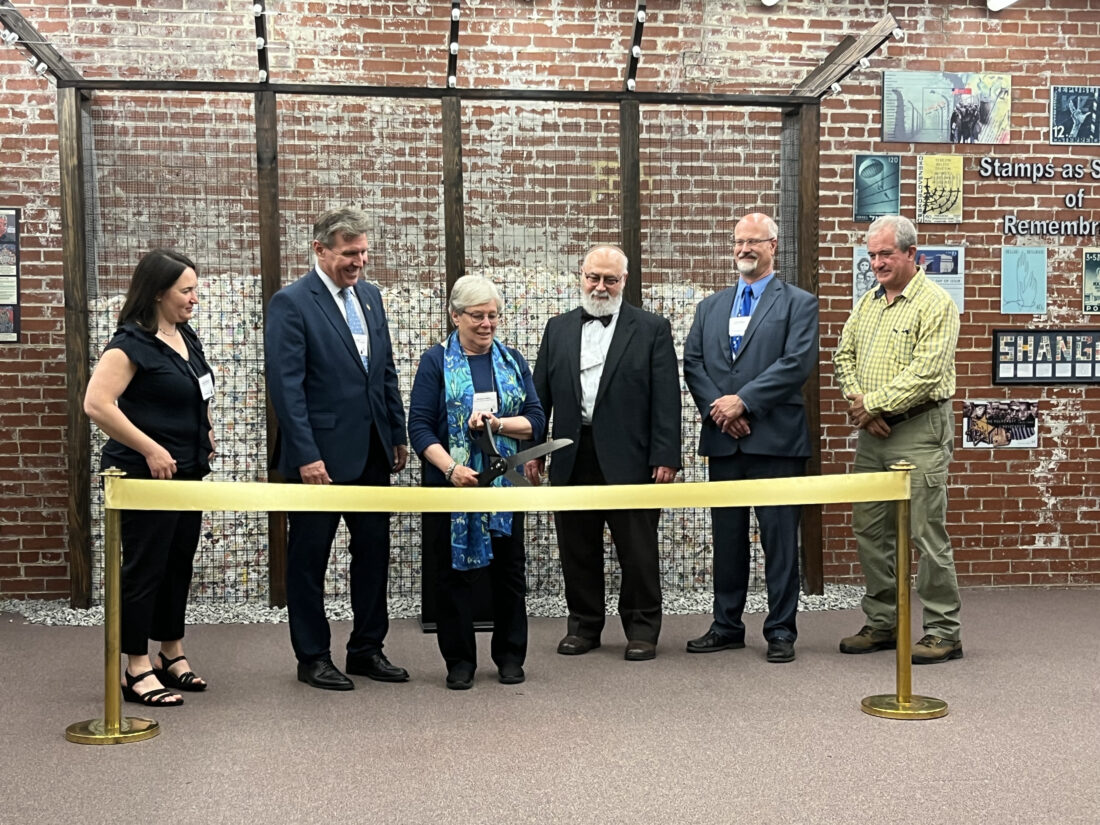
BREANNA HANLEY/THE EXPRESS Pictured, from left, are Commissioner Amber Concepcion, State Representative of the 82nd District Paul Takac, Charlotte Sheer, Rabbi David Ostrich, Commissioner Mark Higgins and Commissioner Steven Dershem.
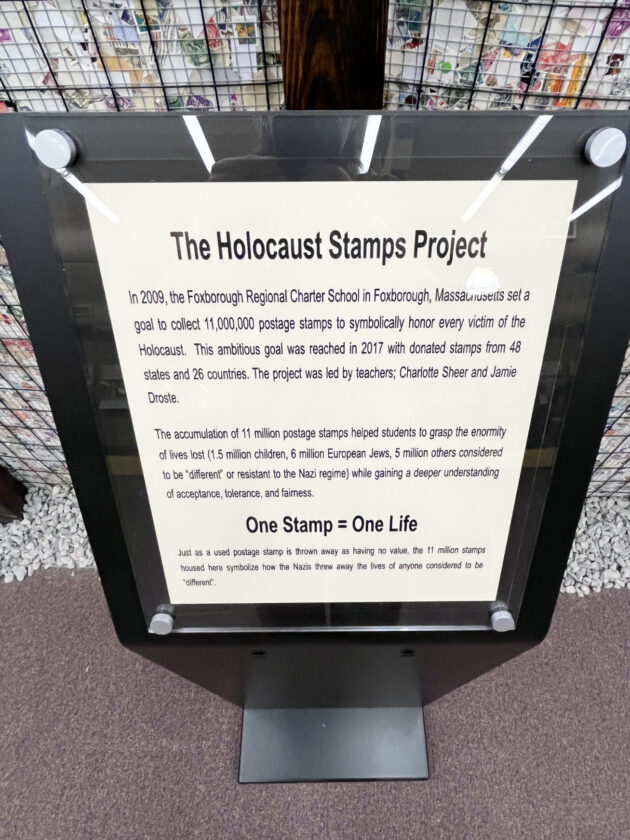
BREANNA HANLEY/THE EXPRESS A plaque at the exhibit explains the origins of the Holocaust Stamps Project.
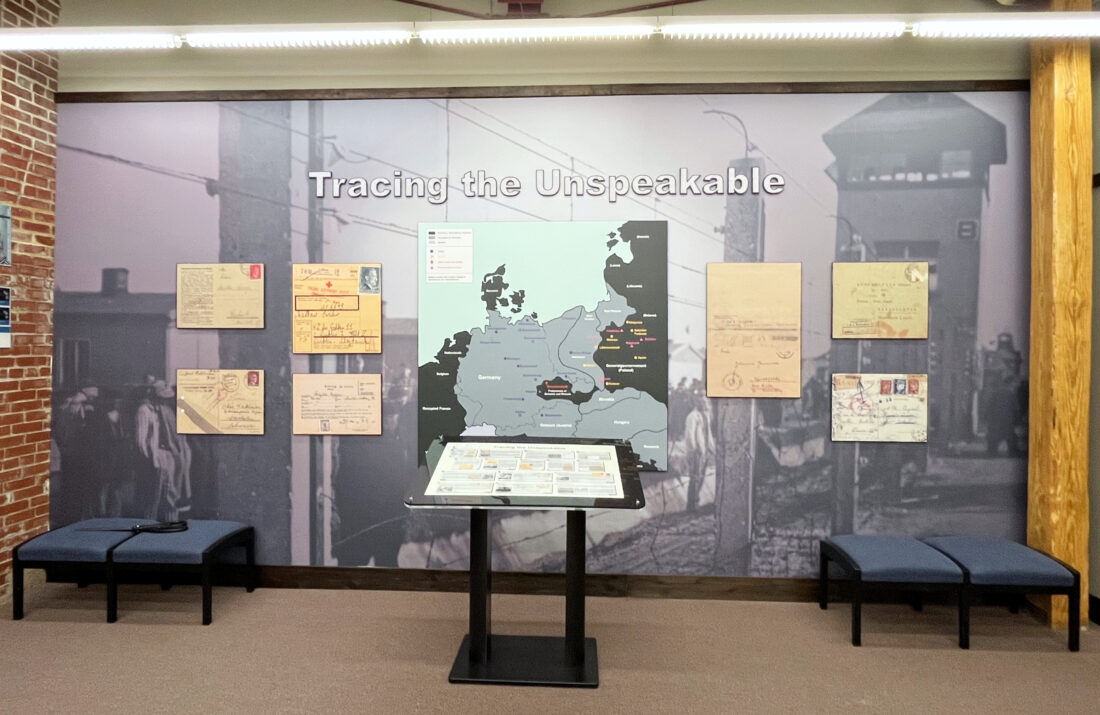
BREANNA HANLEY/THE EXPRESS One of the displays at the exhibit showcases some of the postcards sent by victims of the Holocaust alongside informational graphics.
BREANNA HANLEY/THE EXPRESS The display of 11 million stamps is pictured.
BREANNA HANLEY/THE EXPRESS A a wall depicting aspects of the Holocaust Stamps Project is seen.
BREANNA HANLEY/THE EXPRESS Pictured, from left, are Commissioner Amber Concepcion, State Representative of the 82nd District Paul Takac, Charlotte Sheer, Rabbi David Ostrich, Commissioner Mark Higgins and Commissioner Steven Dershem.
BREANNA HANLEY/THE EXPRESS A plaque at the exhibit explains the origins of the Holocaust Stamps Project.
BREANNA HANLEY/THE EXPRESS One of the displays at the exhibit showcases some of the postcards sent by victims of the Holocaust alongside informational graphics.
Trending
BELLEFONTE -- The American Philatelic Society, in partnership with Penn State University's Hillel and the Holocaust, Genocide and Human Rights Education Initiative, will formally dedicate the museum exhibit "A Philatelic Memorial of the Holocaust."
With members in more than 110 countries, the American Philatelic Society is the largest, non-profit organization for stamp collectors in the world. Founded in 1886, the APS serves collectors, educators, postal historians and the general public by providing a wide variety of programs and services.
The initial invitation-only opening of the event was held Wednesday night -- the last day of Jewish-American Hertiage Month -- and included remarks from award-winning filmmaker and director of the Holocaust, Genocide and Human Rights Education Initiative Boaz Dvir; Penn State Hillel; American Philatelic Society Executive Director Scott English; and educator Charlotte Sheer, who initiated the Holocaust Stamps Project with her students at Foxborough Regional Charter School.
In 2018, K-12 students of Foxborough completed a nine-year project collecting 11 million stamps representing the victims of the Nazi regime. Donations arrived from Holocaust survivors, their families and others from 48 U.S. states and the District of Columbia and 29 countries.
Known as the Holocaust Stamps Project, the educational initiative included peer-to-peer teaching tools created by students on various aspects of the Holocaust.
The American Philatelic Society built the exhibit "A Philatelic Memorial of the Holocaust" from the Project's 11 million stamps and educational materials. The exhibit also includes actual postal relics sent to and from concentration camps and ghettos during the Holocaust.
"A postcard mailed from a Poland ghetto might be the only surviving, tangible evidence of the life and death of a Jewish victim of the Nazi regime. To touch history like that makes it real," said APS exhibit coordinator Susanna Mills, "The American Philatelic Society is proud to safeguard and share those stories told by stamps and postal relics."
"A 2020 survey showed nearly two-thirds of millennials and Generation Z lacked basic knowledge of the Holocaust," said Scott English, Executive Director of the American Philatelic Society. "This exhibit brings to life the tragedy of the Holocaust using the voices and artifacts of the victims. We have a duty to connect the past to the future so that it never happens again."
The guest speakers each spoke about the subjects nearest to their hearts when it comes to the exhibit.
Dvir began his speech with bad news, saying, "Despite 50 years of what would appear to be excellent Holocaust education, we are seeing what amounts to zero results. Scott mentioned the survey that shows lack of awareness -- that’s a problem. We should aim for more than just awareness. We hope for the washing away of hate."
He also spoke on the potential impact of the project, indicating the importance of Holocaust education.
"One of the ultimate goals is to enable students to have not just a passive learning experience, but instead have an actual hands-on experience like this wonderful project. This is a wonderful example of the kind of project that can be lasting, can make a difference, can alter the perception of a child and provide them with something they can carry on beyond regurgitating knowledge on a test," said Dvir.
Sheer told the emotional and heartwarming story of her students and how the idea for the project had originally come about in 2009.
Her 5th grade students read "Number the Stars" by Lois Lowry, a historical fiction story about the escape of a family of Jews from Copenhagen, Denmark, during World War II, and had had questions that Sheer wasn't sure
"(The questions) plucked at my Jewish heartstrings," said Sheer, "'What were German soldiers doing in that country? Why were they so mean to Jewish people? Where did Nazis relocate all the Jews they forced from their homes?'"
The students struggled to understand the gravity of 11 million lives lost, and inspired them to create a visual representation of those lost so that the entire school can understand how many people died.
"Their idea planted the seed for collecting 11 million postage stamps. One to honor each of the victims of Hitler's hatred. Each small piece of paper symbolized an item of value discarded as worthless after one use, reflecting Hitler's treatment of Jewish people and others. The mass of printed images would underscore and celebrate our world's extraordinary diversity, which Hitler had set out to destroy. The children's enthusiasm lit the fuse for the Holocaust Stamps project to succeed," said Sheer.
Attendees were invited to Morse Hall after the guest speakers gave their speeches for the ribbon cutting ceremony.
English invited Commissioners Steven Dershem, Amber Concepcion and Mark Higgins to join in the ribbon cutting ceremony as well as State Representative Paul Takac, Charlotte Sheer and Rabbi David Ostrich.
Tours of the exhibit were offered after the ribbon cutting ceremony.
The American Philatelic Center is open to the public for tours on Monday to Friday, 8:30 a.m. to 5 p.m. A public open house for "A Philatelic Memorial of the Holocaust" will be held on June 11, from 11 a.m. to 3 p.m., featuring discussions of Holocaust-era postal history.
About PSU Hillel and the Holocaust, Genocide and Human Rights Education Initiative
The Holocaust, Genocide and Human Rights Education Initiative at Penn State enables K-12 educators to effectively teach difficult topics such as racism and trauma. The Initiative offers sustained and customized professional learning programs and online modules. Through a trauma-informed lens, the Initiative guides teachers in helping students develop insight into the human condition and life skills such as empathy, active listening, critical thinking, civic discourse and agency by applying inquiry approaches to the instruction of difficult topics.
Penn State Hillel is the foundation for Jewish Campus Life at the Pennsylvania State University.
Penn State Hillel's mission is to enrich the lives of the estimated 5,000 Jewish students at Penn State, encouraging students to pursue tzedek (social justice), tikkun olam (repairing the world), and Jewish learning, and to support Israel and global Jewish peoplehood.
For more information, contact Amy Larimer (amy@stamps.org, 814-933-3803 ext. 225).