
Wildfire smoke intensifies across region as air quality falls
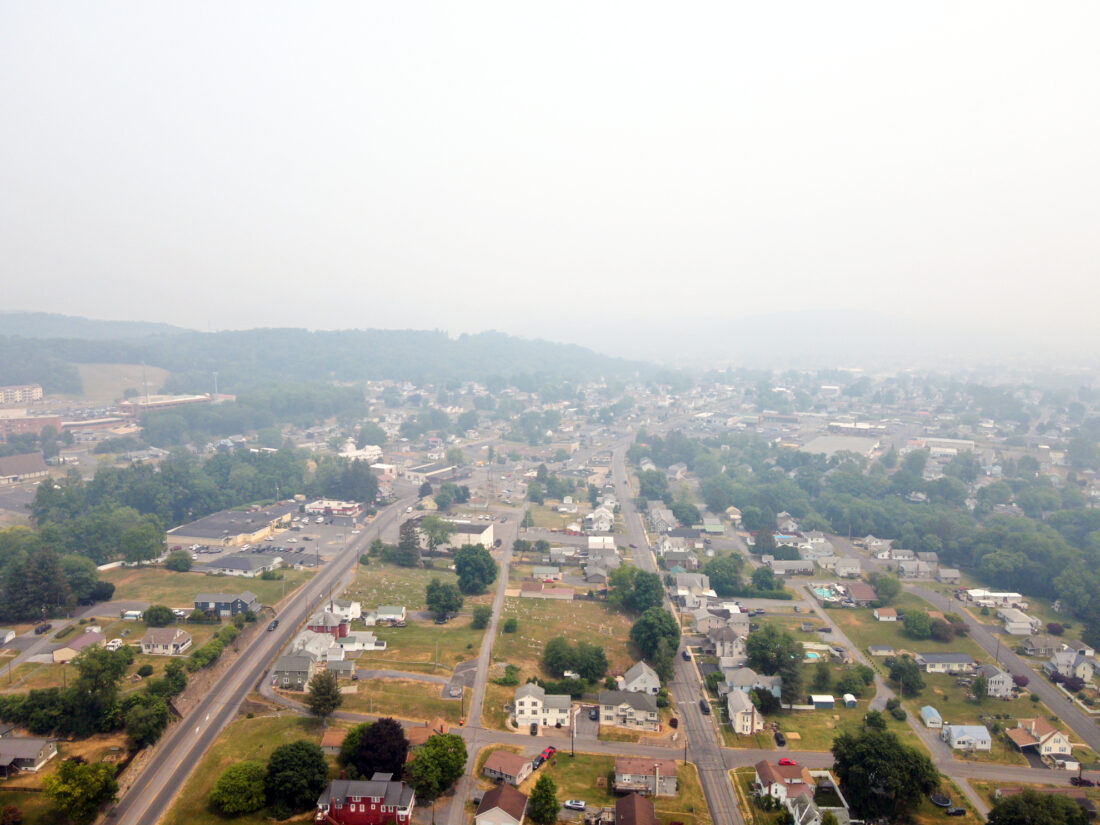
PHOTOS PROVIDED Drone shots provided by the Clinton County Department of Emergency Services highlight the haze from on high.
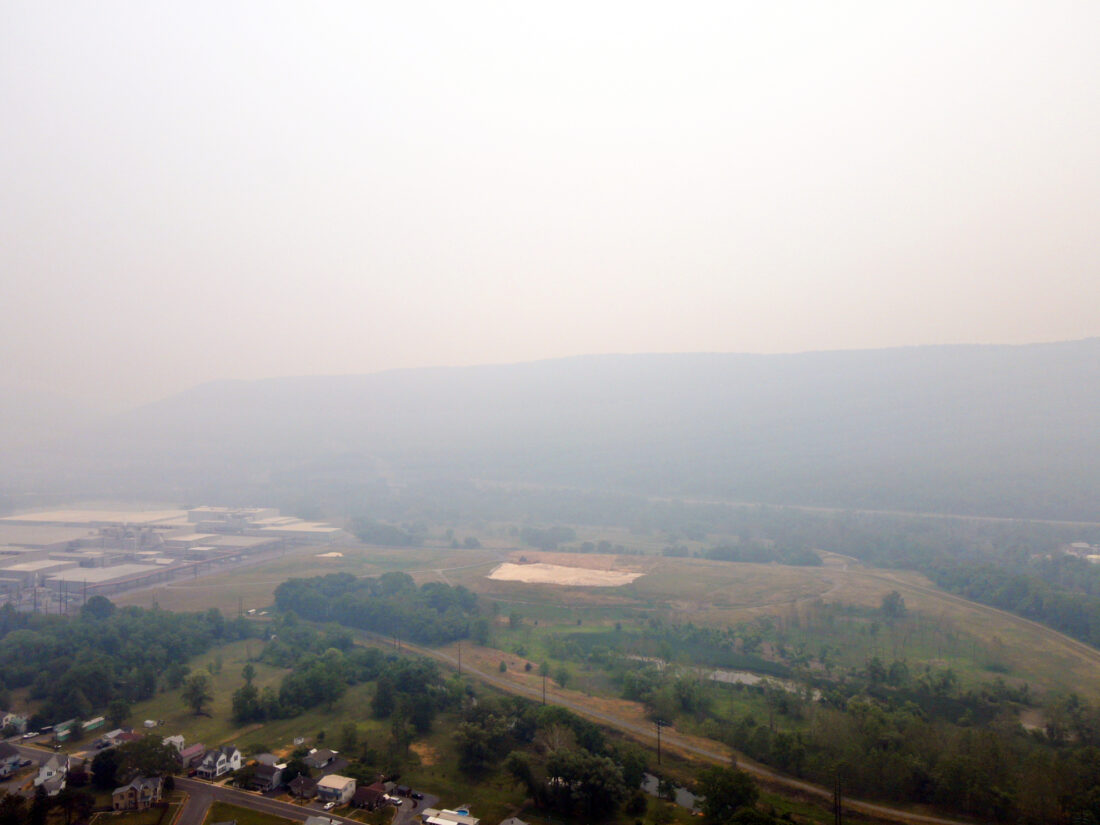
PHOTOS PROVIDED Drone shots provided by the Clinton County Department of Emergency Services highlight the haze from on high.
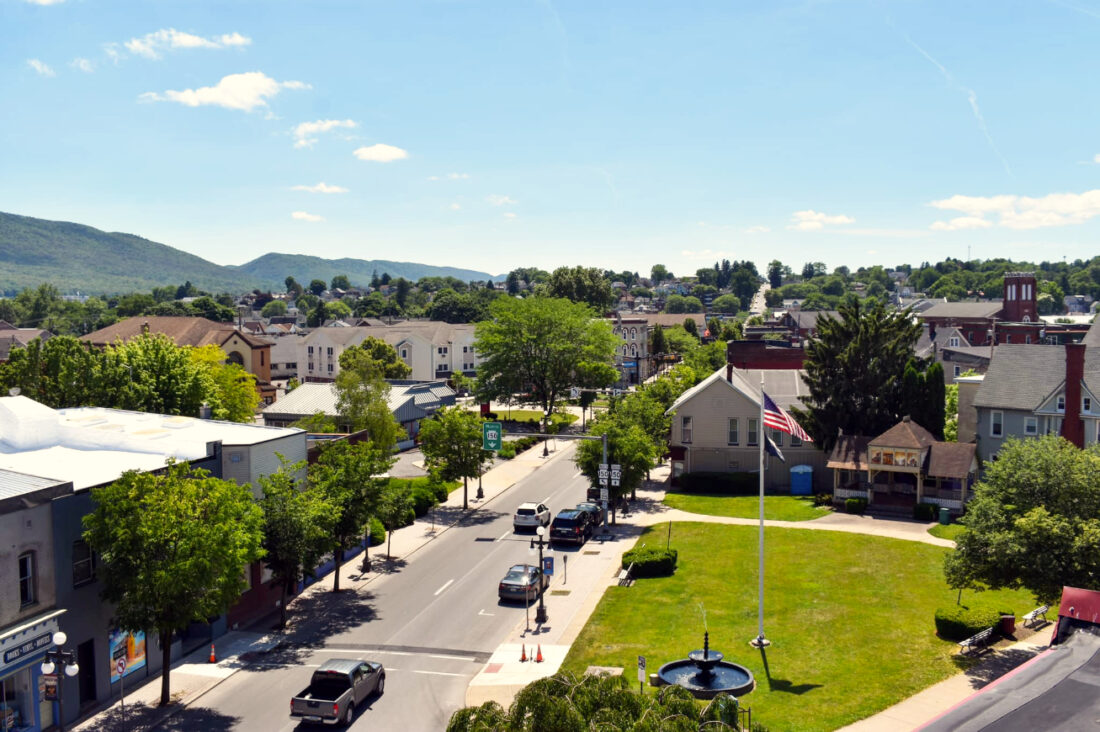
LAURA JAMESON/THE EXPRESS These photos, taken a year apart from the roof of The Express office, provides a before-and-after from a similar angle, showcasing the haze of smoke from wildfires in Quebec, Canada, which has been stifling the region since late Tuesday night.
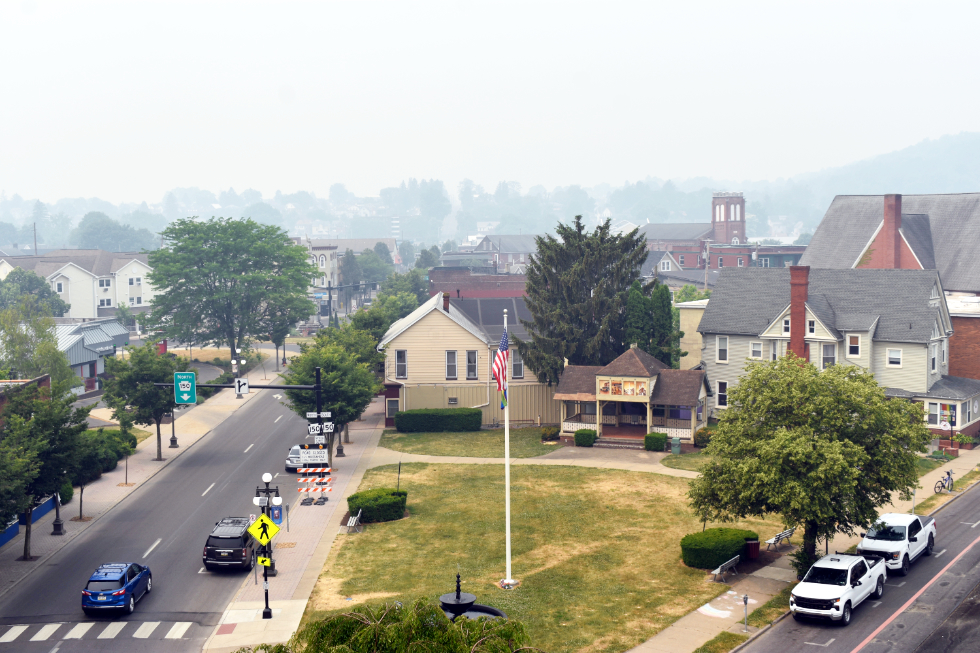
LAURA JAMESON/THE EXPRESS These photos, taken a year apart from the roof of The Express office, provides a before-and-after from a similar angle, showcasing the haze of smoke from wildfires in Quebec, Canada, which has been stifling the region since late Tuesday night.
PHOTOS PROVIDED Drone shots provided by the Clinton County Department of Emergency Services highlight the haze from on high.
PHOTOS PROVIDED Drone shots provided by the Clinton County Department of Emergency Services highlight the haze from on high.
LAURA JAMESON/THE EXPRESS These photos, taken a year apart from the roof of The Express office, provides a before-and-after from a similar angle, showcasing the haze of smoke from wildfires in Quebec, Canada, which has been stifling the region since late Tuesday night.
LAURA JAMESON/THE EXPRESS These photos, taken a year apart from the roof of The Express office, provides a before-and-after from a similar angle, showcasing the haze of smoke from wildfires in Quebec, Canada, which has been stifling the region since late Tuesday night.
Trending
LOCK HAVEN -- Residents of Clinton County and most of Pennsylvania are experiencing the effects of wildfires that continue to plague Canada -- specifically its western provinces in Quebec.
After a month, smoke from the wildfires reached Clinton and surrounding counties late Tuesday night. The haze, which left mountains obscured and many looking to remain indoors, has remained in the area since.
Due to the continued presence of smoke, the EPA is recommending people with heart or lung conditions, older adults, children and teens avoid physical activities outdoors. Everyone else should avoid strenuous outdoor activities, keep them short and consider rescheduling outdoor tasks or bringing them indoors, the Clinton County Department of Emergency Services said.
It directed residents to the EPA's AirNow platform, AirNow.gov, to keep further track of changing conditions.
According to Emergency Services Director Andrew Kremser, the smoke has caused an increase in call volumes.
"We did see an increase in call volume last night (June 6) due to the haze/smoke," he said. "These calls weren't of medical nature but out of concern of fires."
"Our dispatchers did an excellent job of asking additional questions to better identify if the caller was observing the impacts of the haze or if there was a localized fire," Kremser continued.
Kremser is asking that county residents pay attention to air quality as they go about their activities.
"We ask that everyone be cognizant of the current air quality conditions as the haze/smoke continues to pass through our areas; follow the EPA's recommended tips and to check in on older adults that live alone," Kremser said.
According to the Environmental Protection Agency, here's what you can do to protect yourself when smoke is in the air:
-- If it looks or smells smoky outside, take it easier to reduce how much smoke you inhale.
-- Choose a mask that will help protect you from smoke.
-- Limit time spent outdoors by only performing essential activities and taking frequent breaks indoors.
-- Reschedule outdoor work tasks.
The current conditions are predicted to last at least until the weekend, according to reports.
In the short term, the weather model at firesmoke.ca -- which models the near-future movements of smoke from Canadian wildfires -- is showing smokey conditions continuing through Friday morning, as of this writing, with more plumes of smoke trailing behind and cascading down the Great Lakes towards Pennsylvania.
A short-but-appreciated break in the smoke is expected in the early morning hours today, from 3 a.m. until 9 a.m., at which point mild smoke begins to re-enter the region.
The model depicts the intensity of the smoke in a measurement of PM(2.5) -- particulate matter -- per cubic meter of air. According to the EPA -- slightly simplified -- air under 12 micrograms per cubic meter is generally healthy, while air which contains more than 35 micrograms per cubic meter of particulate matter is unhealthy.
That mild smoke returning to the area tomorrow morning at about 10 a.m. is between 1-10 micrograms per cubic meter.
It isn't until tomorrow afternoon when air quality is expected to dip severely, although limiting exposure is still good, especially since the air has been over the unhealthy threshold during the previous 24 hours.
Around 2 p.m. today, the smoke is expected to thicken once again, with the air entering unhealthy parameters by 5 p.m.
An area of very thick smoke is expected to stall out over Renovo at around 9 p.m., with concentrations of particulate matter between 120-250 micrograms per cubic meter.
The model shows that getting a bit better overnight, with Lock Haven and Bellefonte slipping below the unhealthy threshold, while Renovo stays slightly worse on the scale.
Aorund 7 a.m. Friday morning, the model shows that patch of thick smoke flaring up again, with the corridor including Howard, Bellefonte and State College seeing concentrations of particulate matter between 120-250 micrograms per cubic meter. Beech Creek is right on the border of this cloud of smoke, as of this writing -- it may stay in the range of 60-120 micrograms, which is still definitly unhealthy.
That concentration is expected to last for at least several hours, with the model showing another patch of clear air approaching from the north.
The biggest question mark at the moment for the longer-term forecast is whether or not the blocking pattern which is currently in place over the north east United States will give way early next week as a low-pressure system approaches from the west.
The GFS weather model, as of this writing, is showing that low-pressure system swinging up the east coast Monday night into Tuesday, bringing some rain to the area -- and, notably, likely pushing remaining smoke northward, instead of the blocking high which is currently pushing the smoke southward to Pennsylvania and beyond.
If this model run holds true, the smoke should only stick around through the weekend, and then the pattern will change and keep the worst of the smoke away from our region.