
Clinton County Treatment Court Programs celebrate 10 year anniversary

LISA SCHROPP/THE EXPRESS Debra Todd, Chief Justice of the Pennsylvania Supreme Court, was a special guest at the 10th Anniversary Celebration. She is seen here with Ed Hosler, deputy chief probation officer, and Judge Mike Salisbury, who presides over Clinton County’s Treatment Court Programs.
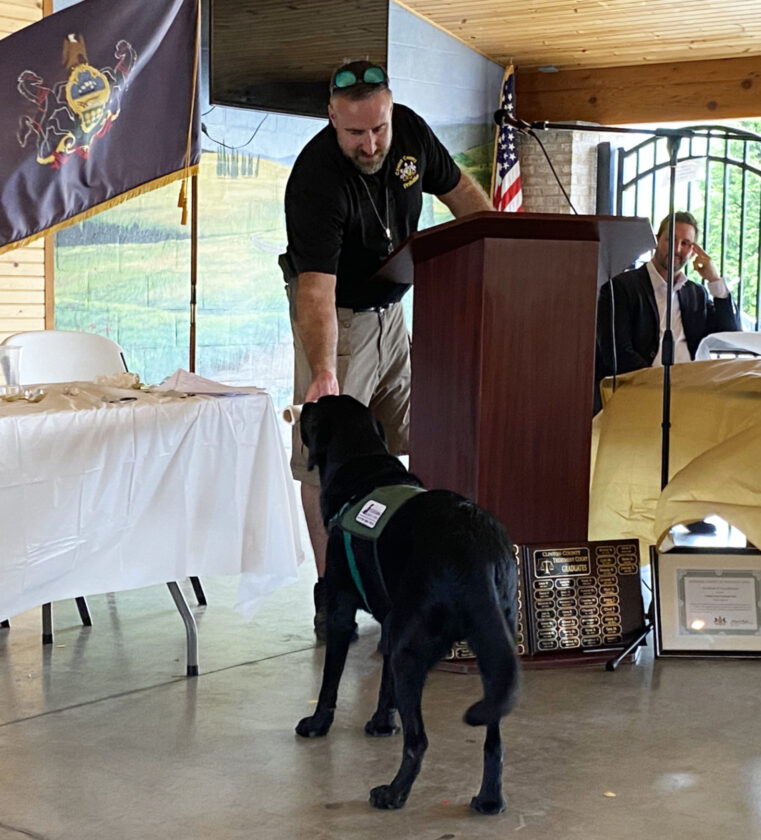
LISA SCHROPP/THE EXPRESS Clark receives a bone for his service during the event.
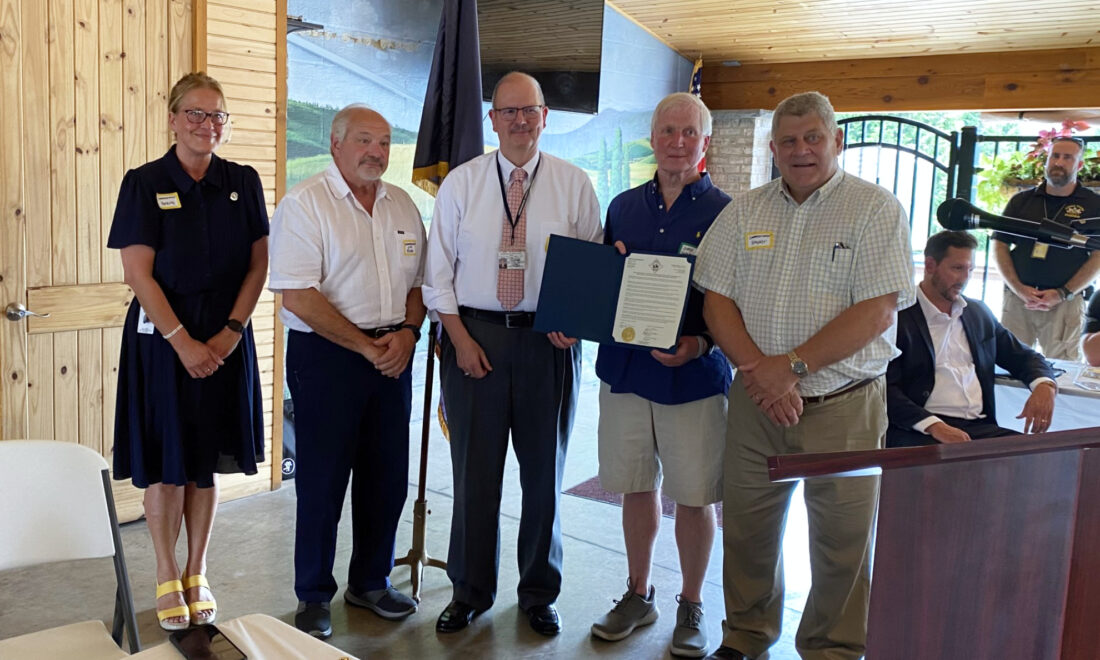
LISA SCHROPP/THE EXPRESS The Clinton County Commissioners presented Judges Salisbury and Miller with a Proclamation to honor the achievements of the Clinton County Treatment Court Programs and to reaffirm their commitment to the programs.
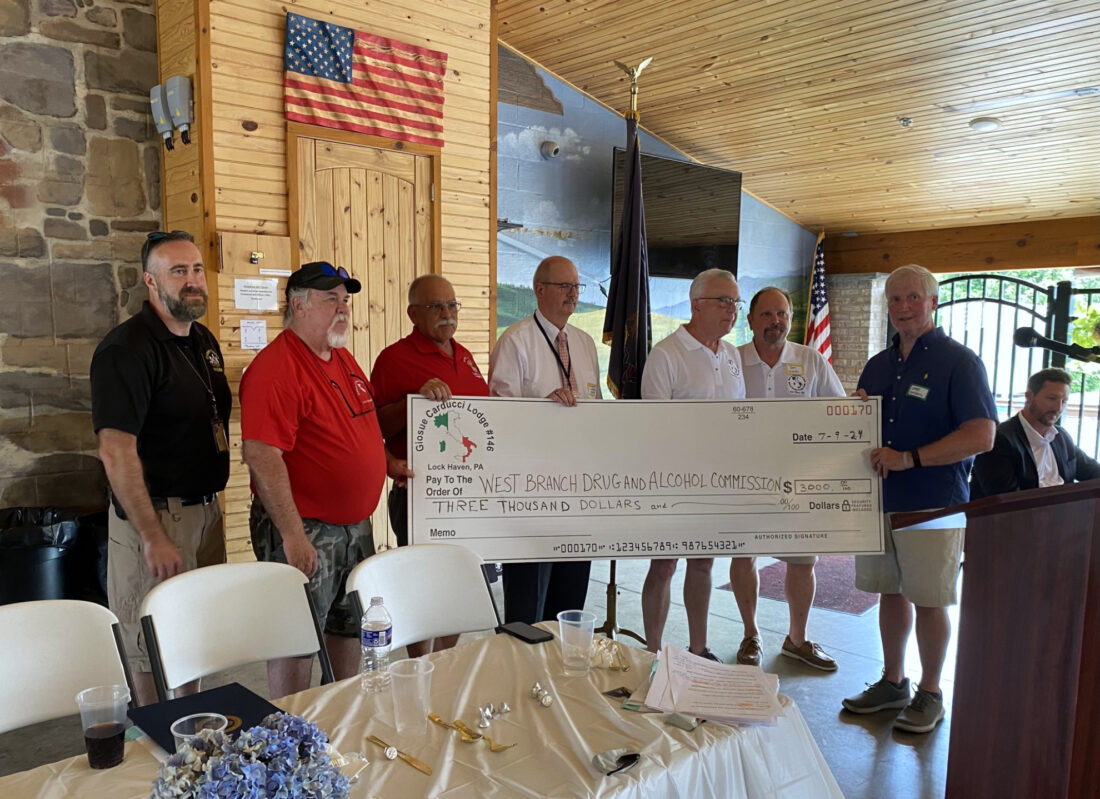
LISA SCHROPP/THE EXPRESS Judges Salisbury and Miller were surprised by a $3,000 donation from The Sons and Daughters of Italy at the anniversary celebration.
LISA SCHROPP/THE EXPRESS Debra Todd, Chief Justice of the Pennsylvania Supreme Court, was a special guest at the 10th Anniversary Celebration. She is seen here with Ed Hosler, deputy chief probation officer, and Judge Mike Salisbury, who presides over Clinton County’s Treatment Court Programs.
LISA SCHROPP/THE EXPRESS Clark receives a bone for his service during the event.
LISA SCHROPP/THE EXPRESS The Clinton County Commissioners presented Judges Salisbury and Miller with a Proclamation to honor the achievements of the Clinton County Treatment Court Programs and to reaffirm their commitment to the programs.
LISA SCHROPP/THE EXPRESS Judges Salisbury and Miller were surprised by a $3,000 donation from The Sons and Daughters of Italy at the anniversary celebration.
Trending
LOCK HAVEN -- Members of the community gathered to celebrate the 10th anniversary of the Clinton County Treatment Court Programs.
In 2014, Clinton County Treatment Court was created to help individuals in the Clinton County criminal justice system who are dealing with substance abuse. Clinton County's Veterans Treatment Court was added in 2016 to address the growing number of veterans involved in the criminal justice system.
The Treatment Court Program expanded again in 2020 when the Clinton County Behavioral Health Court was established to be an advocate for individuals who are coping with mental illness while cycling through the court and prison system. The goal of these programs is to keep the participants out of jail and give them their lives back.
More than 150 people packed into the Sons of Italy to commemorate the special occasion. Special guests for the ceremony included Debra Todd, Chief Justice of the Pennsylvania Supreme Court, and her husband, Stephen Todd, a former attorney for the United States Army who retired from the U.S. Army Reserve at the rank of colonel.
After arriving the previous day and receiving a tour of the city and courthouse, Todd said, "I have been looking for the prettiest place in Pennsylvania to retire and I might have found it."
After thanking the veterans in the room, Todd congratulated everyone involved in the Clinton County Treatment Court Programs for reaching this milestone and commended them on their innovation, teamwork and judicial leadership.
"It's never too late to rebuild a life," Todd said.
Judge Michael Salisbury recalled when President Judge Craig Miller first asked him to preside over Clinton County's Treatment Court Programs, and admitted to having an initial trepidation after his previous position as the Clinton County District Attorney.
"Everything that you think you know about addiction is wrong and that describes me in 2014," Salisbury said.
He spoke about the personal transformation that it took for him to understand that putting someone in incarceration is intensifying their isolation.
"I did not understand that in 2014," he said.
Now, Salisbury witnesses firsthand how these treatment programs strengthen connections and get each participant back to being the person who they are meant to be. Everyone who enters into the program is met with empathy and understanding, and told from day one that they are important and they matter.
Speaking directly to Judge Miller, Salisbury said, "Thank you for your drive, forethought and compassion."
Salisbury said his favorite part of the program is graduation and he recognized Nancy K., a current graduate.
Salisbury acknowledged that Nancy is a different person than she was when she started the program. She volunteers at Salvation Army and Rally for Recovery, and recently visited her grandchild for the first time, clean and sober.
But Salisbury also cautioned that her journey is not over. She is just going into a different phase of her recovery.
"The program is not meant to be easy. It's meant to be work," Salisbury said. "We want you to be proud and want your family to be proud. Everyone here, including Clark, is proud of you."
Many graduates of the program were in attendance including Adam H., the first graduate in 2015. Adam shared his personal experience and said that the program won't work unless the participant puts the time and effort into it. For him, it was worth it in the end and he is truly grateful.
"I don't know where I would be without this program," Adam said.
Matt W. shared his journey as a graduate of the Lycoming County Treatment Court, which is in its 26th year under Judge Nancy Butts, who was also in attendance.
After relying on drugs as a coping mechanism and using them no matter the consequences, Matt admitted that he thought his life was over, but developed a different feeling after stepping into the Lycoming County jail.
"I felt like my life had just begun," Matt said. "I didn't know there was another way to live."
Since completing the program, Matt has found things that he enjoys, such as skiing, swimming, golfing, weightlifting and reading. He has also found meaning in his life through helping other people as a public defender, and he even gives recommendations on who would be a good candidate for the program.
"I learned that I was a good person and I had a lot to offer to other people," Matt said. "In the course of 10 years, I went from appearing before Judge Butts to arguing a case before the Pennsylvania Supreme Court."
Now Matt is looking forward to starting the next phase of his life as his wife is expecting their first child.
Commissioners Jeff Snyder, Angela Harding and Jim Russo presented Judges Salisbury and Miller with a Proclamation to honor the achievements of the Clinton County Treatment Court Programs and to reaffirm their commitment to the programs.
"The future is determined by the present," Harding said. "Thank you to those who made a decision to enter the court programs, to those who support them, and to those who run the programs."
Dan Vilello, president of The Sons and Daughters of Italy, surprised Judges Salisbury and Miller with a $3,000 donation.
"The Sons and Daughters of Italy is an unparalleled benefactor," Salisbury said. "I don't know where we would be today without them."
Since its inception 10 years ago, there have been 79 graduates of the Clinton County Treatment Court, 16 graduates of the Clinton County Behavioral Health Court and 13 graduates of the Clinton County Veterans Treatment Court.
"It is the most rewarding thing that I have ever experienced in my life," Salisbury said.