
Curtin UMC fights to stay
Court battle follows split from national group
Trending
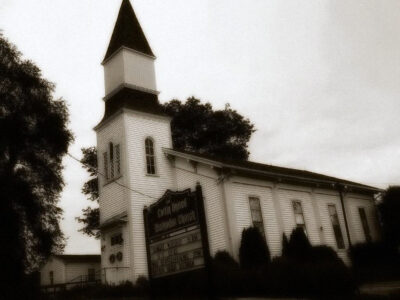
BELLEFONTE -- The fallout of the United Methodist Church's 2019 breakup over disputes involving the church's LGBTQ-related policies has fallen on Centre County, threatening to expel the county's oldest church's congregation from their chapel.
The congregation of the Curtin United Methodist Church in Howard appeared in court Tuesday to defend themselves against the plaintiff, the Susquehanna Conference of The United Methodist Church, the regional governing body of the denomination, who seeks to seize control of Curtin UMC's real estate and other assets over its disaffiliation with the church.
Joining the roughly 25 percent of churches and members that have departed the denomination, parishioners from Curtin UMC, which has been continually operating for over 200 years, have sought to disaffiliate with The United Methodist Church primarily over the decision to allow LGBTQ people to serve in leadership positions.
"We feel this church was started biblically and we want to continue that," said Larry Beahm, a member of the congregation who represented Curtin UMC at the counsel table.
The congregation says unclear instruction and extortionate fees complicated the disaffiliation process, causing the church, whose worshipers are predominantly elderly, to fail to secede during the five-year window authorized for departures related to the ideological split.
"They made it impossible to disaffiliate," said churchgoer Connie Davis who alleged the congregation was asked to pay fees that seemed to fluctuate at whim, anywhere from a few thousand dollars to upwards of $60,000.
"They would never say what they really wanted," she said.
The preliminary injunction hearing was presided over by Centre County Court of Common Pleas Judge Julia R. Rater. Early in the hearing she informed the congregation that churches, which fall into the legal category of nonprofit organizations, legally must be represented by a licensed attorney.
Beahm stated that, despite reaching out to over 20 attorneys, none were willing or able to represent them.
To allow the congregation time to find legal counsel, Judge Rater scheduled a second preliminary hearing to take place Sept. 23, 2024, at 1 p.m.
When asked by Beahm what would happen should they not find representation, Rater informed the defendants the hearing will occur as planned, whether they are represented or not.
The Susquehanna Conference was represented by Michael Routch, Esq. of Quatrini Law Group. He was asked by Judge Rater if mediation was explored as a possibility.
"Every discussion up until now has not bore fruit," said Routch, who was adamant every alternative had been exhausted, forcing the conference's hand in bringing the congregation to court.
He said the church was saddened by the decision of Curtin UMC to disaffiliate and the necessity of pursuing legal remedy to the matter.
In her judgment, Judge Rater said the congregation is allowed to use the facility so long as they do not impair the Susquehanna Conference's ownership interests and continue to maintain the property.
As part of the agreement, the congregation will either use their own money or coordinate with Routch to pay the building's utilities and upkeep.
The legal argument presented by the Susquehanna Conference's attorney is that the Trust Clause of the "Book of Discipline," the denomination's governing document states the church property is owned by the local church in trust -- not outright.
"Ownership and usage of church property is subject to the 'Discipline.' The trust requirement is an essential element of the historic policy of The United Methodist Church or its predecessor denominations or communions and has been part of the 'Discipline' since 1797," reads the forward to the Trust Clause. "It reflects the connectional structure of the Church by ensuring that the property will be used solely for purposes consonant with the mission of the entire denomination."
Beahm and the congregation at large allege the "Book of Discipline" is unenforceable because the terms of the "Discipline" have been violated by the plaintiff, who the defendants claim has not fulfilled their duty to provide structure, biblical governance and support for the denomination's mission and ministries.
Routch says throughout both the country and the commonwealth the legal argument the parishioners have made has been struck down by the courts, noting a similar case litigated in Bradford County.
Though the dwindling congregation's case is a longshot in court, as one churchgoer said, "God is in control."