
‘One in a million chance:’ Bellefonte teacher talks about experience with paleontology program

PHOTO PROVIDED Bellefonte Area High School biology teacher, Chris Freidhoff, poses in front of the DIG Program’s most famous Triceratops site — Fly-by-Tric — so named because the rancher who found the specimen spotted horns sticking out of the side of a hill on his property while flying an airplane overhead.
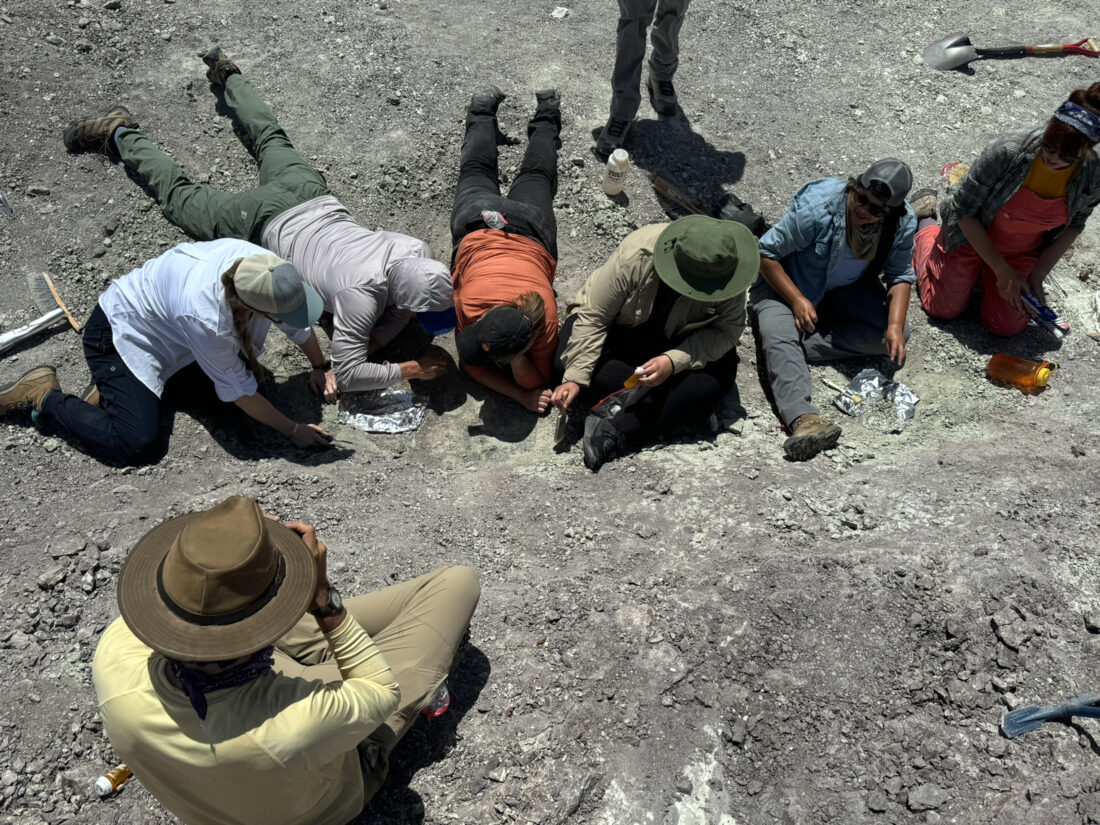
PHOTO PROVIDED Chris Freidhoff and several other DIG Field School participants work on a Phytosaur jaw at the Petrified Forest dig site in Arizona.
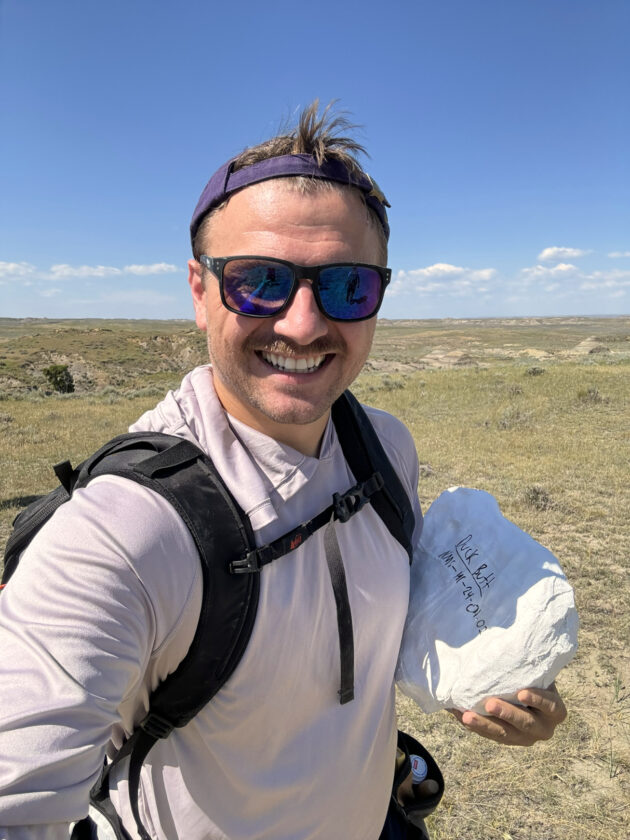
PHOTO PROVIDED Chris Freidhoff takes a selfie with a jacketed part of an Edmontosaurus. This site was called “Duck Butt” because some of it was the hip of a duck-billed dinosaur.
PHOTO PROVIDED Bellefonte Area High School biology teacher, Chris Freidhoff, poses in front of the DIG Program’s most famous Triceratops site — Fly-by-Tric — so named because the rancher who found the specimen spotted horns sticking out of the side of a hill on his property while flying an airplane overhead.
PHOTO PROVIDED Chris Freidhoff and several other DIG Field School participants work on a Phytosaur jaw at the Petrified Forest dig site in Arizona.
PHOTO PROVIDED Chris Freidhoff takes a selfie with a jacketed part of an Edmontosaurus. This site was called “Duck Butt” because some of it was the hip of a duck-billed dinosaur.
Trending
BELLEFONTE -- Getting a glimpse of the oldest dinosaur fossil ever discovered in North America nearly made Bellefonte area teacher Christopher Freidhoff faint. But for him, the real reward lies in transforming his hands-on paleontology experience into lessons that ignite his students' passion for real-world science.
Freidhoff, a biology teacher at Bellefonte Area High School, attended this week's school board meeting to reflect on his participation in the DIG Program, an esteemed professional development initiative designed to immerse educators in the world of paleontology.
As a DIG alumnus and volunteer, Freidhoff joined teachers from across the United States, in Montana and Arizona, to partner with renowned paleontologists for a week-long crash course in paleontology, geology and evolutionary biology.
Created by University of Washington professor Dr. Greg Wilson, the program introduces educators to the field of paleontology, teaching proper excavation techniques and fossil conservation. It emphasizes a deeper understanding of the "process of science" -- how science is conducted -- along with a focus on science communication, aligning lessons with Next Generation Science Standards (NGSS) and providing real-world experiences teachers can bring back to their classrooms.
"Allowing teachers to take part in experiencing how science is done allows them to share these experiences with their students," said Freidhoff. "Teachers gain a better understanding on how data is collected, how data is analyzed and how data is communicated. This process is very important for students to understand so they can connect more with the process of science."
Having participated in the program since 2019, Freidhoff has visited both of its dig sites: the Hell Creek Formation in Montana and, this year, Petrified Forest National Park in Arizona.
"To tell you that it's one in a million chance that I'm still here taking part in this program would be an understatement," he said. "This opportunity is very rare for anyone in the United States to do, let alone myself, coming here out of Bellefonte."
This past June, Freidhoff and the other DIG Field School participants camped under the stars at Petrified Forest National Park alongside "the Tom Bradys of paleontology," Dr. Sterling Nesbitt and Dr. Michele Stock, renowned paleontology professors from Virginia Tech. As a protected area, the park grants exclusive overnight access to DIG Field School participants.
Freidhoff emphasized, "That's how prestigious this program is."
At the start of the week, to learn about geological time, the participants took a trip to the Grand Canyon. There, they explored the Earth's layering and how scientists use this information to determine the age of the planet.
The participants then had the opportunity to explore a fossil collection and make scientific observations about fauna from the early Triassic period -- the same era as the rock from the dig site in the Petrified Forest -- when dinosaurs were just beginning to evolve.
"We learned a lot about the life that existed during the Triassic," he said.
The group was introduced to various species, including phytosaurs (crocodile-like reptiles), early dinosaurs, turtles, fish and other unidentified species. They were also shown what many scientists consider to be the oldest identified dinosaur fossil in North America, dating back over 200 million years.
After completing some introductory lessons, the participants dove head-first into field work, excavating, identifying and cataloging the specimens being found by researchers.
The group initially focused on macrofossils -- remnants of organisms and their activities large enough to be easily visible without a microscope -- before moving on to microfossils later in the week. Freidhoff had the opportunity to create plaster molds of some of these fossils and even carry a phytosaur skull that was several million years old.
"(My) biggest takeaway from this experience is that doing science at this high of a level is achievable. There is a stigma around science that only the smartest of the smartest can do it," said Freidhoff. "By bringing teachers out to this experience, we learn that we can also take part in the research. Showing students that science is a possible career field opens tons of job opportunities."
In the spirit of bringing the learning back to the classroom, the Burke Museum in Seattle sends out "Burke Boxes" to teachers, giving students the chance to become fossil hunters from the comfort of their school.
They send these boxes with sediment from the dig sites and have students find fossils in the actual sediment from these locations.
"We send these bags out to the teachers once they complete the program, and we have them actually work with their students to find fossils and sort through and actually bring this science from the field into the classroom," said Freidhoff.
Previously, the fourth and fifth grade students from Mrs. Geyer and Mrs. Whitman's classes had the chance to learn with Mr. Freidhoff and work with the sediment themselves.
"They actually use that data in their research, which is really cool to show the kids that they're taking part in not only just a learning activity, but the research that these scientists are doing," he added.
Board Member Donna Smith said that Freidhoff is the type of educator that the district needs to celebrate.
"I know that your students think the world of you as a teacher," she said.
Freidhoff says that every year he seems to spend more time with the program, now serving as a volunteer nearly every month of the summer and helping with the application process.
"I plan to continue to help out as much as I can going forward," he said, feeling fortunate to be so involved.