
PA DEP awards millions to help clean up streams, rivers in Chesapeake Bay Watershed
Trending
EXPRESS FILE PHOTO
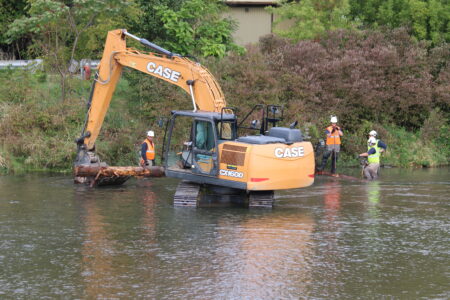
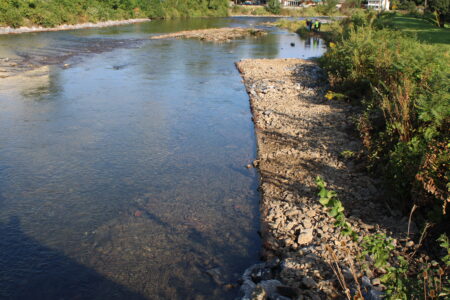
An example of a modified mudsill at the Fishing Creek Rehabilitation Project, is seen fully built and waiting for vegetation in this file photo.
HARRISBURG -- The Pennsylvania Department of Environmental Protection (DEP) has awarded $24 million to reduce pollution and restore local streams, rivers and lakes in the Chesapeake Bay watershed.
DEP awarded grants through the 2025 Countywide Action Plan (CAP) Implementation Grants to county teams across Pennsylvania's share of the Chesapeake Bay Watershed. Locally, these grants included:
-- Clinton County Commissioners: $136,774
-- Centre County Conservation District: $751,261
-- Lycoming County Commissioners: $492,447
"This grant reflects our Commonwealth's steadfast dedication to environmental stewardship, emphasizing the vital importance of maintaining clean rivers and streams within the Chesapeake Bay watershed for the health of our environment and the well-being of our communities," said state Rep. Paul Takac, D-Centre in a release, "These waterways are lifelines that support diverse ecosystems and provide invaluable recreational opportunities. By protecting our waterways, we're supporting clean drinking water, diverse habitats and the recreational opportunities that they provide while helping to ensure a sustainable, healthy ecosystem for future generations."
According to Takac, the grant funding will enable the Centre County Conservation District to support various initiatives aimed at reducing pollution, improving water quality and enhancing the overall health of the Chesapeake Bay watershed. These efforts include streambank stabilization, riparian buffer restoration and the implementation of best management practices to reduce runoff and sedimentation.
"These grants have been used to implement everything from streambank tree plantings to livestock crossing installations. Their work benefits not only their communities, but our Commonwealth and beyond," said DEP Acting Secretary Jessica Shirley. "It's projects that counties are putting on the ground that are changing the conversation from 'talking about fixing the Bay' to 'fixing the Bay,' and I'm excited to see the ingenuity and progress made by this year's grant recipients."'
Pennsylvania has made historic progress in the Chesapeake Bay watershed. Earlier this year, the Shapiro Administration announced that for the first time in the history, the Chesapeake Bay showed steady overall improvement, earning a C+ grade from the University of Maryland's Chesapeake Bay and Watershed Report Card -- the highest grade ever awarded to the overall health of the Bay since the report was created.
The Upper Bay, which is fed by the Susquehanna River from Pennsylvania scored one of the highest grades among any area of the Bay -- and posted a significant improvement from last year -- showing how efforts in agency collaborations, strong partnerships and sustained investments led to progress throughout the Susquehanna River watershed and beyond.
The 2025 CAP Implementation Grant round brought in applications for 205 projects that will be completed in the next 12 to 18 months, resulting in an estimated reduction of nearly 110,000 pounds/year of nitrogen, 42,150 pounds/year of phosphorus and 11.8 million pounds/year of sediment.
Nutrient pollution and eroded sediment can enter streams, rivers and lakes from stormwater runoff and other activities on land, such as using too much fertilizer, plowing and tilling farm fields, stripping away trees and vegetation and expanding concrete and paved surfaces.
The 2025 CAP Implementation Grants include $9.6 million from the state Environmental Stewardship Fund and $14.4 million in EPA funding, including $7.1 million in Infrastructure Investment and Jobs Act (IIJA) funds, to support counties' implementation of their local priority initiatives in their CAPs.
In addition to the funding awarded for implementing projects, DEP also awarded nearly $1.8 million to county teams to support local Clean Water Coordinators who help to strategically implement the CAPs.
Additional EPA funding includes $1.12 million in Local Government Implementation (LGI) funds to be used to implement projects in the Octoraro Watershed in Chester County that will be reported toward the multi-jurisdictional Conowingo Watershed Implementation Plan (WIP) as a supplement to funding for Chester County's CAP.
Along with state and sector efforts, CAPs are a key component of Pennsylvania's Chesapeake Bay Phase 3 WIP to reduce pollution from local streams and rivers. All 34 counties that were asked to voluntarily develop a CAP continue to actively implement their CAPs.
Countywide action teams have implemented a diverse range of projects and initiatives in the watershed since 2021, including not only stream restorations, streambank tree plantings, rain gardens and livestock crossing installations, but also a rapid stream delisting strategy which aims to delist pollution-impaired steams from Pennsylvania's list of agriculturally-impaired waterways by the year 2030.
All or part of 43 counties are in Pennsylvania's share of the Chesapeake Bay Watershed. The area spans half the state and includes over 12,000 miles of polluted streams and rivers.
Exceptional projects funded by previous CAP grants in DEP's Annual Reports and monthly Healthy Waters e-newsletter.
For more information, visit the Pennsylvania Department of Environmental Protection's website, or follow DEP on Facebook, X (formerly Twitter), Instagram, or LinkedIn.