
Federal budget bill would raid fund for cleaning up abandoned coal mines
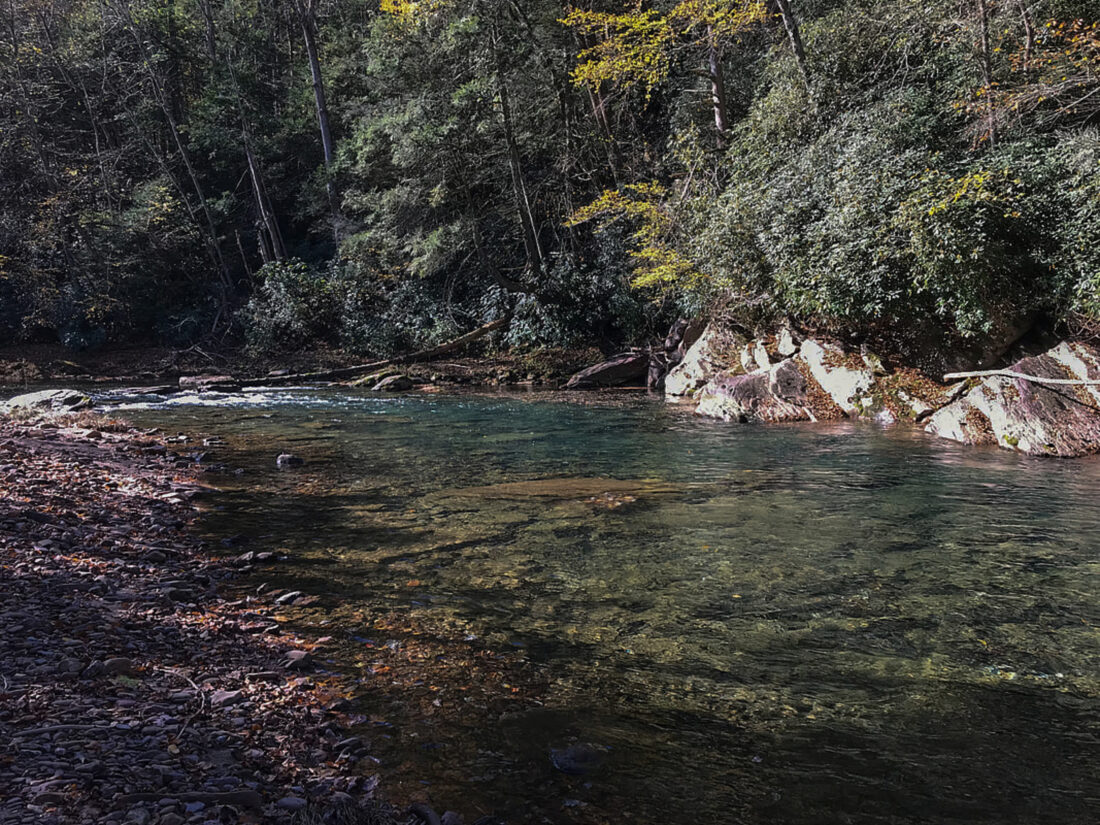
Middle Susquehanna Riverkeeper photo, via Penn Capital-Star Catawissa Creek, a visually beautiful waterway that drains into the Susquehanna River in Pennsylvania, suffers from acid mine drainage that kills aquatic life.
A bill aimed at averting another government shutdown this month would divert $500 million for states and tribal governments to repair landscapes damaged by coal mining.
Pennsylvania, with a centuries-long legacy of resource extraction, stands to be the hardest hit by a loss of grant money if the transfer of funds remains in the final version.
House Resolution 6938 passed by a 397-28 vote in the U.S. House and is now in the U.S. Senate for consideration. The money is from the 2021 Bipartisan Infrastructure Investment and Jobs Act and would be redirected to wildfire management and National Forest Service operations.
It’s one of three bills in a “minibus” appropriations package for the upcoming fiscal year that congressional Democrats lauded for rejecting the Trump administration “draconian” cuts to a variety of federal programs, including the National Park Service and the Forest Service.
Each of Pennsylvania’s 17 U.S. representatives voted in favor of the bill except for Rep. Scott Perry (R-10th District). His office did not respond to a request for comment.
While the commonwealth is one of more than two dozen states and tribes that received grants last year, Eric Dixon, a researcher at the Ohio River Valley Institute, said coal mining regions in Pennsylvania are most likely to feel the impact.
In 2025, the state received about $245 million or nearly 34% of the $725 million the U.S. Department of the Interior distributed. If Pennsylvania receives the same proportion of funds in the 2026 fiscal year budget, it would get between $130 million and $175 million less.
The money is used to address hazards from old open pit and underground mines, Dixon said, such as acid drainage polluting rivers and creeks, spoil piles that mar landscapes, and subsidence from subterranean collapses that can endanger homes and businesses.
“It’s not going to shut the program down, but it is going to be very meaningful for the homeowners who have subsidence or property that’s along a stream that’s not going to get cleaned up now,” he said.
Pennsylvania has the most acres of abandoned and unreclaimed mine lands and most abandoned wells of any state in the nation, according to Pennsylvania Department of Environmental Protection Press Secretary Neil Shader. The bill would also transfer $285 million for an Interior Department fund to stop uncontrolled natural gas emissions from orphan wells.
“Cutting federal funding for these projects will hurt Pennsylvania’s ability to continue its historic work to create jobs and protect public health and safety,” Shader said, noting that IIJA funds paid to cap a majority of the 350 orphan wells under the Shapiro administration. The AML Fund is being used to address 450 abandoned mine sites across the state, he said.
Critics have characterized the transfer as a raid on the trust fund established by the 1977 Surface Mine Reclamation Act, the primary U.S. law regulating the environmental impact of coal mining. It requires mine operators to restore mined land and places a fee on mined coal to fund cleanup work at mines abandoned before the law was passed.
“The Abandoned Mine Land Fund is not a slush fund. It is a promise to communities that built this country and have lived for decades with the environmental damage left behind. Raiding it is unconscionable and an insult to hard-working families across Appalachia,” Patrick McDonnell, president and CEO of the clean energy group PennFuture.
Bobby Hughes executive director of the Eastern PA Coalition for Abandoned Mine Reclamation said Pennsylvania was responsible for about one-third of all coal produced in the United States since it was first mined on an industrial scale in the late 1700s.
As a result, there are 28,000 abandoned mine sites across the commonwealth, 5,500 miles of polluted streams and at least 5,000 sources of acid mine drainage, Hughes said. That’s caused when water inside mines reacts with minerals in the rock, increasing its acidity and causing elements such as iron, aluminum and manganese to leach out.
“These are hazards that we’ve lived with, at least, I’ve lived with them for the last 50 some odd years, growing up here in the Wyoming Valley in the northern anthracite coal fields,” Hughes said.
Hughes’ organization receives AML Fund money to identify and map abandoned mine sites, drainage sources and to restore streams. The loss of those dollars would prevent such work and potentially have a negative impact on efforts to restore, reforest and redevelop them for industry, recreation and tourism.
“To take this kind of money away from … is not really doing any favor to our Appalachian communities that are already still struggling to come back out of the legacy of past minded practices,” Hughes said.
He added the investment in restoring mine land in Pennsylvania has benefits far beyond the commonwealth. The Susquehanna River, which receives mine drainage from northeastern Pennsylvania, is the Chesapeake Bay’s largest tributary. Hughes, who also sits on the board of the Chesapeake Bay Foundation, called it a national treasure.
“What we’re doing up here is cutting down on all kinds of sedimentation loads, coal, silts, metals, organics, phosphorus, nitrogen, that would end up going into the waterways, eventually reaching the bay, if we didn’t do the work we’re doing up here,” he said.
——
Pennsylvania Capital-Star is part of States Newsroom, a network of news bureaus supported by grants and a coalition of donors as a 501c(3) public charity. Pennsylvania Capital-Star maintains editorial independence. Contact Editor Tim Lambert for questions: info@penncapital-star.com. Follow Pennsylvania Capital-Star on Facebook and Twitter.
Local news
Federal budget bill would raid fund for cleaning up abandoned coal mines

Conklin announces run for re-election

‘Joe Dirt’ tribute takes top prize in Pennsylvania Farm Show mullet contest
No injuries reported in S. Renovo vacant property fire

‘Persistence pays off:’ Mackeyville woman wins baking contest at 2026 PA Farm Show
KC accepting applications for open Region IX seat
MILL HALL — Following the resignation of Mary Kramer from the Region IX seat of the Keystone Central School ...