Vilello highlights PA housing plan in Williamsport DCED visit
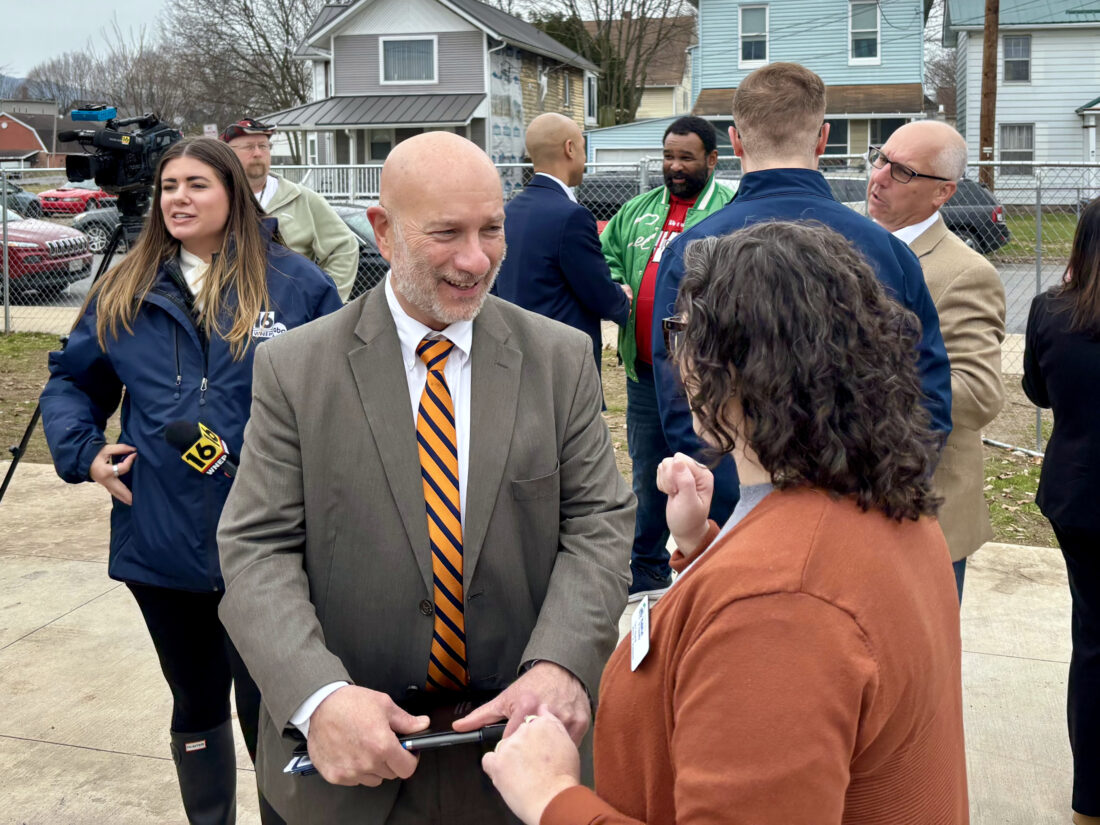
PHOTO PROVIDED Department of Community and Economic Development (DCED) Deputy Secretary for Community Affairs and Development Rick Vilello is pictured while in Williamsport to highlight the Pennsylvania Housing Action Plan.
Williamsport — Pennsylvania Department of Community and Economic Development (DCED) Deputy Secretary for Community Affairs and Development Rick Vilello toured a new, nearly completed housing project in Williamsport to highlight the urgent need to expand housing opportunity and increase affordability for all Pennsylvanians.
According to a press release from DCED, under current projections, Pennsylvania is expected to face a shortage of roughly 185,000 homes by 2035 unless further action is taken. Housing costs continue to rise at a rate faster than wages, with over one million households in Pennsylvania spending more than 30 percent of their income on housing, and more than half of the Commonwealth’s housing stock is over 50 years old — making it increasingly more expensive to maintain.
To address these issues, the release states, “Governor Josh Shapiro created Pennsylvania’s first-ever Housing Action Plan, which will build and preserve more homes, modernize housing regulations and zoning rules and break down barriers preventing people from finding stable housing — all to grow the Commonwealth’s economy and improve Pennsylvanians’ quality of life.”
“Here at DCED, we work with local governments across Pennsylvania to help them tackle challenges and plan for their future — access to quality, affordable housing is a top concern no matter the location,” said Deputy Secretary Vilello. “That’s why Governor Shapiro created Pennsylvania’s Housing Action Plan to align state and local leaders, builders, advocates and communities around a shared vision to build and preserve more homes, stabilize housing outcomes, and expand housing opportunity for all Pennsylvanians. The housing project we toured today is just one great example of what we can accomplish when we work together with a common goal and make targeted investments that improve quality of life and give more people access to opportunity.”
Deputy Secretary Vilello was joined by local and state leaders and other partners to tour a new, nearly completed housing project at 508 5th Avenue in Williamsport.
Formerly a “nuisance bar,” the property was purchased by the Pennsylvania College of Technology in 2015 and leveled. In Oct. 2023, the college donated the property to the Greater Lycoming Habitat for Humanity, with a groundbreaking occurring in Sept. 2024. The Lycoming County Commissioners approved a $100,000 grant for construction and the City of Williamsport permitted the use of an adjacent city-owned property for equipment and materials storage.
The home was designed as part of a Penn College of Technology class assignment and was built by students in the following programs: architecture & sustainable design; building construction; concrete science; electrical; heating, ventilation and air conditioning; and heavy construction equipment technology. The Greater Lycoming Habitat for Humanity construction staff and volunteers also worked on the 1,440-square-foot, ADA accessible home when school was not in session.
“At a time when housing challenges are front and center, this partnership directly addresses the very issues outlined in Governor Shapiro’s Housing Action Plan–expanding access, strengthening communities, and creating pathways to stable, affordable housing,” said Williamsport Mayor Derek Slaughter. “We’re proud to be part of a solution that doesn’t just talk about change, but actively builds it.”
“This home represents much more than a construction project. It shows what’s possible when state leadership, local partners, volunteers and future homeowners work together toward a shared goal,” said Jonah Milliken, Board Chair, Greater Lycoming Habitat for Humanity. “We’re encouraged to see the Governor’s Housing Action Plan bringing renewed attention to the housing affordability challenges facing communities like ours. We’re proud that this project can serve as a local example of how partnerships help turn those goals into real homes for real families.”
“We are excited to be in alignment with the Governor’s Housing Action Plan,” said Ellyn A. Lester, PhD, Assistant Dean for Construction and Architecture, Pennsylvania College of Technology. “This house represents an important step in our own strategic initiatives, which includes building bridges across our design and construction-oriented programs to give our students more real-world experience, while working with the community on important initiatives that help alleviate pressure on our local housing stock.”
“Habitat For Humanity” has been such a wonderful organization for a long time, but society’s current desperation for affordable housing makes their cause even more valuable,” said Mark Mussina, Lycoming County Commissioner.
The Governor’s Housing Action Plan was spearheaded by an executive committee of cabinet officials and senior leaders from DCED, the Pennsylvania Department of Human Services, the Governor’s Office of Policy and Planning, Legislative Affairs, and Budget Office; and the Pennsylvania Housing Finance Agency.
According to the release, the Shapiro Administration has engaged thousands of residents, local leaders, developers and housing advocates from every corner of the Commonwealth for over a year:
— Hosting 18 Regional Roundtables with Pennsylvanians in each of the Commonwealth’s five regions.
— Attending Statewide Housing Conferences to receive feedback from housing developers, property managers and other professional attendees.
— Conducting Statewide Surveys which collected nearly 2,500 survey responses from each of Pennsylvania’s 67 counties.
Shapiro’s Housing Action Plan lays out five core goals
DCED laid out five key goals in their press release about the housing action plan:
— “Build and Preserve Pennsylvania’s Housing Stock. Pennsylvania needs more homes for today and tomorrow, but we must also protect the ones that have long anchored our neighborhoods. By building new houses at a pace that keeps up with our economy and safeguarding the homes we already have, we can ensure that safe, stable and affordable housing is available to residents for generations to come.
— Expand Housing Opportunity for All Pennsylvanians. A dignified, secure home should never be out of reach. By breaking down barriers, expanding homeownership opportunities, and strengthening tenant protections, we can build a Commonwealth where every resident has the security of a safe, stable and attainable home.
— Provide Pathways to Housing Stabilization and Sustainability. A strong system supports those residents who are most vulnerable. By connecting Pennsylvanians to resources that prevent displacement and by supporting households during times of crisis, we can reduce housing insecurity — giving our residents the stability they need to grow and our communities the resiliency they need to thrive.
— Modernize Pennsylvania’s Housing Development Regulation. Outdated rules and unnecessary delays drive up costs and slow down progress. By modernizing regulations, cutting red tape and streamlining development, we can make it easier and more affordable to build homes across the Commonwealth — encouraging investment and helping to ensure that housing is developed where it is needed most.
— Improve coordination and accountability. Pennsylvania’s housing systems work best when they work together. By aligning local and state efforts, sharing data and coordinating across agencies, we can deliver results efficiently and stay accountable to the residents we serve.”
Shapiro’s 2026-27 proposed budget takes the first steps to implement this plan, DCED says, as the budget calls for investments and reforms to expand housing access, protect renters and homeowners and strengthen coordination across state agencies to further strengthen his Housing Action Plan.
According to DCED, Shapiro’s budget proposal includes:
— “Critical Infrastructure Investment Fund to Build More Homes: One of the best ways to lower the cost of housing is to build more homes. The Governor’s budget proposal creates a new $1 billion initiative supported through the issuance of general obligation bonds, with proceeds deposited into the Capital Facilities Fund. This initiative would provide flexible funding for major infrastructure projects across the Commonwealth, including building and preserving more housing, bringing new energy generation onto the grid and upgrading school and municipal facilities.
— Protecting Renters and Promoting Housing Stability: Establishes a statewide cap on rental application fees tied to the actual cost of screening and prohibits fees before a property is viewed; affirms a tenant’s right to terminate a lease due to domestic violence without financial penalty; seals eviction records for individuals who were not actually evicted; and advances fair-chance housing reforms to regulate when and how criminal history may be considered in rental decisions; and invests $1 million in an Investments in Health pilot, leveraging federal funding to total $2.5 million to connect Pennsylvanians experiencing homelessness or housing instability with housing-related supports.
— Supporting Manufactured Homeowners: Limits annual lot rent increases in manufactured home communities and requires advance notice of increases, protecting residents — many of whom own their homes but rent the land beneath them — from sudden and unaffordable cost spikes.
— Addressing Tangled Titles and Preserving Generational Wealth: Authorizes transfer-on-death deeds for primary residences, providing a streamlined way for homeowners to pass property to heirs, avoid costly probate, access home repair programs and reduce blight in communities across the Commonwealth.
— Strengthening Housing Coordination and Accountability: Creates a Deputy Secretary for Housing at DCED to coordinate housing policy and oversee implementation of the Housing Action Plan.
— Modernizing Local Planning and Permitting: Updates the Municipalities Planning Code to reduce regulatory barriers to residential development, improve permitting processes and incentivize county and regional planning that reflects the diverse housing needs of Pennsylvania’s communities.”
For more information about the Housing Action Plan or the Department of Community and Economic Development, visit the agency’s website, Facebook, X and LinkedIn.
Local news

Enhanced role for ICE at US airports as shutdown frustrates travel
For airline travelers, the shutdown answer is simple: Pay TSA officers
ATLANTA (AP) — Regardless of politics or destination, American air travelers were unified by one desire Saturday: ...

Emergency dog intake at Centre County PAWS after humane investigation
Vilello highlights PA housing plan in Williamsport DCED visit
Trump’s changing course on Strait of Hormuz strategy raises questions about US war preparation
WEST PALM BEACH, Fla. (AP) — At war with Iran, President Donald Trump is cycling through an increasingly ...