KCSD faces $3.5 million deficit as it shapes 2026-2027 budget
MILL HALL — Facing a potential deficit of about $3.5 million, the Keystone Central School District Board of Directors will have to decide in May if it will consider a tax increase to close the gap for the 2026-2027 budget.
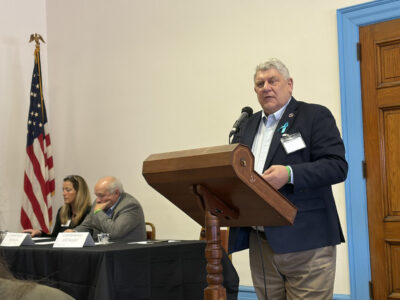
The board was presented with an updated presentation regarding the ongoing work on the proposed budget by Business Manager Joni MacIntyre during its work session on Thursday night.
Among the topics MacIntyre touched on during the presentation was a change in the reduction of expenses.
MacIntyre said the amount for staff attrition and resignations decreased after the board did not approve a recommendation from the administration to furlough staff.
“Our reduction of expenses have reduced and that is due to the disapproval of the furlough recommendations. I had to add those budget figures back in,” she said. The change saw the total reduction of expenses dip from $4,973,522 to $3,908,927.
MacIntyre told the board that staff is continuing to look for other ways to reduce the budget going into 2026-2027.
“We have, as of April 4, stopped all 2025-2026 spending unless it is absolutely necessary,” she said.
MacIntyre said the administration has also talked about targeting recruitment for out-of-district students and charters and collapsing class sizes depending on enrollment.
With the change in the reductions, she added this increased the potential deficit for the year to $3,591,964, which would need to be made up through the district’s unassigned fund balance within its General Fund.
To provide a look into how the district is spending its tax dollars, MacIntyre also presented a chart to showcase where that money is going.
According to her presentation, the district is expected to bring in $25,469,198 in property tax revenue for the 2026-2027 school year.
About 45 percent of this, the presentation notes, will go towards the local PSERS share and another 55 percent will go to charter, cyber and alternative education tuition.
All said and done, MacIntyre noted the district actually comes out owing $177,764 out of its General Fund.
“With just two mandatory expenses we have overspent with just real estate,” she said.
If the board chooses to forego a tax increase for the coming year, MacIntyre said the district would pull from its unassigned fund balance. However, this could create issues down the line.
She told the board the unassigned fund balance currently sits at $4,003,720 which is 4.3 percent of the general fund budget. She noted the state recommends an unassigned fund balance be at about 7 to 8 percent to be considered healthy.
If the $3.5 million deficit stands and funding is pulled from the unassigned balance, the district would go into the 2026-2027 school year with a balance of $441,966, or 0.5 percent.
Even with the potential of a maximum tax increase of 3.5 percent, the district would still need to make up a deficit of $2,582,322 based on the current numbers.
The lower general fund balance also affects the district’s ability to collect interest, she added.
Following MacIntyre’s presentation, Board President Elisabeth Lynch asked each board member to share with the business manager where they stood regarding the potential for a tax increase.
“So Joni has some sort of idea,” she said. “Not that we’re making a decision. This is a snapshot for Joni.”
Board Vice President John Miller and members Shelby Bohartz and Roger Kshir all said they would stick to a zero percent increase for the next year.
“I’ve said it before, instead of putting the burden out on the tax payers, this district n eeds to get rid of some bloat. We need to get cutting,” Miller said.
Other board members expressed hesitancy on picking a possible percentage.
Jason Smith, who was recently appointed by the Clinton County Court of Common Pleas to the board’s Region IV seat, asked MacIntyre for her thoughts on what the future could hold for the district if the board chooses not to increase taxes.
“If there is no tax increase at all, I would believe we would go into the fiscal year with some kind of deficit,” she said.
She added if that were to continue and the unassigned fund balance were to get to the 1 to 2 percent margin which was predicted in her figures, she said it could spell trouble.
“I don’t know how you make it into the next year,” she said.
With this in mind, Smith said he’d ideally prefer no tax increase, but said he would consider a lower percentage, at most, 1.75 percent.
“The ultimate goal is to keep things running,” he said.
Scaff said he wanted to say zero, but due to seeing the work MacIntyre and the business office was putting in — and continues to put into — reducing future expenses, he couldn’t give an answer. He noted, however, if it came to it he would at most accept a 0.88 percent increase.
“I don’t want to make (MacIntyre’s) job any harder. I know how hard she’s been working and the finance committee and others have been doing some phenomenal things,” he said.
Board member Manny Rodriguez was in line with Scaff, saying a 0.88 would be the maximum he’d consider.
Board members Rich Wykoff and Dr. Bill Baldino both said they wouldn’t be able to give a solid figure.
“I don’t think in all honesty we could do nothing. I don’t think zero works,” Wykoff said. He noted if the business office can continue to do the work it’s been and reduce expenses, that could create opportunities in the future.
“I don’t see the solution being immediate,” he said.
Baldino said the board has to deal with what it is presented with, and that means a potential tax increase.
“If we were to raise taxes to the maximum that is legally allowed, we still have almost a $2.6 million deficit,” he said. “You’re kidding yourself if you think we can get along without raising taxes.”
“We’re teetering on the edge of when Harrisburg is going to come in here and start telling us what we’re going to do. That is not an ideal situation,” he continued.
Baldino noted he’s voted against tax increases in the past and said the district needed to be more serious in cutting its spending than it has over the years.
“We need to lean on that more. I think this year we may be right up against the wall and we need to do it,” he said, concluding that he couldn’t pick a specific percentage.
Lynch said she was inclined to go with no increase, based on work that could be done to reduce expenses. That includes having a new staffing study done and potentially working with Intermediate Unit 10 to try and bring students back to the district.
“I am hopeful that those two things may occur. With that said, that’s why I’m saying zero,” she said. “But if those two things don’t come through, you know, I don’t know what to say. That’s where I am at right now.”
Scaff emphasized the current board hadn’t created the issues it was facing now.
“It’s going to take all of us to work as a team to try and get through it. Like Bill said, this is not going to be easy. We’re going to have to curb a lot of things,” he said.
Local news
Pa. primary election 2026: Your complete guide to Republican Stacy Garrity in the race for governor
Zoning hearing for possible psychiatric facility to continue in May
DUNNSTOWN — The continuation of a zoning hearing for a proposed adult psychiatric residential treatment facility ...
Who is on the ballot in Clinton County?
LOCK HAVEN — With roughly a month and a half until Primary Election, local Democrat and Republican voters can ...
‘A True Hero’: Jersey Shore teen honored by local officials for saving grandfather’s life
KCSD faces $3.5 million deficit as it shapes 2026-2027 budget
MILL HALL — Facing a potential deficit of about $3.5 million, the Keystone Central School District Board of ...