
Rhythm of the Hive: Local beekeeper, pastor talks about connections between bees and ministry
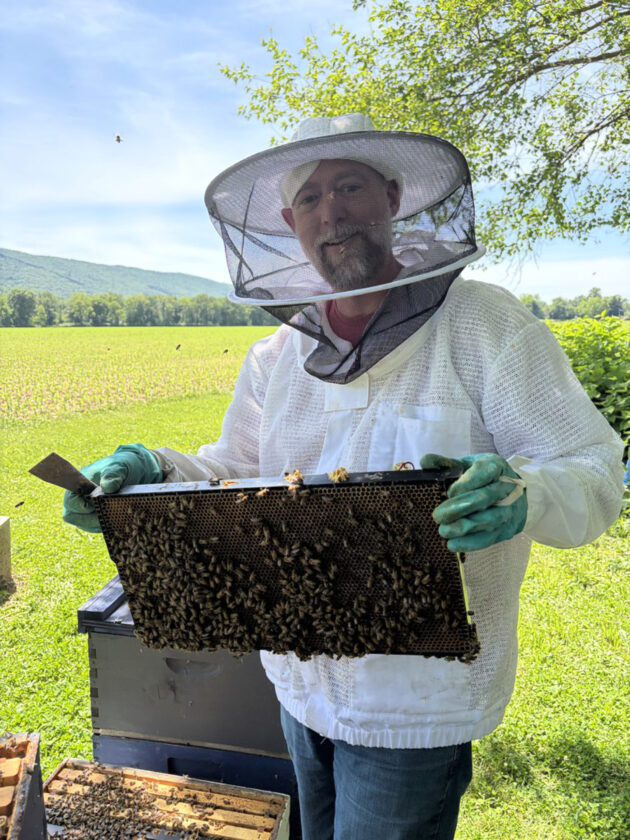
HUNTER SMITH/THE EXPRESS Pastor Josh Grimes, CEO and chief beekeeper of Susquehanna Honey Bee Co., holds a frame from one of his hives while wearing his bee suit at his Island Road apiary outside Lock Haven.
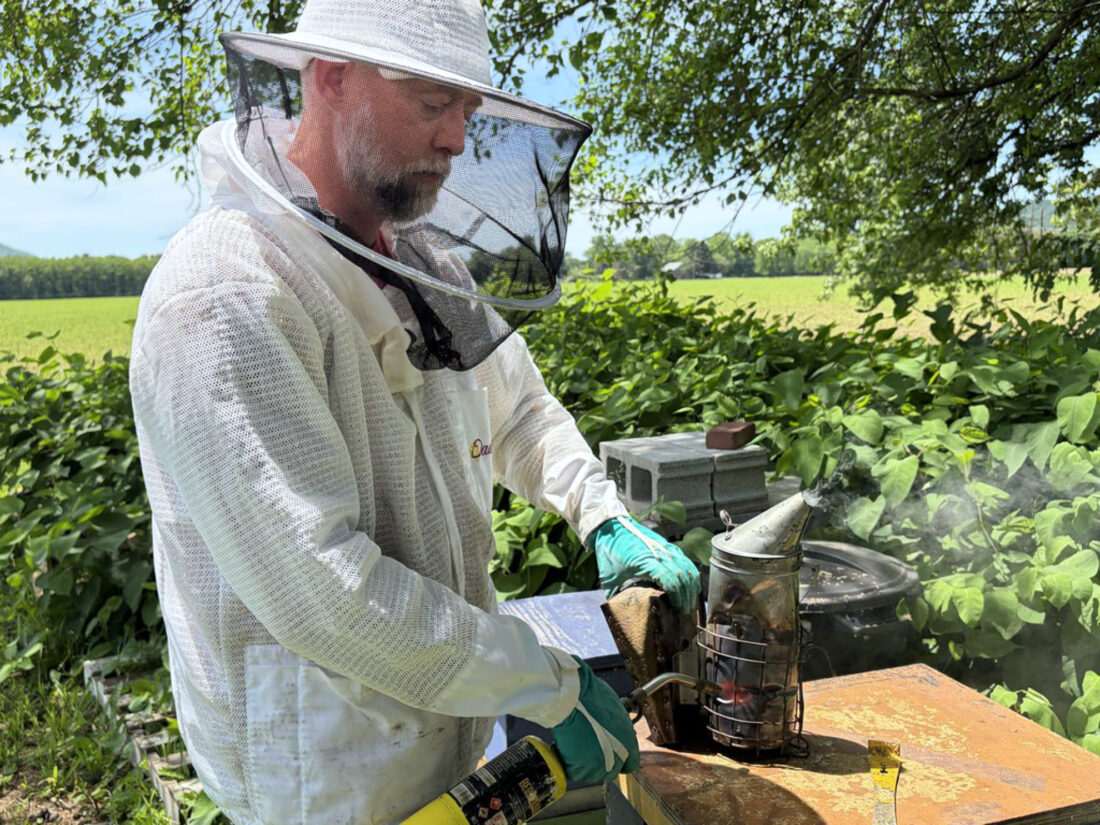
HUNTER SMITH/THE EXPRESS Pastor Josh Grimes, CEO and chief beekeeper of Susquehanna Honey Bee Co., prepares a smoker filled with cedar chips to calm his bees before opening their hives.
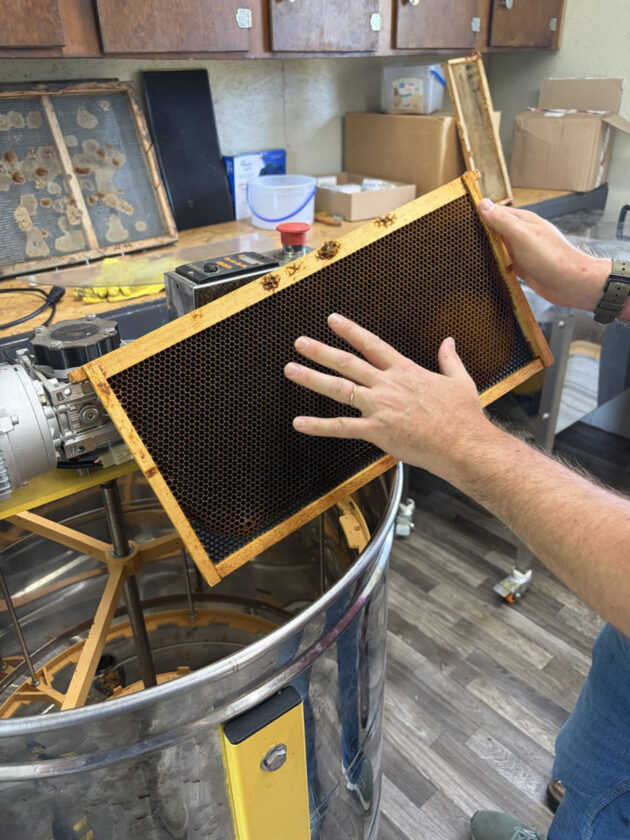
HUNTER SMITH/THE EXPRESS Grimes explains how honey is extracted from hive frames using the centrifuge pictured at bottom left.
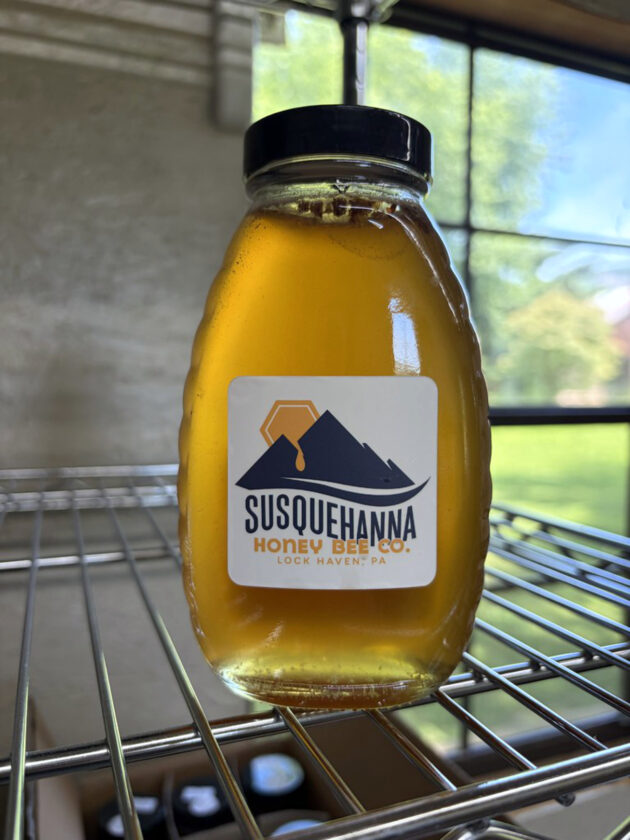
HUNTER SMITH/THE EXPRESS A bottle of honey produced by Susquehanna Honey Bee Co.
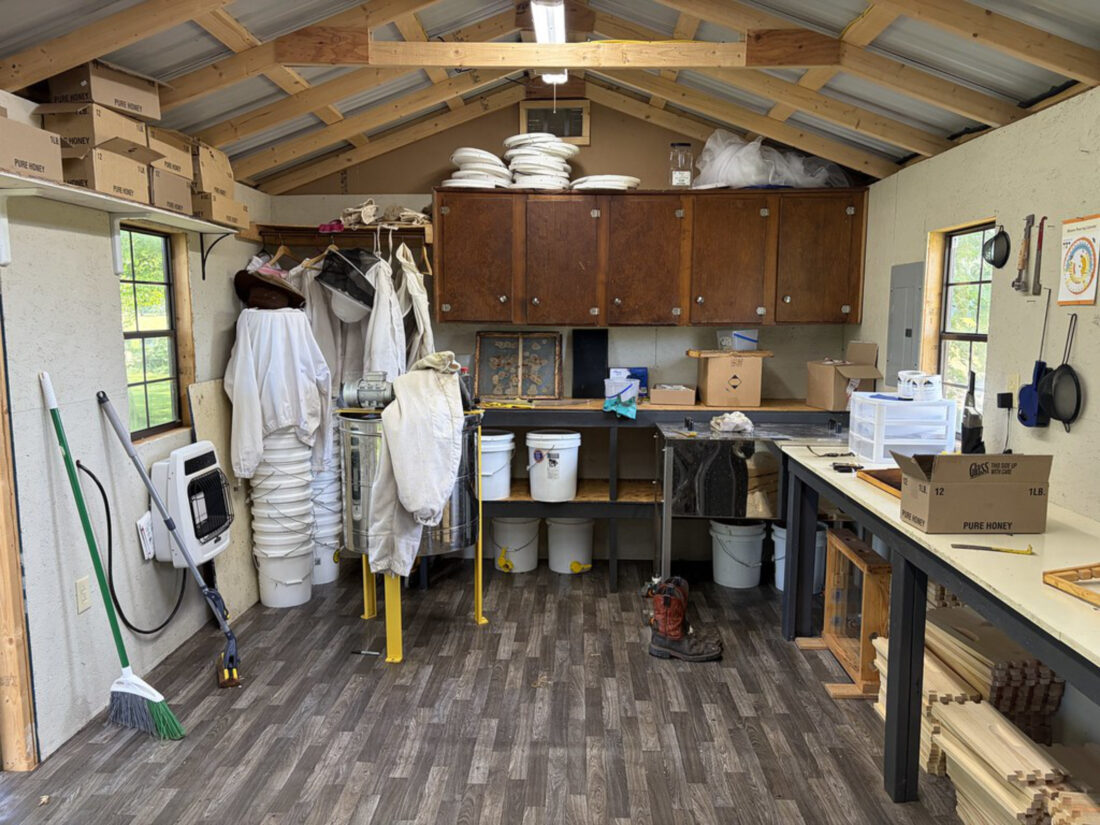
HUNTER SMITH/THE EXPRESS The interior of Grimes’ supply shed, where he stores beekeeping equipment and prepares honey for sale.
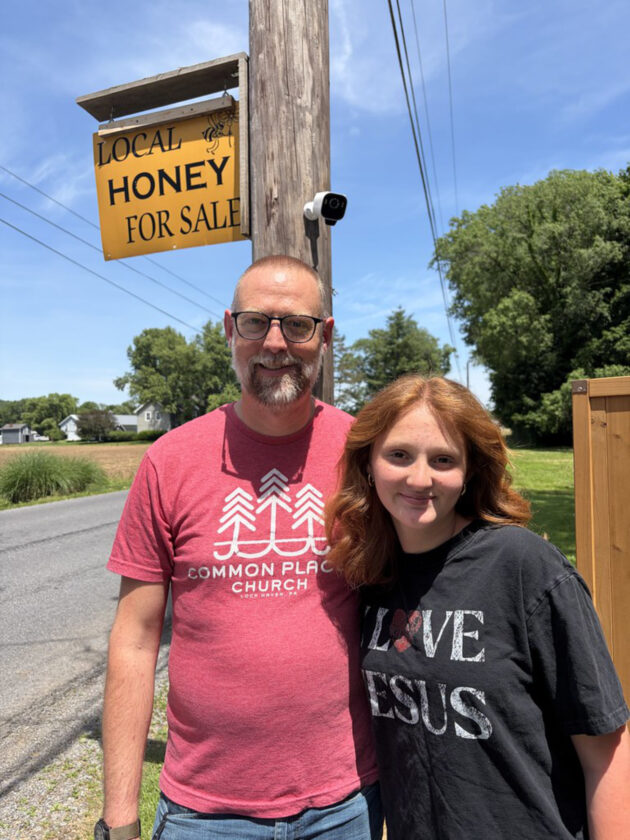
HUNTER SMITH/THE EXPRESS Josh Grimes, CEO and chief beekeeper of Susquehanna Honey Bee Co., and his daughter, Piper, who helps with the business, stand beside the Honey Cabinet, where they sell honey and other bee-derived products, at 226 Island Road in Lock Haven.
HUNTER SMITH/THE EXPRESS
HUNTER SMITH/THE EXPRESS
HUNTER SMITH/THE EXPRESS Pastor Josh Grimes, CEO and chief beekeeper of Susquehanna Honey Bee Co., holds a frame from one of his hives while wearing his bee suit at his Island Road apiary outside Lock Haven.
HUNTER SMITH/THE EXPRESS Pastor Josh Grimes, CEO and chief beekeeper of Susquehanna Honey Bee Co., prepares a smoker filled with cedar chips to calm his bees before opening their hives.
HUNTER SMITH/THE EXPRESS Grimes explains how honey is extracted from hive frames using the centrifuge pictured at bottom left.
HUNTER SMITH/THE EXPRESS A bottle of honey produced by Susquehanna Honey Bee Co.
HUNTER SMITH/THE EXPRESS The interior of Grimes’ supply shed, where he stores beekeeping equipment and prepares honey for sale.
HUNTER SMITH/THE EXPRESS Josh Grimes, CEO and chief beekeeper of Susquehanna Honey Bee Co., and his daughter, Piper, who helps with the business, stand beside the Honey Cabinet, where they sell honey and other bee-derived products, at 226 Island Road in Lock Haven.
HUNTER SMITH/THE EXPRESS
HUNTER SMITH/THE EXPRESS
Trending
LOCK HAVEN -- Beekeepers have a choice, Pastor Josh Grimes said.
They can wear gloves and protect themselves from stings, or work barehanded and handle their bees with a gentler touch.
When he works without gloves, Grimes said, he is less likely to accidentally harm the bees, but it also leaves him more exposed.
"Vulnerability," he explained, "creates the possibility for pain, but it makes you a better beekeeper."
The same lesson, he said, applies to ministry.
"Humans, if we want to be gentler, more approachable, kind people, it opens us up to vulnerability, to being hurt," he said. "Or, we can choose to be self protective and have a tough skin. While we may not hurt ourselves, we may end up hurting other people."
Grimes, the founder and senior pastor of Common Places Church, is also CEO and chief beekeeper of Susquehanna Honey Bee Co., a family-owned business in Lock Haven that sells local raw, unfiltered honey. He currently manages 32 hives across two apiaries -- an estimated 1.6 million to 2.2 million bees during peak season.
In the rhythm of tending his hives, Grimes said he's found patterns that resemble the work of shepherding a congregation.
"There are plenty of times that I have worked with bees and found analogies to working with humans," he said.
One of the clearest parallels is the need for discernment. Like leadership, tending a hive requires more than a single posture.
"If I'm collecting honey, I'm not going to do that with my bare hands. I will get terrorized," he said.
Likewise, church leadership, he said, sometimes requires distance, structure and personal protection in order to keep showing up.
Grimes began keeping bees in 2021, after a friend from church stepped away from the hobby and offered him equipment.
"I started with two hives, and I just had a great time with it," Grimes said. "It was so much fun."
From the beginning, honey production came quickly. In his first year, he produced about five gallons from just two hives.
As the number of hives increased, so did his yield.
"The next year, of course, I had more bees, and I ended up with more honey, so I just started selling it," he said. "By the time I got to 70 hives, I realized that it wasn't a hobby. It had become something else at that point."
Bees make honey on the earth's schedule. Locally, the "honey flow" -- the period when major nectar sources are in bloom and conditions allow bees to forage in abundance -- is currently well underway.
"It follows the natural cycle of the plants," Grimes said. "In this area, May and June are going to be your best months for getting honey."
The region will soon enter the summer dearth, a mid-to-late summer period when nectar sources are scarce and bees rely on stored honey.
"And then in our area, you'll also get a fall bloom all along the river," Grimes said.
That seasonal rhythm also affects the honey itself. Spring honey tends to be lighter and more floral, while fall honey is darker and more pungent.
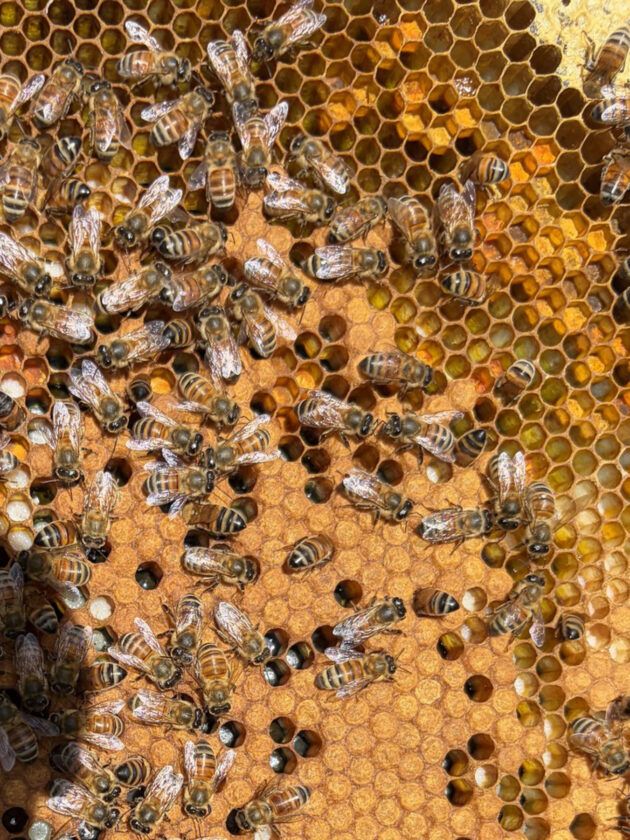
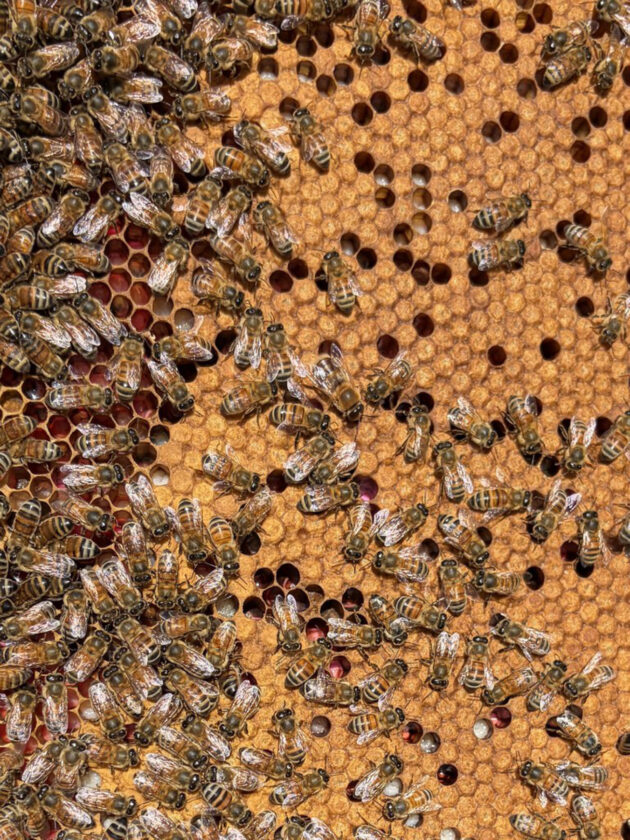
Inside the apiary's hives, bees build wax comb on wooden frames to store that honey. Inside each cell of the comb, they raise brood, store pollen or fill space with nectar that will eventually become honey.
During peak honey flow, Grimes said, those frames can be filled and ready for extraction in as little as a week.
When it's time to harvest, he uses a smoker fueled with cedar chips to calm the hive, releasing smoke that disrupts the bees' communication. He typically works during the middle of the day, when the most active worker bees are out foraging and the more passive nurse bees remain inside.
"Some people say it's because bees communicate with pheromones," Grimes said. "It disrupts their ability to communicate with each other."
Another theory is that the smoke mimics a forest fire, he said. "The bees get distracted, and they start to prepare to leave their hive, so they gorge themselves on honey for the journey ahead."
Once the bees are calmed, the honey-filled frames are removed and brought into his workspace. The wax caps are sliced away with a heated knife, and the frames are spun in a centrifuge to extract the honey, which is then filtered, bottled and sold through the family's self-serve Honey Cabinet on the Island Road.
Their Honey Cabinet is open 24/7 and accepts cash and Venmo. Inside, customers can buy honey from Grimes' own hives as well as other beekeepers, along with beeswax products, soap, stickers and locally printed shirts.
As demand has grown, he has expanded beyond his own production to carry raw honey from apiaries around the country, as well as products like soap from Squonk Soap in Lock Haven, which uses beeswax from his hives.
"It pays for itself, and it produces a little income, too," he said.
Susquehanna Honey Bee Co. honey is also sold at Nittany Valley Holistic Health in Lamar and Revived & Company in Clearfield.
Grimes also raises queen bees, which allows him to expand his operation by starting new hives.
"When a bee hive either loses its queen or when a beehive has so many bees in it that they are getting uncomfortable, the way God has made bees work is that they split," he said.
Half the bees leave with the old queen to form a new colony, while the remaining bees raise a replacement. Beekeepers can intervene in that process, selecting larvae and feeding them a nutrient-rich diet of royal jelly inside specially constructed queen cells. The first queen to emerge will kill the others still developing.
"As long as I get to them before the first queen emerges, I'm able to raise those queens individually and put them into new hives," Grimes said.
That kind of intervention, he said, reflects a broader reality of beekeeping: every decision is a balance between growth and production.
"It's a bit of a strategic game of trying to give your bees the right resources that they need while also managing them for honey," he said. "A beekeeper sometimes has to choose. Either you can try to keep your bee population really high -- and if you can do that without them swarming, you can have a great honey harvest -- or you can try to make more hives."
That balance, he said, also defines how he measures success in the church.
"At least in the modern church, often, the thing we count as most important is how many people come to our church," Grimes said. "We think it's all about the honey. How much can we pack in this one hive?"
Common Places Church has intentionally taken a different approach.
Rather than focusing on building one large congregation, the church meets in several smaller locations, including Avenue 209 Coffee House and the Piper Aviation Museum in Lock Haven and the West End Christian Community Center in Williamsport.
"We've opted not to go big, but instead to create multiple hives," Grimes said.
A healthy church and a healthy beehive, he said, are both built on the same principle: individuals thrive when they are working toward something larger than themselves -- the common good.
For those interested in keeping their own colonies, Grimes pointed to the Lycoming County Beekeepers Association and online resources as starting points. He also noted equipment suppliers such as Dadant in Williamsport, which provides tools and beginner kits for new beekeepers.
"Learning from other beekeepers is the best way to do it," he said.
Follow Susquehanna Honey Bee Co. on Facebook and Instagram for updates. More information about Common Places Church is available at www.commonplacechurch.com. Worship gatherings are held on Sunday mornings at 9:30 a.m. at Avenue 209 and 10 a.m. at both the Aviation Museum and West End Christian Community Center locations, according to their website