
Successful Samoyeds: Local pups take home five awards at dog show
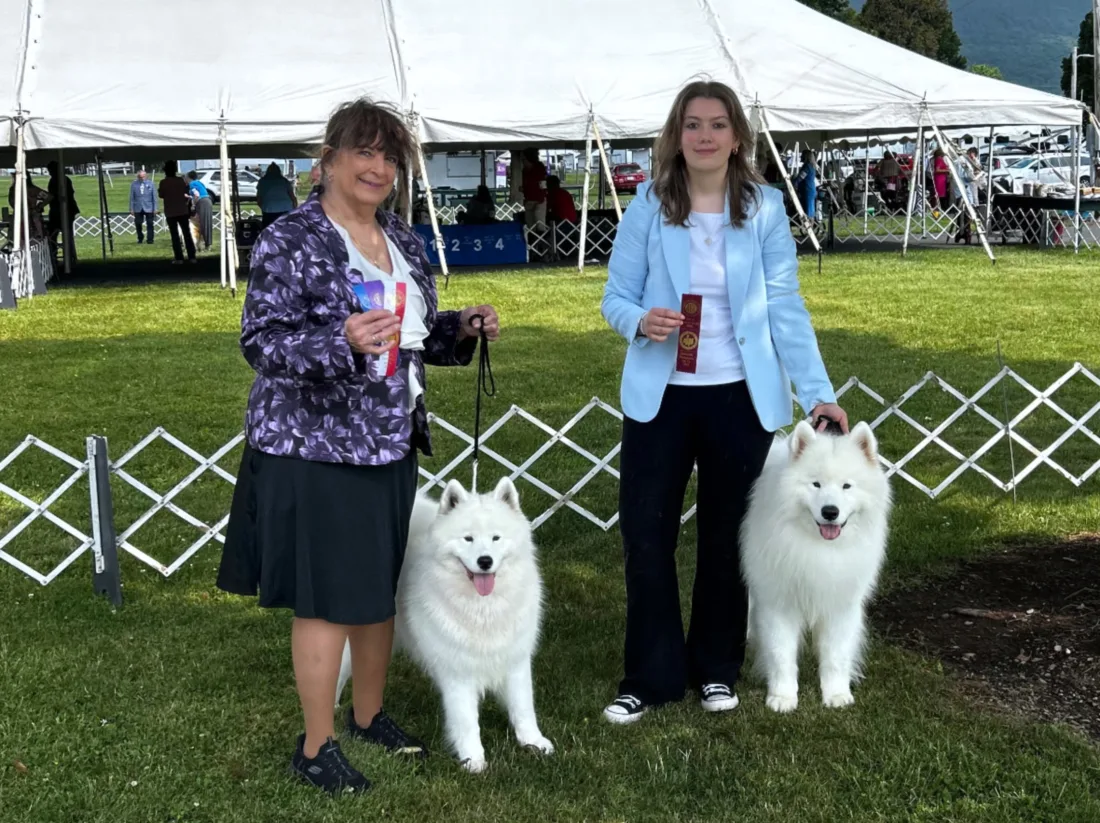
PHOTO PROVIDED Cynthia Harkey, left, and Hannah Youells are pictured with awards — and, of course, gorgeous samoyeds — following a dog show.
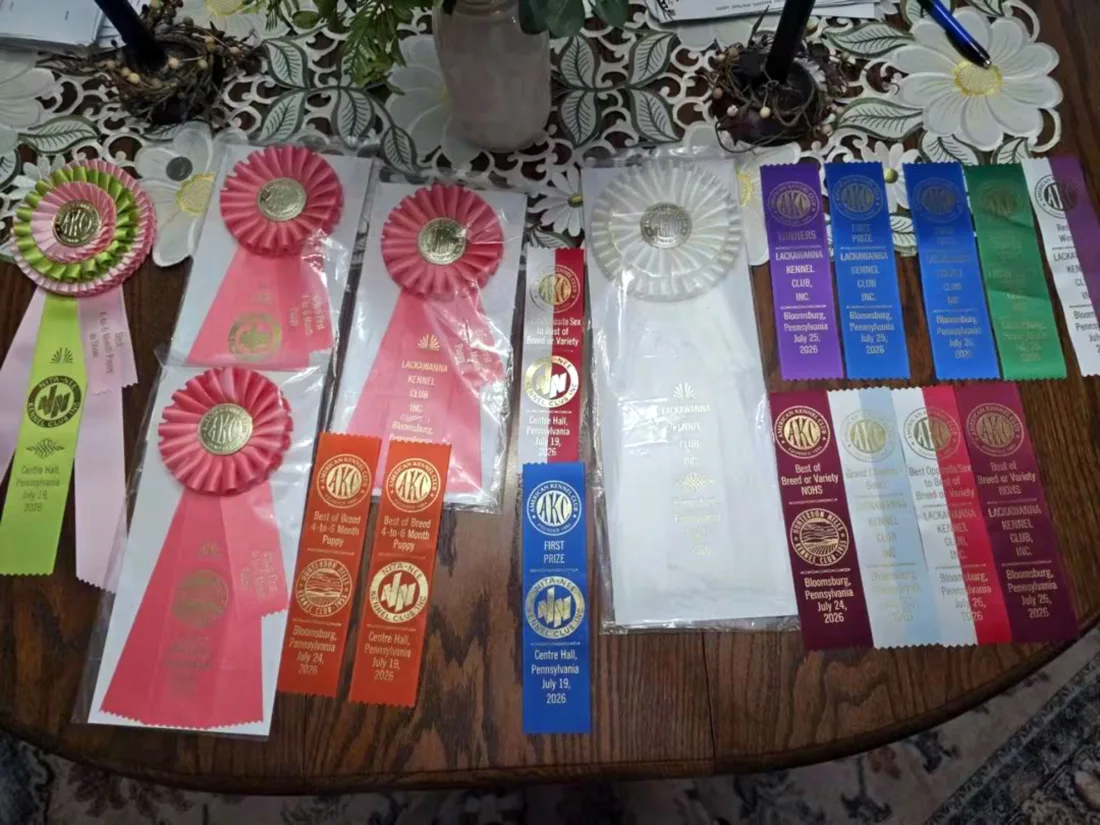
PHOTO PROVIDED Winning ribbons from Bloomsburg and Centre Hall are pictured.
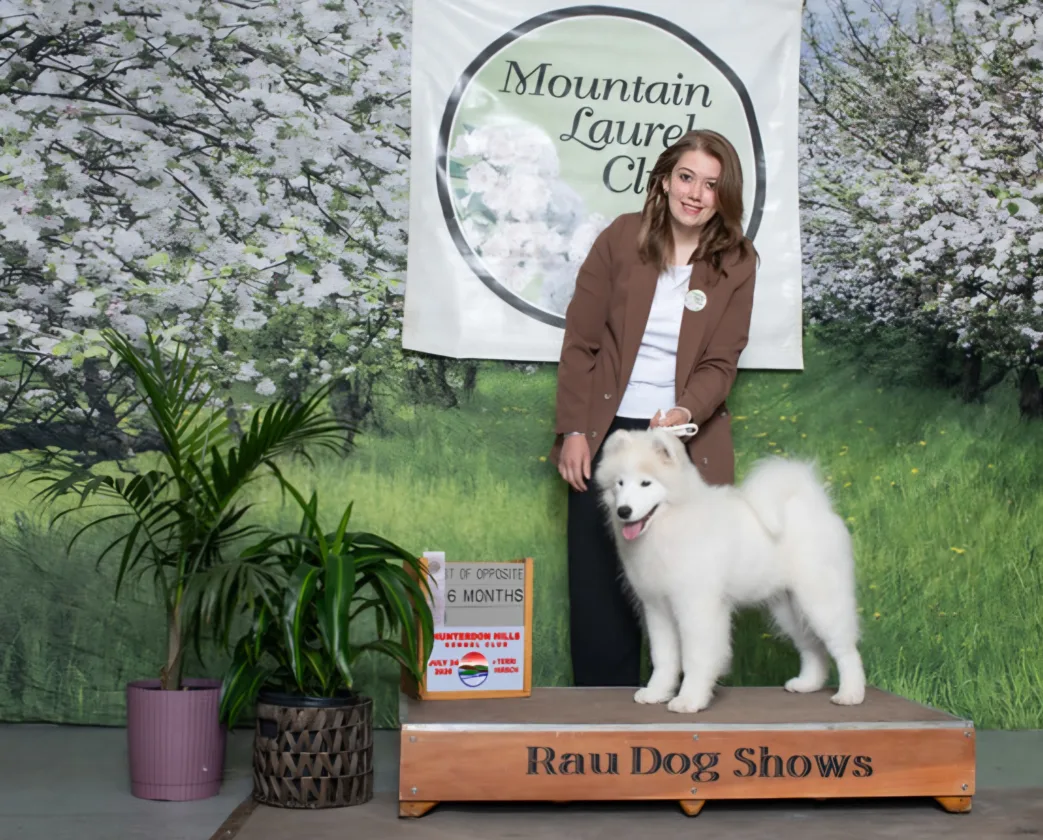
PHOTO PROVIDED Hannah Youells and Cowboy are photgoraphed at Bloomsburg Mountain Laurel Cluster.
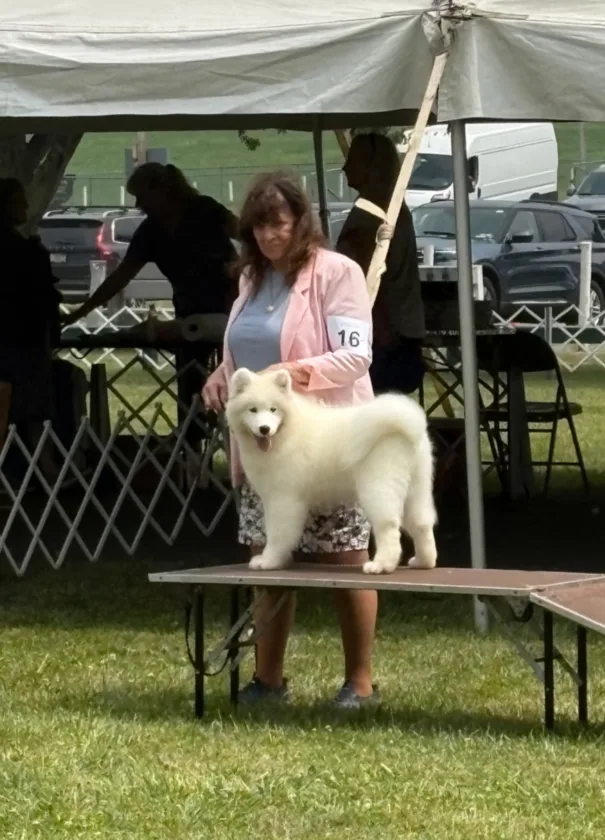
PHOTO PROVIDED Cynthia Harkey and Emmy are pictured at Centre Hall.
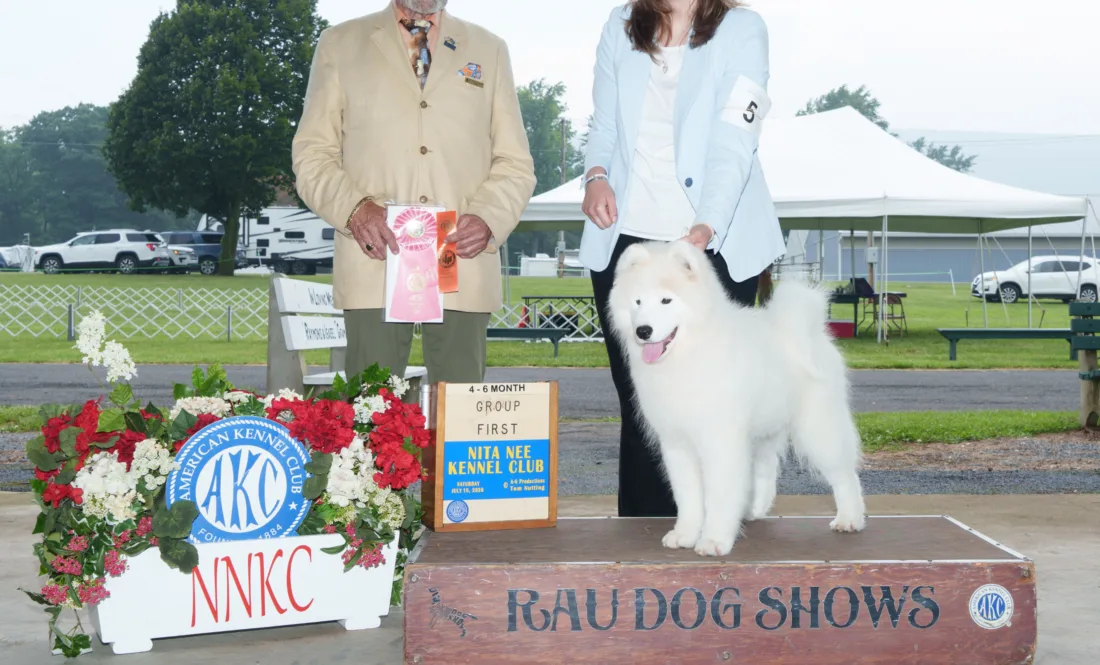
PHOTO PROVIDED Hannah Youells and Cowboy are pictured in their first show and first place finish.
PHOTO PROVIDED Cynthia Harkey, left, and Hannah Youells are pictured with awards — and, of course, gorgeous samoyeds — following a dog show.
PHOTO PROVIDED Winning ribbons from Bloomsburg and Centre Hall are pictured.
PHOTO PROVIDED Hannah Youells and Cowboy are photgoraphed at Bloomsburg Mountain Laurel Cluster.
PHOTO PROVIDED Cynthia Harkey and Emmy are pictured at Centre Hall.
PHOTO PROVIDED Hannah Youells and Cowboy are pictured in their first show and first place finish.
Trending
AVIS -- For Cynthia Harkey, owner of Cindy's Smiling Sammy, winning in the show ring is the result of years of careful breeding, training and learning the fine details of the Samoyed breed.
For Hannah Youells, it is the beginning of what could become a lifelong hobby.
The two recently attended the Nittany Kennel Club dog show together with several of Harkey's Samoyeds, including two puppies that have quickly established themselves as competitors to watch.
The results were hard to miss: the puppies won at each of the five shows they entered.
"They won every show," Harkey said.
The two young Samoyeds, Emmy and Cowboy, repeatedly traded Best of Breed and Best of Opposite Sex honors, with one also earning Best Puppy in the 4-to-6-month puppy class.
For Youells, who co-owns Cowboy, one of the puppies with Harkey, the success has been especially remarkable because she has only recently entered the world of competitive dog showing.
"This is only my second time," Youells said.
Harkey, on the other hand, has been showing Samoyeds for approximately 33 years and breeding them for 35.
The experience has allowed her to teach Youells the intricacies of presenting a dog in the ring while also giving the younger handler the opportunity to experience the excitement of competition firsthand.
"It's a lot to learn," Youells said. "It's a lot of fun."
Five shows, five wins
The recent run of success began with two puppies from the same litter.
At five consecutive shows, the puppies consistently came away with major honors.
One would win Best of Breed while the other earned Best of Opposite Sex, and the roles would switch at another show.
"They won either one, one day, and the other one got the opposite, or vice versa," Harkey said. "Every day."
The puppies were competing in the 4-to-6-month class, making their early success even more impressive to their handlers.
At only about 20 weeks old, one of the puppies was already earning recognition against other young Samoyeds.
One of the highlights came when Bella earned a three-point major toward her championship.
The points awarded at a dog show are determined in part by how many dogs a competitor defeats. A major is a significant step toward completing a championship.
Harkey explained that Bella earned three points because of the number of dogs she defeated and because of her subsequent placement over a champion.
Another of Harkey's Samoyeds, Quincy, is already an accomplished competitor and is just four points away from earning his grand champion title.
"He's actually four points away from his grand champion title," Harkey said.
More than a pretty face
While Samoyeds are known for their striking white coats and famously smiling expressions, success in the conformation ring requires much more than appearance.
Judges evaluate dogs against the established breed standard, examining their overall structure, proportions, movement, eyes, tail, ears, muscle and bone.
Handlers must also know how to move the dog properly around the ring and present its strengths to the judge.
"You've got to know what you're looking for in terms of structure and movement," Youells said.
Harkey has spent decades learning those details.
"When they judge your dog, they judge on eyes, length of tail, structure of the body, length of leg to body on this breed," she explained.
For Samoyeds, Harkey said the ideal proportion is approximately 55% leg and 45% body.
The judges also examine the dog's ear set and thickness.
Because Samoyeds are an Arctic breed, those physical characteristics are connected to their historical purpose.
"They have to have enough hair and thickness of ear to be able to weather the tundra," Harkey said.
The breed was historically used for reindeer herding and sledding and remains a working breed with a long history alongside humans.
Preparing for the ring
Success at a dog show does not happen when the handler steps into the ring.
It begins at home.
Harkey said showing requires extensive grooming and training, as well as an understanding of canine structure and movement.
The dogs must become comfortable being handled and examined by judges.
As part of the judging process, the dogs are examined physically, including their bite, elbows, shoulders, muscle and bone structure.
The handler must then guide the dog around the ring in a way that allows the judge to evaluate its movement.
For Youells, those details have been part of the learning curve.
"I really wanted to show," she said. "She (Harkey) is co-owning a puppy with me and then teaching me how to do it."
The arrangement allows Youells to participate in shows while Harkey remains available to handle the dog when necessary.
If Youells cannot attend a show, Harkey can step into the ring with the co-owned dog.
A lifetime in the ring
Harkey's experience stretches far beyond the recent winning streak.
She attends roughly 20 shows a year, with many of them taking place in Pennsylvania. She also travels to shows in other states and has competed at the prestigious Westminster Kennel Club Dog Show in New York City.
Although she has not won at Westminster, she considers participating there an accomplishment in itself.
"Usually the big professional handlers are what wins there," Harkey said. "But it's a really cool experience to be there either way."
Over more than three decades, Harkey has bred and shown numerous champions and grand champions.
Nearly all of the dogs currently in her program are champions or grand champions, with the exception of her youngest dogs.
She does not keep a puppy from every litter. Instead, she evaluates each puppy's structure, health, temperament and potential before deciding whether it belongs in her breeding and showing program.
"I breed for confirmation, and for showing, and for structure, and for health, and for companionship, and overall temperament," Harkey said.
That careful approach has produced a bloodline she can trace through generations.
Harkey keeps pedigrees on her dogs and performs DNA and health testing. The records allow her to track multiple generations of the Samoyeds in her program.
Showing for the love of the dogs
Despite the ribbons, championships and years of breeding, Harkey said the competitive side of the hobby is not about the money.
"It's just a really expensive hobby," she joked.
The reward is the relationship between handler and dog.
"It really connects you with your dog," Youells said. "They enjoy it. They have a really good time. It is a real experience to be able to show."
That relationship is evident in the preparation that goes into every competition -- from grooming the dogs' distinctive coats to training them to stand, move and respond to their handlers.
And now, after 33 years of showing, Harkey is watching Youells begin that same journey.
For a veteran breeder and a first-time handler, the recent five-show winning streak has provided plenty of reasons to look forward to the next competition.
The ribbons may be the visible reward, but for both women, the real attraction is stepping into the ring with a dog they have worked with, trained and grown alongside.
And if the puppies' first five shows are any indication, Smiling Sammy's may have some more ribbons coming home.