
Seeing dead leaves in the trees? Signs of cicadas linger long after bugs move on
Trending
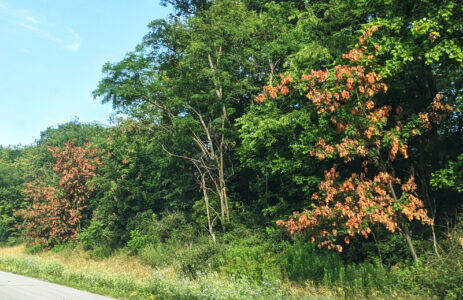
LOCK HAVEN -- Have you been noticing that many deciduous trees throughout the area are covered in browned, dying leaves and branches?
The culprit for most of these trees is the lasting effects of the 17-year emergence of Brood XIV cicadas earlier this year.
Thankfully, as Illinois Extension noted in an article by Ryan Pankau -- a horticulture educator with a focus on forestry -- on how to identify cicada damage on trees, most healthy trees will recover easily from this damage. It might be a bit scary right now -- but many affected trees throughout the region have dealt with this before, and will again.
The damage is caused by slits sliced into small twigs and branches, especially at the tips of limbs, which the cicadas cut open to deposit their eggs into.
This damage can cause significant stress to younger trees, as diseases enter the tree's system through them.
According to Illinois Extension, "Cicada damage will be limited to branch tips, and leaves will be entirely dead and brown. Disease stress tends to be more widespread across the canopy and more evenly distributed, with leaves that are often only partially impacted and some green tissue still present."
In general, no action is needed for larger trees. The affected branches will eventually fall off from wind, snow, or ice, and the tree will continue on as it has. On smaller trees, it can be beneficial to prune back the dying twig to make a healthier cut that is less likely to invite disease -- and, of course, removing the brown patches can make for a more aesthetically pleasing tree.
However, in most cases, this is just another part of nature doing what nature does: we are just fortunate enough to be here to witness it.
The next opportunity to see this phenomenon will be in 2030, with the emergence of Brood II -- another 17-year brood which last graced our skies in 2013.