‘Victoria’s Law’ aims to stop the sale of animals raised in puppy mills in Pa.
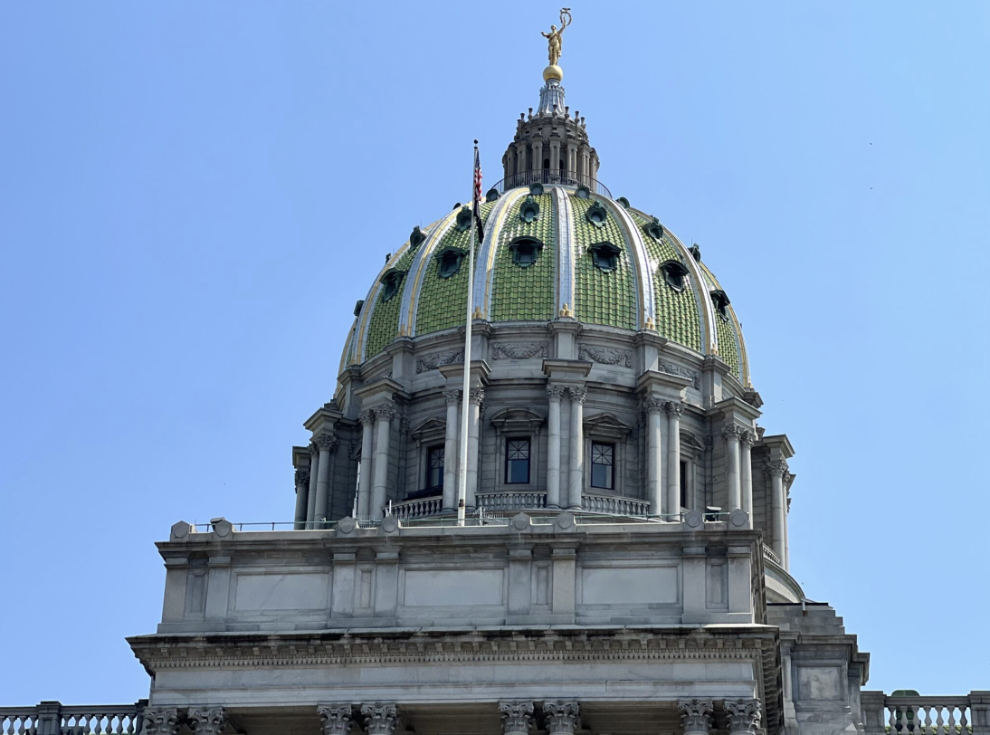
The state Capitol building in Harrisburg. (Tim Lambert/Pennsylvania Capital-Star)
Under a new proposal in the state House, pet stores in Pennsylvania would be barred from selling animals from large-scale breeders, described by critics as puppy mills, where dogs kept for breeding often endure years of inhumane treatment.
Supporters say Victoria’s Law, named for a German shepherd rescued from a Lancaster County kennel after a decade of breeding, would help consumers by requiring more transparency and higher standards in the pet trade, while ensuring a better quality of life for countless animal companions in the commonwealth.
“House Bill 1816 can reduce the risk of heartbreak and financial strain for Pennsylvania families, improve the overall safety and health of pets entering homes and empower consumers to make more informed, ethical choices,” said Grace Kelly Herbert, founder of Finding Shelter Animal Rescue in Norristown.
Critics said the measure doesn’t do enough to tackle the root of the problem with unregulated breeders and that the same goals could be achieved by strengthening and enforcing Pennsylvania’s dog law. Dr. Andrea Honigmann, president of the Pennsylvania Veterinary Medical Association, said the bill would do nothing to increase penalties for unlicensed kennels, meaning it would not affect those already operating outside of the law.
“We are in the trenches, observing firsthand, sometimes the appalling and irresponsible keeping, kenneling and breeding of pets,” Honigmann said. “The reality is that these woeful animals can and do come from anywhere, including private breeders and rescues, and not solely from pet shops.”
The bill, which was the subject of a hearing before the House Consumer Protection, Technology and Utilities Committee, is sponsored by state Rep. Jeanne McNeill (D-Lehigh). McNeill said she has pursued reform in the state Department of Agriculture’s regulation of commercial pet breeding for more than eight years. Sen. James Malone (D-Lancaster) sponsored companion legislation this month.
“Pennsylvania, and Lancaster specifically, have a puppy mill problem,” Malone said in a statement. “These facilities are forcing dogs to breed under inhumane conditions. They’re overwhelming the shelter system and producing dogs that often have genetic and other health issues, which are costly and devastating for owners.”
Malone said bills would reduce market demand for such inhumane operations and encourage retail pet dealers to source animals from reputable breeders and shelters.
The proposal would bar the issuance or renewal of pet-shop-kennel licenses under the Dog Law after this year. A similar provision would apply to licenses to sell cats and rabbits.
After hearing testimony, Rep. Carl Metzgar (R-Somerset), the committee’s ranking Republican, noted the issue of dog breeding has historically been addressed by the Agriculture Committee and recommended re-referring the bill to that committee for consideration. The Consumer Protection, Technology and Utilities Committee took no votes Tuesday.
Pennsylvania has for years been ranked among the states with the most dog breeders and sellers cited by regulators, according to Humane World for Animals, formerly the Humane Society of the United States. The group publishes a “Horrible Hundred” report on the most egregious violations each year.
In the 16 years since founding her shelter, Herbert said she’s had hundreds of positive and negative experiences helping families find pets. She’s also rescued around 10,000 dogs and puppies, including some from pet stores and breeders that died hours or days after they were rescued.
On the table as she testified Tuesday were two small boxes containing the ashes of puppies Bert and Tyler, who died despite receiving nearly $10,000 in veterinary care after they were rescued from a pet shop. While Pennsylvania law protects consumers who purchase animals with hereditary or congenital defects, it allows only 10 days after a purchase for a new pet owner to receive a diagnosis.
“All I could think and imagine was if this was an unsuspecting family with children whose new puppy died,” Herbert said. “I have the heart and soul of a seasoned rescuer, and let me tell you, this was not easy … Had those people taken them home, they would have had a tragedy in their family.”
PA News
‘Victoria’s Law’ aims to stop the sale of animals raised in puppy mills in Pa.

Experts call for guardrails in Pennsylvania for AI in counseling, health care

Philadelphia sues over removal of slavery exhibit at Independence National Historical Park
PennDOT restricts commercial vehicles on interstates, other high traffic roadways ahead of weekend winter storm
HARRISBURG – Ahead of heavy snow expected across Pennsylvania starting Saturday night, the Pennsylvania ...

The Education Department is opening fewer sexual violence investigations as Trump dismantles it