
Trending
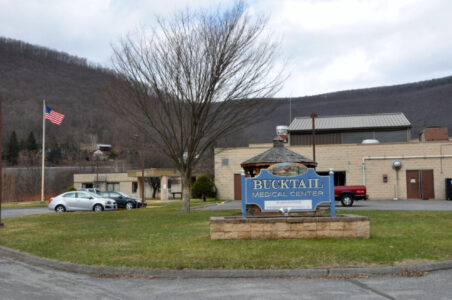
RENOVO -- Bucktail Medical Center is sounding the alarm regarding its financial standings.
CEO Tim Reeves sent out a multi-page letter to area government officials requesting their assistance in ensuring the facility remains in Western Clinton County.
"Over the past several months, I've talked about the tenuous financial situation at Bucktail Medical Center," Reeves wrote.
Reeves said he's noted to many officials that he keeps payroll in reserve in each account including: general checking, payroll, capital campaign and donation accounts.
"I also said that when I needed to use this last reserve of cash, I would 'sound the alarm,'" he said. "Today I am sounding the alarm."
According to Reeves’ letter, "payroll every two weeks is about $135,000. Taxes and other payroll expenses are $58,000, totaling $193,000."
He noted this cost doesn't cover expenses for physicians who are 1099 employees, utilities, insurance, mortgage, medications or supplies.
"I do project additional revenue of $26,285.99," he said.
Reeves said the facility is losing about $150,000 per month for the last year. His reasoning: "Insurers don't want to pay."
"One insurer, knowing that our cost for a specific type of inpatient care we provide is about $6,700 per day, is willing to pay only $1,500 per day for that service," he said. "We will have to stop providing that specific service for patients with that insurance."
He said another insurer wants to be reimbursed $81,000 for a service the center provided, and was paid for, "claiming they did not get the proper documentation."
Reeves said the medical center has resubmitted the documentation.
"Medicare claims to reimburse us, as a Critical Access Hospital (CAH), at 101 percent of our cost for inpatient and some other services, except, Medicare Sequestration cuts Medicare payments 2 percent annually, soon to be 3 percent," Reeves said. "And our Medicaid Cost Report was cut nearly in half by $300,000. These do not cover our costs."
Reeves went into depth on how the medical center is working to better its services and the facility for the communities it serves.
"We've created a master plan... and we have started several projects to move us toward implementing this plan," he said.
Some of the plan includes:
Re-established our ambulance service.
-- Entered into a two-year lease agreement with MXR imaging for a CT Scanner, due in September. We strongly believe these two strategies are imperative for increased patient volumes, which is the key to viability for the facility.
-- Secured a $1,000,000 USDA Emergency Rural Healthcare grant for several necessary projects, including major infrastructure work needed to progress with the Master Plan.
o Replace leaking roof over the hospital wing of the facility and replace leaking roof over the services wing of the facility. This project has been awarded and is scheduled to begin early September.
o Repair four hospital rooms that have been unusable due to water damage from the roof leak. Necessary demolition is complete. New drywall, ceilings, and floors will be completed when the roof has been replaced.
o Replace leaking water piping in the domestic hot water system. This project has been awarded and is scheduled to begin in the middle of September.
o Replace two 43-year-old gas boilers that provide heat for much of the facility. This project has been awarded and is scheduled to start once the boilers are onsite. The lead time for the boilers could be many months.
o Purchase a new ambulance. We took delivery of the ambulance earlier this month and are working to get it equipped, supplied, and inspected for service.
o Purchase a portable X-Ray. The unit is here and in service.
o Purchase a new cardiac monitor. The unit is here and operational.
-- The facility has also taken measures to improve the financial performance of the facility.
o Directly hired physicians, rather than using an agency, to control costs and so we can collect both the facility fee and the professional fee while charging more reasonable rates to our patients.
o Nearly eliminated agency nurses and other allied health professionals and improved employee retention by bringing all wages in the facility to a competitive level.
o Brought a second provider into our community clinic to increase patient volumes and to provide more options for our patients.
o Increased our charge master - what we charge for each service - however, insurance companies will only recognize increases of 1 percent to 2 percent per year regardless of your actual cost.
o Renegotiating reimbursement contracts with insurers.
"The list goes on," Reeves said. "The point is, we've taken an active approach to understand how best to meet the medical needs of the communities we serve and to increase patient volumes. We've taken action to reduce costs and to increase revenue."
Reeves said the medical center has also talked about Employee Retention Credit (ERC). He noted, thanks to Senator Bob Casey and Congressman GT Thompson's offices, this has been paid for five out of seven quarters.
As a Critical Access Hospital (CAH), Reeves said they are provided some additional support, however it's limited "to cost-based payment for patients with Original Medicare and some Medicaid programs."
"It does not apply to Medicare Advantage plans, which are becoming increasingly popular because they are less expensive for the patient," he said.
Reeves said of the 16 CAH's in the state, only three aren't owned by a health system.
"These three hospitals do not have the financial resources of a health system, nor can we direct specific services to specific facilities to get the best reimbursements," he said.
A high population of seniors sees the hospital dealing with Medicare and Medicare patients as well.
"We serve a very high population of Medicare and Medicaid patients -- the second highest in the state -- with reimbursements that do not cover our costs, as discussed above," he said.
With the challenges it’s facing, Reeves said he's concerned for Bucktail Medical Center's future.
"We have planned and started implementation of a long term plan for the facility: I am now quite concerned we will not have the opportunity to implement this plan. I'm concerned about meeting the next payroll. I'm concerned vendors will stop providing products and services. I'm concerned that the people living in Western Clinton County will lose not only medical care close to home, but also their largest employer. I'm concerned that residents in long term care will have less contact with family when placed in facilities farther away," he said.
Reeves also noted concern about losing the only hospital in Clinton County -- mentioning the shift of UPMC Lock Haven from an inpatient facility to an emergency medical facility.
He also posed a multitude of questions on how the medical center may remain in place including how to remain fair to current employees and staff, its newly acquired ambulance service, the building repairs and more.
"I find that we are at a critical point. Is there a need for a hospital in the most remote town in the state? Absolutely. But is there a true desire for the hospital to remain in Renovo? If yes, we urgently need help now, and a plan for going forward," he said.
Reeves noted the medical center will hold a meeting, open to the public, on Sept. 5 at 7 p.m. in the Chapman Township Fire Hall, 79 Park Ave., North Bend.