
Mother-of-pearl is out of style, but still classic
The art of adding mother-of-pearl inlay to lacquerware has been practiced in Korea for more than a thousand years. The Korean term for it is Najeonchilgi, from the words najeon, meaning mother-of-pearl, and chilgi, lacquer. It is a lengthy process that requires skill and patience the artisan builds through years of training.
The artisan must prepare the mother-of-pearl shells, cut them into delicate slices or intricate shapes, lacquer to the object to be decorated, apply the shells, add more coats of lacquer and finally sand and polish the object. Even today, artisans prefer using traditional materials and methods that have been handed down over generations.
Najeonchilgi has lost popularity since the 1970s, but some artisans continue to practice it and make works of art or luxury goods on commission. Older pieces are sought as antiques. Auction house Nye & Company described this Najeonchilgi chest as an Emperor chest and sold it for $2,048.
——
Q: We had a 4 1/2-inch vase in our home when I was a child (I am 82). It is light blue with raised figures in white. There is a woman with two angels and a lot of scrolls and flowers. It looks like Wedgwood to me, but there are no marks on the bottom except the numbers “3200.” I would be thrilled to know if it is really Wedgwood and how old it is.
A: Your vase sounds like jasperware, a type of nonporous pottery with a solid background and raised decorations in a contrasting color. It was invented by Wedgwood and is still one of their most famous products, but it became so popular that it has been made by many other factories around the world. Wedgwood pieces are almost always marked. If your vase is not marked, it sounds like it is probably a copy made by a giftware company in the 20th century. The number on the bottom may be a mold number or inventory number. For more information about Wedgwood jasperware and to help identify pieces, check your library for books like “Wedgwood Jasper Ware: A Shape Book and Collectors Guide” by Michael Herman or “Wedgwood Jasper” by Robin Reilly.
——
Q: I have a “document” that starts out with “Address delivered at the dedication at the Cemetery at Gettysburg,” signed by Abraham Lincoln, November 19, 1863. I have had it since 1966, given to me and my mother, who said she got it from her late father, my grandfather James Elmer West. He was born in 1863 in Lincoln, Nebraska, and lived most of his simple life as a baker and one of the first mail carriers by horse and buggy in his small community in northern Minnesota. I am guessing that it is a copy of some sort but would like to have someone look at it. It is on parchment paper (or what appears to be) and I have always had it in a glass frame, as did my mother. Any suggestions as to where we could take it?
A: Your document is a copy of the Gettysburg Address, one of the most famous speeches in American history. Reporters transcribed the speech onsite and printed it in newspapers the following day. The first copy with Lincoln’s signature was printed in the book “Autograph Leaves of Our Country’s Authors” in 1864 to sell at a fundraising event for the Union war effort. This version, often called the “Bliss copy” after the book’s publisher, Alexander Bliss, is considered the authorized version of Lincoln’s speech. It has been reprinted and copied many times since then. Antique copies can be worth hundreds of dollars. To authenticate yours, you may want to consult an antiquarian book dealer in your area. You could find one through The Antiquarian Booksellers’ Association of America (abaa.org). An autograph dealer may be able to help. The Professional Autograph Dealers Association (padaweb org) can help you find one. If you decide to get your document formally appraised (a word of warning — appraisals are expensive), you can find qualified appraisers through the American Society of Appraisers (appraisers.org), the International Society of Appraisers (isa-appraisers.org) or the Appraisers Association of America (appraisersassociation.org).
——
TIP: Mother-of-pearl for inlays can be bought at a guitar factory. You may have to sand the back to make the inlay thinner.
——
Terry Kovel and Kim Kovel answer readers’ questions sent to the column. Send a letter with one question describing the size, material (glass, pottery) and what you know about the item. Include only two pictures, the object and a closeup of any marks or damage. Be sure your name and return address are included. By sending a question, you give full permission for use in any Kovel product. Names, addresses or email addresses will not be published. We do not guarantee the return of photographs, but if a stamped envelope is included, we will try. Questions that are answered will appear in Kovels Publications. Write to Kovels, (Name of this newspaper), King Features Syndicate, 628 Virginia Dr., Orlando, FL 32803 or email us at collectorsgallery@kovels.com.
Columns
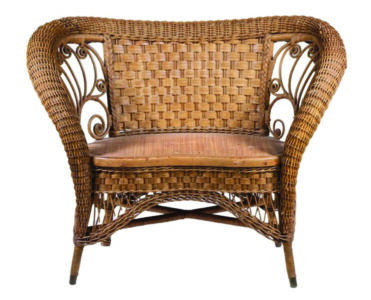
Antique wicker furniture can hold substantial value
How to keep loving America — even when it hurts
The approach of July 4 is making my heart hurt. Love of this country is deep-dyed in my soul, but pondering how or ...
Dear Annie: Embracing carpe diem
Dear Annie: I have been with “Garrett” for over four years now. I have a son who is 9, and we share a daughter, ...
‘Childhood Interrupted’: What enslaved children teach us about America today
An elementary school in Louisville, Kentucky, sits on land that was once the Farmington hemp plantation. That fact ...
Dear Annie: Career crises and workplace anxieties
Dear Annie: I’m feeling torn between pursuing my dream and maintaining my financial stability. I have a job as an ...
Why fatherhood matters more than ever before
Long gone are the days of the distant dad. According to some estimates, the average time dads spend caring for ...