
Trending
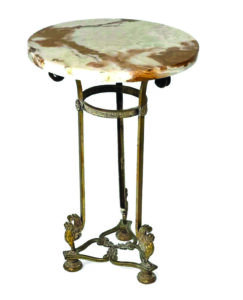
If you enjoy trivia, picking up obscure historical references is part of the fun of antiques. Most people probably haven't heard of Gueridon, a character from 17th-century French farces. But if you're a fan of antique furniture, you may be familiar with gueridon tables. Maybe you have one. A gueridon is a small table with a round top, originally designed to hold a candlestick. They may have long, thin legs or a single column support.
As their name suggests, they were first made in France in the 17th century. Early designs often had supports shaped like human figures, which may be why they were named after a popular character. Both functional and decorative, they remained in fashion for centuries and were crafted in the prevailing styles of their time.
Most antique gueridons are in French furniture styles, such as the ornate Louis XV and XVI, or the stately Empire styles of the 19th century. A French gueridon that sold for $246 at Neue Auctions was made in the early 20th century but evokes earlier styles. It features a marbled stone top (although this one is made of onyx, not marble), a popular design element in Louis XV-style furniture. Its brass base features a Greek key band and rosette medallions, and its three legs terminate in supports shaped like the mythical griffin, referencing ancient Greek and Egyptian art that also appear in Empire style.
------
Q: My father was an antique dealer for over 60 years. He passed at 93, and I have a huge storage unit of his items, from paintings to glassware to collectibles. I want to sell everything. How do I find someone reputable who would be willing to help me? I've had some people I've been referred to who were not interested in helping me, just themselves.
A: Selling a deceased family member's collection is always a daunting task, and your situation is especially so! With a collection like your father's, the best option for you may be to contact an auction gallery that handles estate sales. If your father was a well-known dealer, a gallery located in the area, or at least the state, where he lived and worked, may get the best results. If the collection is large enough, it might take multiple auctions to sell.
Ask the auctioneer or gallery for references, look up reviews of their services, and check resources like the Better Business Bureau. Make sure they have fire and theft insurance and check their credit rating. Before agreeing to do business with any auction, ensure you understand the terms of the sale, including any fees (such as shipping and storage), the payment schedule, what will be done with unsold merchandise, and how the sale will be advertised. A lawyer can help you with the financial and legal aspects of the sale but will not be any help in selling the items. Be sure you get a copy of any contracts or paperwork.
------
Q: I have a bottle of Crown Royal aged over 55 years. I would like to know how much it is worth.
A: Crown Royal whisky was created by Samuel Bronfman, owner of the Canadian distiller Seagram's, in 1939, in honor of King George VI and Queen Elizabeth's visit to Canada. It was the first time a reigning monarch had visited the country.
The whisky was made available to the international market in 1964. It is the world's top-selling Canadian whisky brand and one of the most popular whisky brands in the U.S., which means bottles like yours are relatively common. 4/5-quart bottles over 50 years old with the seal intact can sell for anywhere from about $150 to $300. The highest prices usually go to bottles from the 1950s.
If you still have the purple felt bag or any original packaging, the value will be higher. If you are planning to sell your bottle, be sure you check your area's liquor laws first. If the bottle has been stored in a cool, dry place and not exposed to sunlight, the whisky should still be drinkable.