
Legacy: Late Jesse Jackson visited Lock Haven to support striking paper co. employees
-
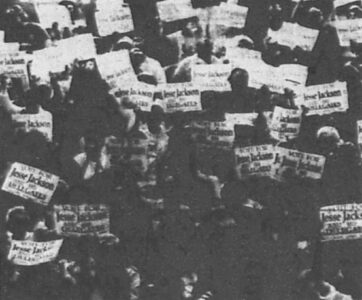
- EXPRESS FILE PHOTO This picture from microfilm shows supporters of Jesse Jackson when he came to Lock Haven in 1988, following his support of the International Paper Co. strikers in Lock Haven in 1987.
-
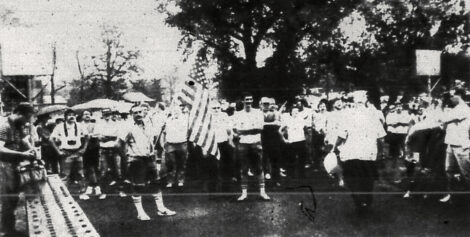
- EXPRESS FILE PHOTO This image from microfilm shows strikers at the Lock Haven branch of the International Paper Co. in 1987. Jackson visited the strikers in support.
-
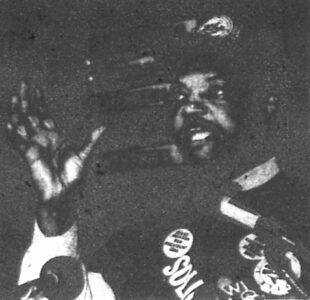
- EXPRESS FILE PHOTO This image from microfilm shows Jesse Jackson while speaking in Lock Haven during one of his repeated visits the area in 1987 and 1988.
-
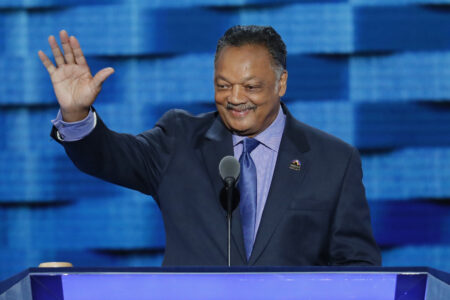
- Rev. Jesse Jackson waves as he steps to the podium during the third day of the Democratic National Convention in Philadelphia, July 27, 2016. AP Photo/J. Scott Applewhite
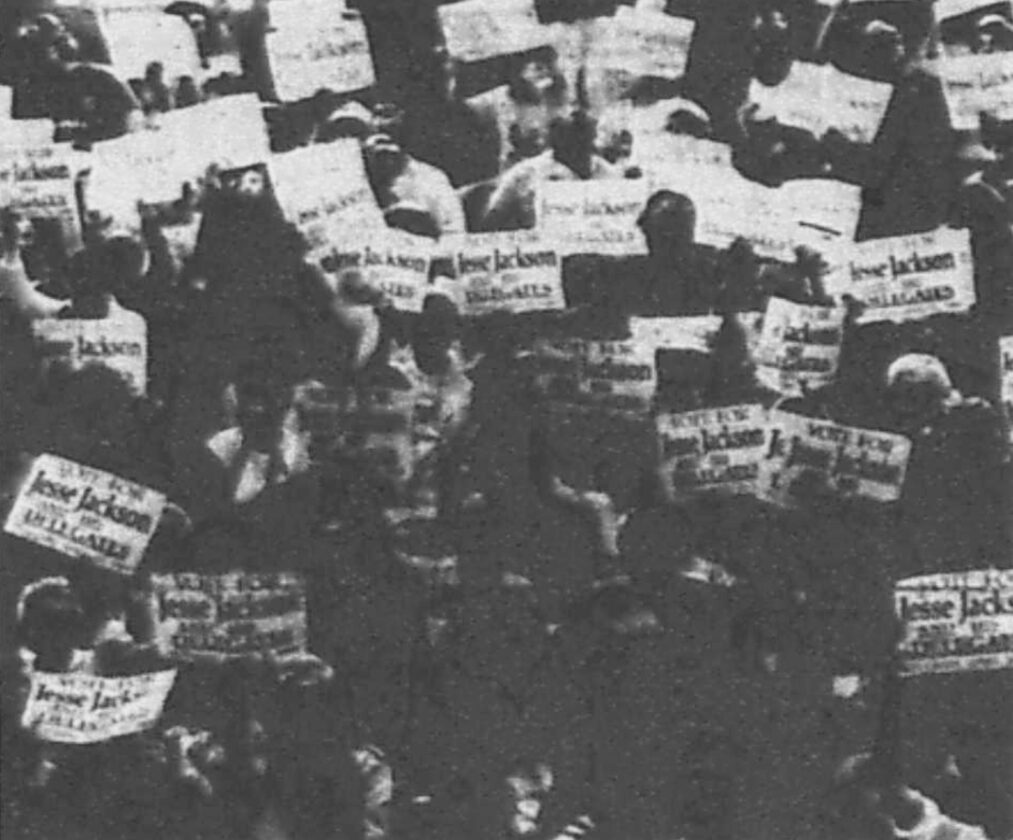
EXPRESS FILE PHOTO This picture from microfilm shows supporters of Jesse Jackson when he came to Lock Haven in 1988, following his support of the International Paper Co. strikers in Lock Haven in 1987.
LOCK HAVEN — Rev. Jesse L. Jackson, a two-time Democratic presidential hopeful and resident of Greeneville, S.C., impacted many individuals across the country throughout his life, including right here in Clinton County.
Jackson was known for his involvement in civil rights, even working alongside Rev. Martin Luther King, Jr. while a young adult, was one of the most recognizable and influential Black political leaders throughout much of the 20th century.
That influence, and his focus on those who felt the weight of a variety of policies and decisions that affects everyday individuals, is what led him to stop in Lock Haven twice between 1987 and 1988.
According to archives from The Express, Jackson first stopped in the city on Nov. 14, 1987 to show support for Local 1787 United Paperworkers International Union, which was in its 22nd week picketing against International Paper Co.
The strike came after the company demanded wage givebacks, high monthly payments for health and other insurance, an end to double-time pay for work on Sundays and the elimination of all holidays (including Christmas).
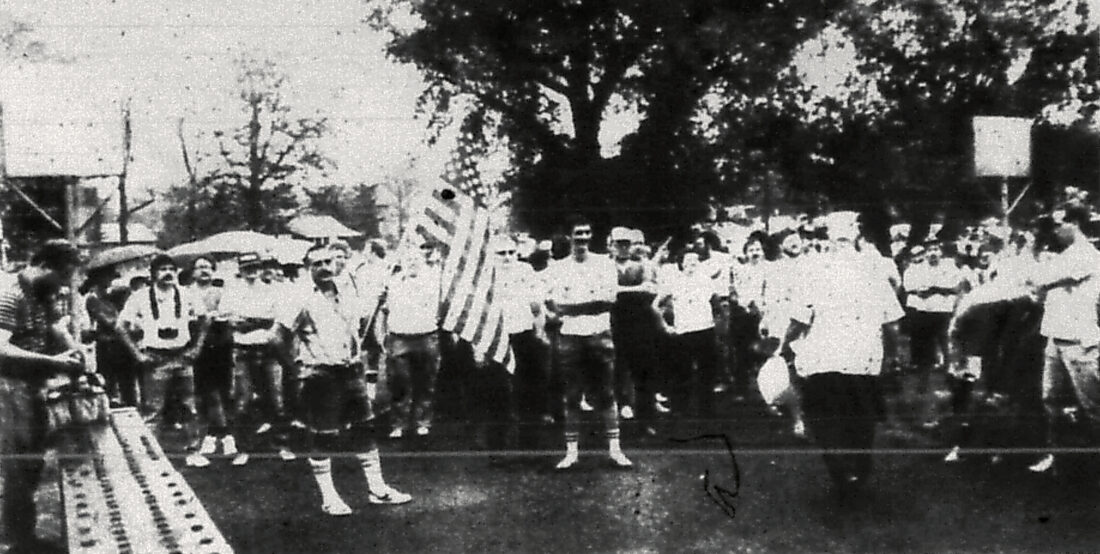
EXPRESS FILE PHOTO This image from microfilm shows strikers at the Lock Haven branch of the International Paper Co. in 1987. Jackson visited the strikers in support.
When agreements couldn’t be met, union workers left their positions and went on strike in June 1987, at which time International Paper found permanent replacements. The company had purchased the Clinton County facility from Hammermill Paper Co. prior to the strike.
On Nov. 14, 1987, Jackson — a presidential candidate looking to secure a spot for the 1988 General Election — spoke to roughly 2,000 union members, their families and supporters in Lock Haven High School’s gymnasium. The Express also reports about 100 more watched him on closed circuit television.
“The real American dream is not the wealth of the few, it’s the work of the many,” Jackson told them.
At the time he encouraged the workers to hold the line and not give in to International Paper Co.’s demands. He further said, if elected to the White House, he would work to ensure Unions received a fair shake.
“Help is on the way. In a democracy everybody has royal blood. Ronald Reagan is not the king and I do not have to be a prince to win,” he told the crowd.
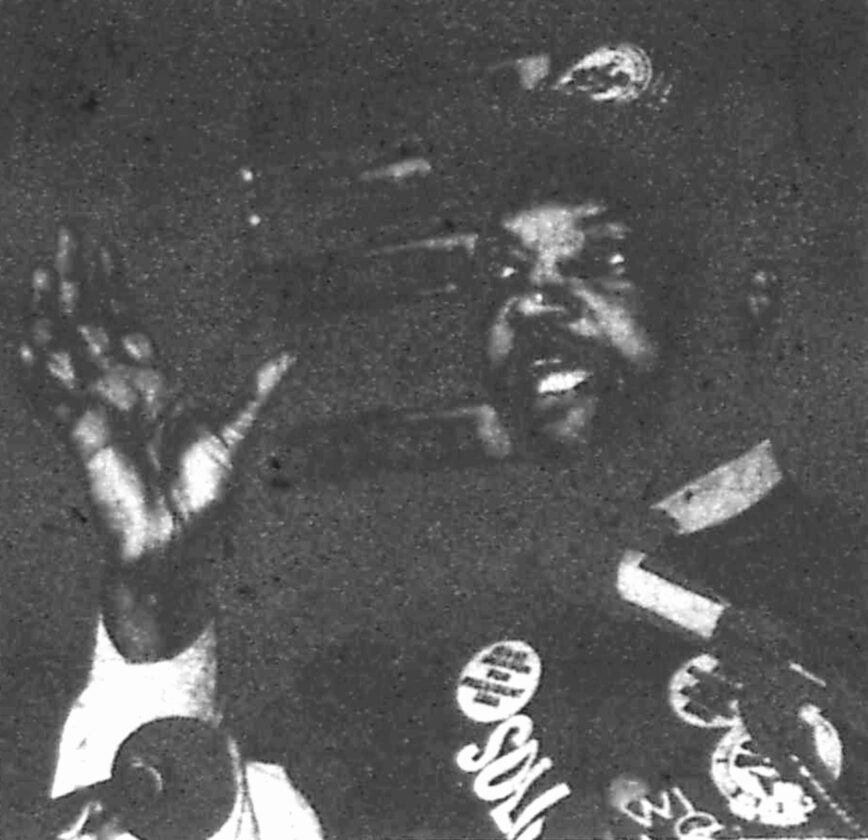
EXPRESS FILE PHOTO This image from microfilm shows Jesse Jackson while speaking in Lock Haven during one of his repeated visits the area in 1987 and 1988.
Encouraging the union members he said, “Let’s come together. Let’s stay together. Don’t surrender. Stand Tall. Joy cometh in the morning.”
Jackson had arrived in Lock Haven after attending strike negotiations in Buffalo, N.Y.
He spoke directly to International Paper Co. when saying, “Return the workers to their jobs, share the profits and be fair.”
Jackson would later return to the area on April 24, 1988 — days before Pennsylvania’s Primary Election.
At the time, Jackson was running for the Democratic nomination against Democratic Governor Michael Dukakis, of Massachusetts; Tennessee Senator Al Gore and Missouri Congressman Dick Gephardt. Ultimately, Dukakis would go on to win the Democratic ticket, and later lose to President George H.W. Bush.
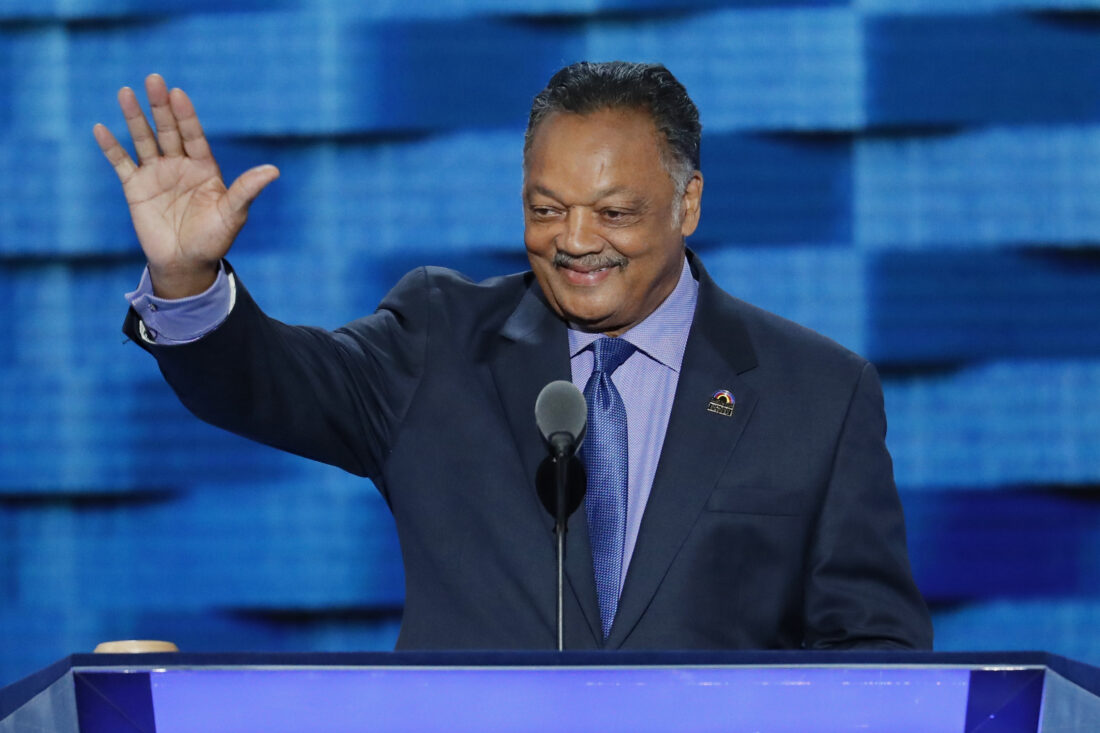
Rev. Jesse Jackson waves as he steps to the podium during the third day of the Democratic National Convention in Philadelphia, July 27, 2016. AP Photo/J. Scott Applewhite
The Express reported on the rally in its April 25 edition on page one, with the title “Action Jackson in Lock Haven.”
The article noted Jackson gave striking paperworkers “another morale boost” during the stop.
“I promised you I would be back here and I am,” Jackson told a crowd of around 2,000 at the Lock Haven High School gymnasium.
The article noted the tone of this visit leaned toward Jackson’s presidential hopes, asking those who attended to support him in the Primary.
“Workers, I stood with you — Tuesday I want you to stand with me,” he said. “When I win, you win.”
Jackson brought with him his mother, Helen Jackson, and one of five children, Jonathan Jackson, and noted the striking workers in attendance showed resilience and hope.
“Your response indicates to me that your hope is alive — that your faith has been renewed — that you’re not going to surrender — that you’re going to stand tall and stand together. You keep standing and you keep holding and you keep believing,” he said.
Jackson spent much of his time speaking about changes that needed to be made at the White House following two terms of President Reagan.
“You do not need anymore Reagan or Bush economics in Lock Haven,” he said. “You need ‘Jackson Action.'”
He called for raising the minimum wage, an end to sex discrimination, and addressing workers concerns by creating a labor relations board. He also railed against Reagan for, as he stated, took jobs out of the country to other areas.
JESSE JACKSON
TERRITORY
Jackson’s time spent in Lock Haven seemingly carried a major impact in the area during 1987 and 1988.
According to archives from Lehigh Valley based-The Morning Call, the late reverend’s support of union workers left its mark for those on the picket lines.
The newspaper’s article, published prior to the primary, titled “Lock Haven Worker Like Jackson” quoted 53-year-old production worker Ted Rechel as saying, “this is Jesse Jackson territory.”
“He’s the only guy in the whole lot who did anything for the people who work for a living and have been shoved out the door by scabs and Ronald Reagan politics,” Rechel had said.
Rechel went as far as to tell The Morning Call he expected Jackson to “get a lot of votes from this rural, red-neck community.”
Prior to the election, and in The Morning Call’s article, it was noted how Jackson’s popularity in a heavily Republican area was considered “one of the anomalies of Campaign ’88,” the newspaper reported.
“White blue-collar workers, many of them lifelong Republicans who voted for Ronald Reagan in the last two presidential elections, are now supporting a left-leaning black social activist for president,” the newspaper said.
It was noted in the article that Jackson was the only presidential hopeful at the time to visit Lock Haven and who advocated for a “Workers Bill of Rights” that would give workers the right job, a democratic union and liveable wage.
Clinton County’s GOP Chairman Chris Dwyer was quoted in the article as noting “the strikers will make a difference” in Jackson’s influence within the county.
The difference seemed to be evident when Jackson became the second top vote getter within the county in April 1988.
According to election results from the 1988 Primary, provided by the Clinton County Voter Registration office, Jackson received 1,405 votes. He trailed behind Dukakis, who received 2,075 votes. The next highest vote-getter for the Democratic primary was Gore with only 116 votes.
Dukakis would later go on to win the Democratic ticket and run against George H. W. Bush. In November 1988, Bush would secure the presidency with 426 of the electoral vote compared to Dukakis’s 111.
Bush also received the popular vote with 48,886,597 (53.4 percent) to Dukakis’s 41,809,476 (45.7 percent).