
LHU’s outlook is a positive one
Trending
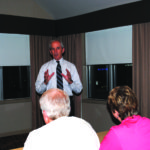
LOCK HAVEN -- "Lock Haven University does have a future," LHU President Dr. Michael Fiorentino said Wednesday.
He spoke at the Clinton County Economic Partnership's annual meeting about the recent study of the 14 state universities commissioned by the Pennsylvania State System of Higher Education (PASSHE).
The study considered how the universities can modernize and become more efficient and more effective, he said, in these times of decreasing student enrollment, seen almost across the board.
Lock Haven University is one of the state institutions seeing a drop in its students number, but this trend does not reflect what the university does, Fiorentino said.
The two most prominent causes of the decrease, according to the study, are the same two causes LHU had already identified -- fewer high school graduates across the Northeast and a lack of state funding.
LHU's state allocation for this school year was less than it was in 2009-10, he reported. Meanwhile, costs have gone up, particularly with wages, health care, and pensions. The university's pension costs increased by $900,000 this year, he said.
The university now has fewer positions filled -- more than 70 fewer compared with seven years ago, Fiorentino reported. All of these positions were left vacant when their holders retired or moved on, the president said.
For seven years, PASSHE has had deficit budgets, Fiorentino said, and this year's budget shows a deficit of around $39 million which the state universities must deal with, all the while trying to compete with about 340 other institutions of higher education in Pennsylvania.
As the number of high school graduates falls, private institutions are responding by offering what Fiorentino called tuition discounts in the form of scholarships. The average discount this year is 50 to 60 percent, he said.
Another factor is a change in the students themselves. More young people are looking at two-year degrees rather than four-year degrees so they can enter the work force quicker. They and their parents may see this as a way to get a faster return on their investment in higher education, Fiorentino said.
"We have done a number of things to position ourselves for the future," he said. "We have to look at long-term needs."
Lock Haven University has a new strategic plan that emphasizes, among a few other things, academic excellence and partnerships. The university also has started a sweeping academic review that will look at "everything we do," the president said, in light of which degrees graduates will need for jobs in Pennsylvania five to 10 years from now.
Work-force development is not the only thing the university does, he said, but it should be considered as LHU decides where to best use the resources it has.
The university can play an important part in advancing Pennsylvania's economy, Fiorentino said, and can work as a partner to meet future needs.
Being a more involved partner also means fostering more chances for students to gain real-world experience in the community, he added.
"One thing I always tell parents who visit is the way in which we approach the education of a student is to combine theory and practice… You can't learn everything in the classroom," he said.
The news is not all bad, the president said.
"Universities right now are just barely keeping their doors open," he said. "We are in a much better place."
LHU's financial health is ranked at No. 4 of the 14 state universities, he reported.
Lock Haven University has made serious efforts over the past number of years to improve the university physically and the resources it can offer, the president said. The campus must be both attractive and functional to draw students, the laboratories must be state of the art, and the information technology services must keep pace, he said.
The university keeps its own separate fund for improving facilities because the state does not allocate enough money for capital projects, Fiorentino said. The $130 million allocated seven years ago for projects at the 14 universities has dropped to $65 million this year, he reported. At LHU, the deferred maintenance projects alone would cost about $155 million.
The most recent capital projects on campus were the new walkway built along Glenn Road at Price Auditorium, making the sidewalk much safer and now handicap-accessible.
Price itself also has been completely renovated. "It can now become a real community resource," Fiorentino said.
Today's students are more interested in degrees in health care, psychological services, business administration, computer science and criminal justice, he said, than in history,
The university must continue to change to attract students and perform its mission, he said, but he does not forecast any major change.