
DEP highlights hazardous site clean ups as state funding potentially ends
-
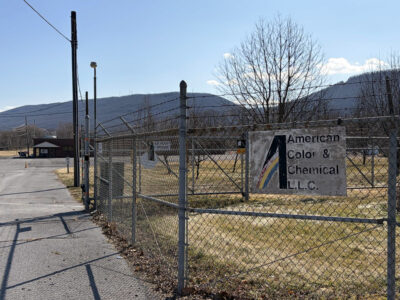
- HUNTER SMITH/THE EXPRESS DEP’s Hazardous Site Clean Up Act (HSCA) has helped clean up sites such as the former American Color and Chemical in Lock Haven.
-
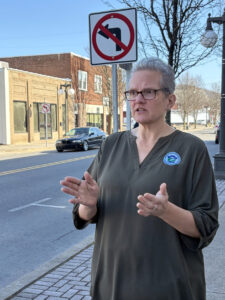
- HUNTER SMITH/THE EXPRESS DEP Environmental Program Manager Cheryl Sinclair talks about the ways HSCA has assisted in clean up of hazardous sites in Clinton County.
-
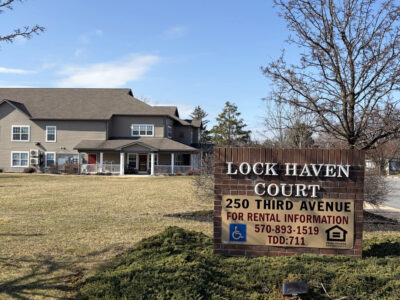
- HUNTER SMITH/THE EXPRESS When radiation and radon were discovered by DEP’s HSCA team in 2007, the program’s funding was able to relocate and completely rebuild the Lock Haven Court building along Third Avenue. The new facility opened in 2018.
-
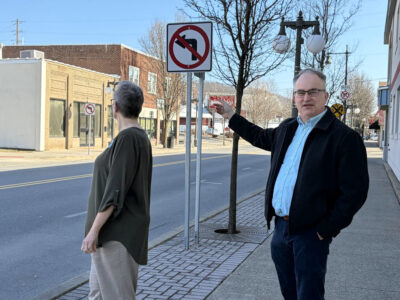
- HUNTER SMITH/THE EXPRESS DEP Environmental Program Manager Randy Farmerie, gestures along Bellefonte Avenue as he talks about the clean up efforts at the former Lock Haven Laundry site. The site, which has since been remediated, now houses a variety of businesses including CVS Pharmacy and Avenue 209 Coffee House.
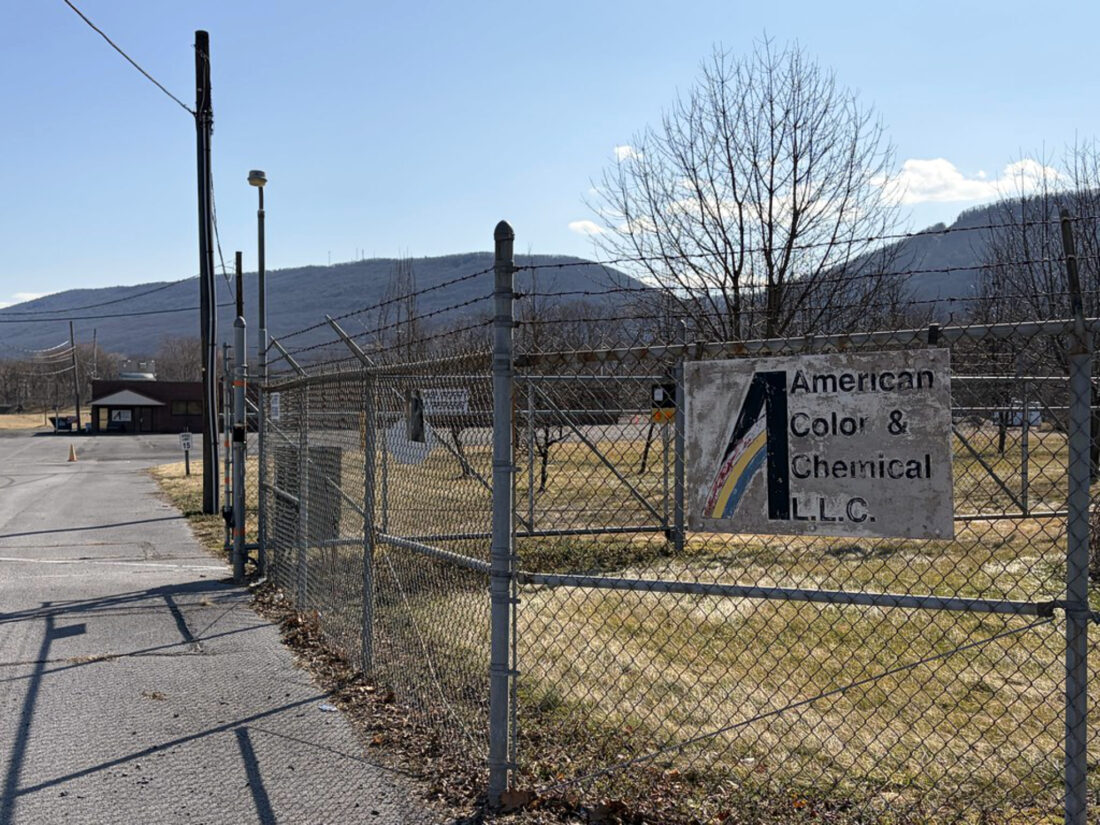
HUNTER SMITH/THE EXPRESS DEP’s Hazardous Site Clean Up Act (HSCA) has helped clean up sites such as the former American Color and Chemical in Lock Haven.
LOCK HAVEN — With its funding winding down at the end of the fiscal year, representatives from the Department of Environmental Protection’s (DEP) Hazardous Site Cleanup Act (HSCA) programs are trying to showcase the positive impacts it had all across the Commonwealth, including Clinton County.
The Hazardous Site Cleanup Fund (HSCF) was established under HSCA in 1988 and authorizes DEP to respond to soil and groundwater contamination which could be the result of toxic chemicals from industrial or commercial operations or poor waste disposal practices.
The HSCF is used to clean up sites contaminated with toxic waste, heavy metals, solvents, PFAS (forever chemicals) and other hazardous substances.
According to information provided by DEP officials, HSCF also partners with the United States Environmental Protection Agency for Superfund site cleanups. Sites such as these in Clinton County include the former American Color and Chemical site.
According to Randy L. Farmerie, environmental program manager, a lot was done to help clean up this site. However, groundwater contamination continues to need work.
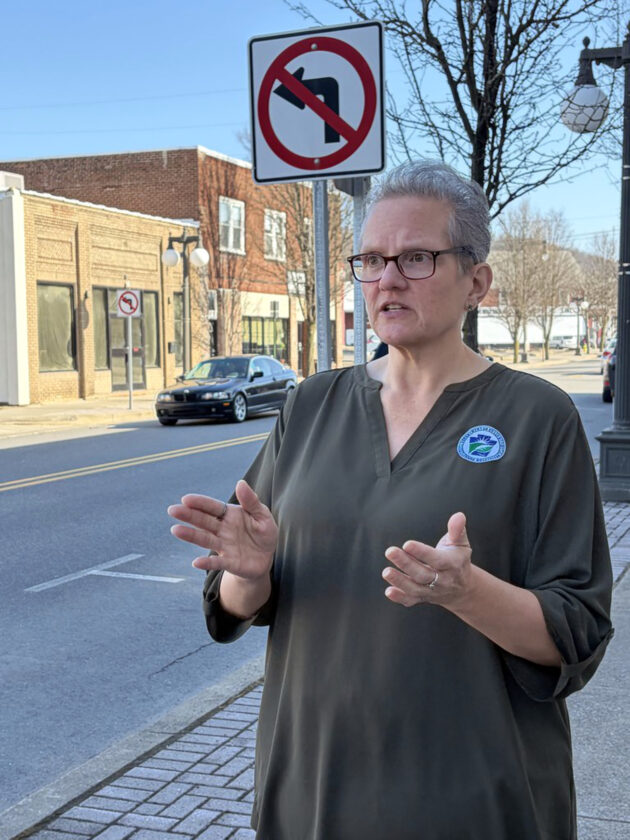
HUNTER SMITH/THE EXPRESS DEP Environmental Program Manager Cheryl Sinclair talks about the ways HSCA has assisted in clean up of hazardous sites in Clinton County.
“A lot has been done but there is still some remedial stuff to do,” he said.
HSCA also provides drinking water assistance such as well testing, bottled water, treatment systems and public water connection for residents who may be affected by a contaminated site.
In nearby Centre County, the HSCa program was able to provide clean drinking water to residents near University Park Airport where PFAS (forever chemicals) were found in ground water wells.
In Benner Township, DEP first detected the PFAS in 2019, which saw 31 residential water supply wells.
Each of these homes were provided bottled drinking water while the HSCA program installed point of entry treatment systems in each well. The last was installed in 2023.
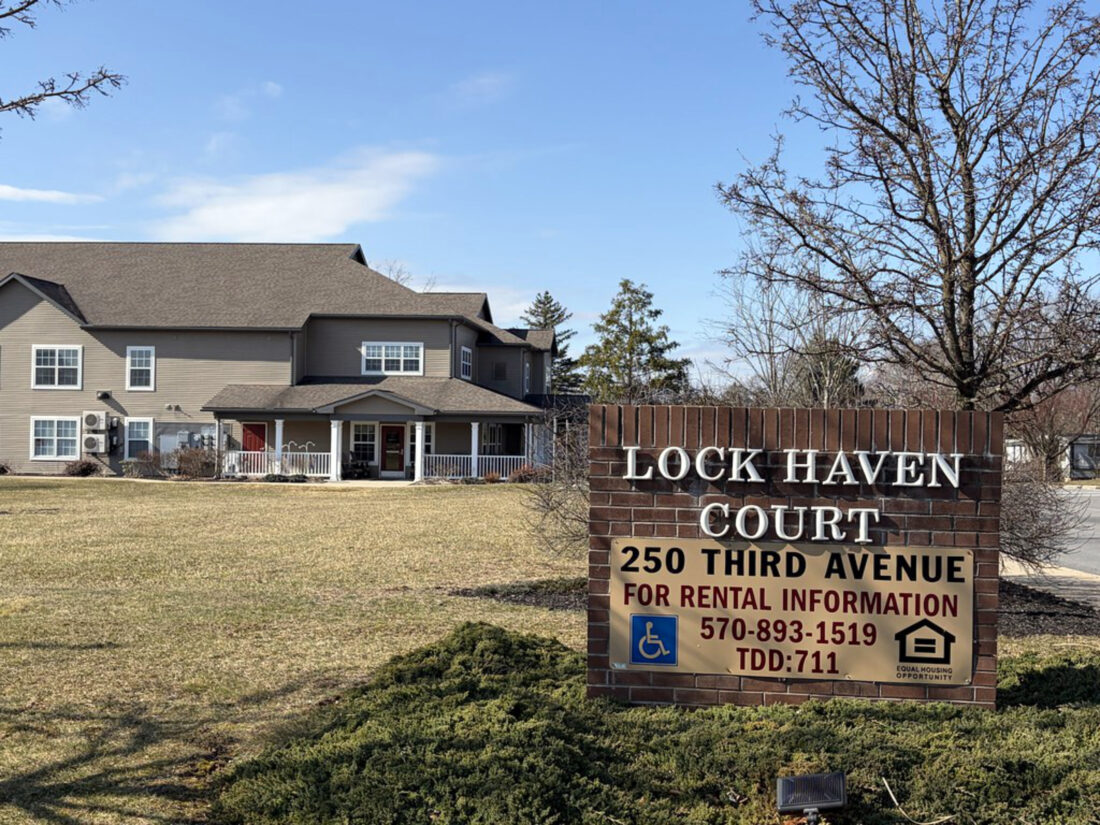
HUNTER SMITH/THE EXPRESS When radiation and radon were discovered by DEP’s HSCA team in 2007, the program’s funding was able to relocate and completely rebuild the Lock Haven Court building along Third Avenue. The new facility opened in 2018.
Farmerie told The Express there have been 8 HSCA funded clean ups in Clinton County over the program’s existence.
This includes a major site clean up, and complete building reconstruction, along Third Avenue in the city.
Cheryl Sinclair, environmental group manager at DEP, offered details on the extensive clean up that spanned from 2007 to 2018:
KARNISH
INSTRUMENTS SITE
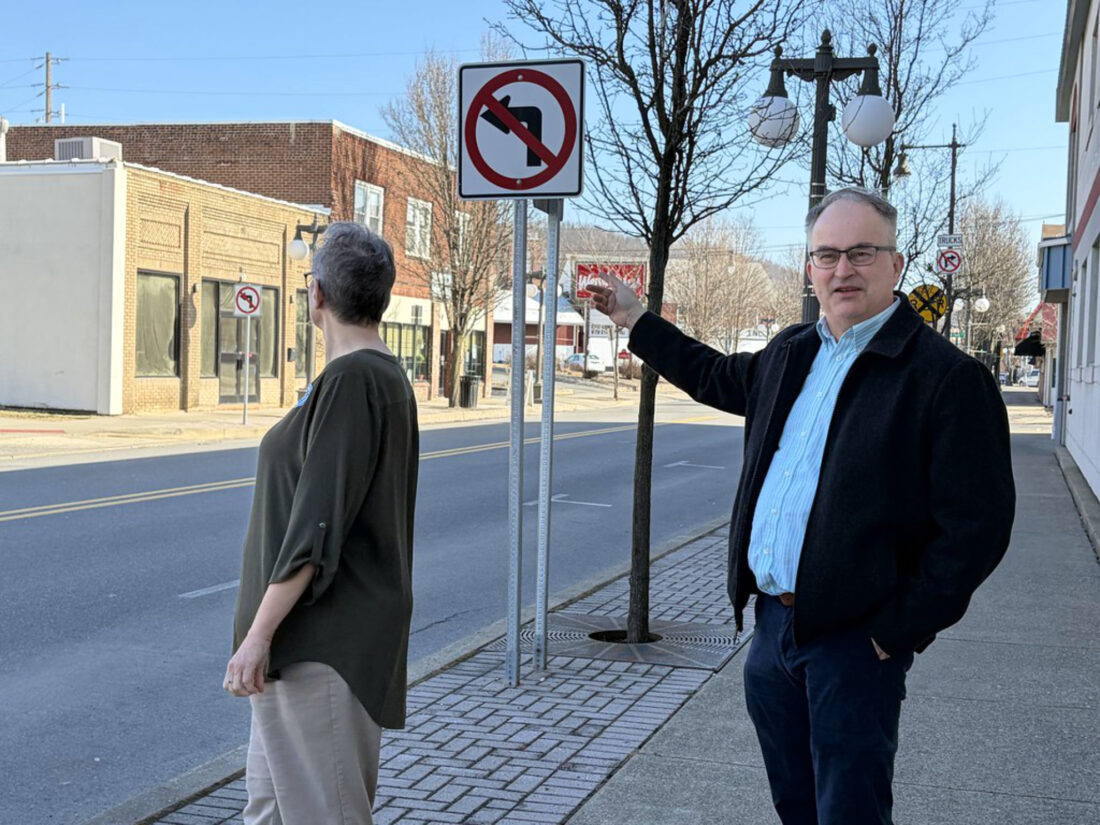
HUNTER SMITH/THE EXPRESS DEP Environmental Program Manager Randy Farmerie, gestures along Bellefonte Avenue as he talks about the clean up efforts at the former Lock Haven Laundry site. The site, which has since been remediated, now houses a variety of businesses including CVS Pharmacy and Avenue 209 Coffee House.
In 2008 the Karnish Instruments site was not where DEP’s Environmental Cleanup & Brownfields Program was sent to investigate at the time.
Sinclair said DEP was assisting in a clean up at Keystone Instruments in 2006 after a radiation alarm had been triggered at the Wayne Township Landfill.
It had been determined at the time that Keystone Instruments had mishandled radioactive waste in relation to radium-painted dials from 1950 to the 1970s.
While on this site, a former Karnish Instruments employee asked if DEP was aware of the property, which was adjacent to Keystone Instruments.
This area, where radium was used in the process of making airplane parts, was located on Third Avenue.
Sinclair said DEP decided to drive by the site with its tools to measure radiation.
“We just got close to the supposed site and the instruments spiked,” she said. The building was, in 2007, Ron’s Rental — a lawn equipment rental business that also had a rented apartment on the second floor.
“The owners had no knowledge whatsoever,” she said, noting the building was deemed contaminated. She explained when Karnish Instruments had created radium-painted dials for aircraft instruments and that radium had been splashed all over the building — on surfaces, walls and more. Thankfully, DEP was able to determine the radiation was not at harmful levels to the public, but still — with HSCA — they took steps to ensure the radioactive materials were removed to prevent further exposure.
“All operations ceased for that business and we had to demolish it and remove the top layer of soil,” she said.
In that time, five other properties were found to be contaminated. Sinclair said the majority had top soil removed from a section of the property. However, Lock Haven Court at 250 Third Ave. was a different story.
DEP determined at the time that radon, a radioactive gas from the decay of radium, was found in the Lock Haven Court building.
In November 2017, through HSCA funding, a new Lock Haven Court building was constructed on an uncontaminated portion of the property and the old building was demolished.
“We were able to build a new apartment building for them and move the residents in while demolishing the old one,” Sinclair said, speaking to the financial impact the HSCA program can have.
In total, $11 million was used from HSCA funding to clean up the site, including constructing a new building for Lock Haven Court.
ACT 2 PROGRAM
Through HSCA, businesses that would like to invest in properties which are deemed hazardous and in need of clean up, are able to participate in HSCA’s Act 2 Program.
Sinclair said this removes DEP’s direct involvement in hiring contractors and is typically used when property owners are able to be located and take on the clean up themselves.
Farmerie said Clinton County has seen a large number of Act 2 Program projects including the Tractor Supply, Lowe’s and Sheetz properties along Hogan Boulevard in Bald Eagle Township. In total, 52 Notices of Intent to Remediate (NIR) were filed which is the first step in the Act 2 Program.
“This is the third branch of HSCA… funding assistance for our land recycle program,” Sinclair said. “We work with the property owners to clean up sites.”
Farmerie said these properties can receive a relief of liability which is funded through HSCA.
If a business or property owner were to be resistant to this or DEP’s direct involvement in a clean up, Farmerie said they have the ability to compel them. However, that is very rare.
“We try to work with the property owners but if there is significant pushback we can compel them through and order,” he said. “We’ve issued very few orders in my time.”
Lehman noted that was a testament to how well Farmerie and Sinclair, along with their team of roughly three to four employees each, work with the community.
LONG TERM
INVESTMENT
Megan Lehman, Regional Communications Manager for DEP, emphasized how HSCA offers a long-term investment for municipalities, like Lock Haven, through the program. This includes the Lock Haven Court clean up and another along Bellefonte Avenue — the former Lock Haven Laundry location.
Farmerie said the site, where the business dumped laundry chemicals in the 1900s, was located in the area of the CVS Pharmacy.
He said, through HSCA, soil extraction took place and wells were put in.
When it was discovered the chemicals could be airborne at times, DEP through HSCA was able to install an indoor air treatment system in the building which now houses Avenue 209 Coffee House.
Lehman noted through these clean ups, businesses such as CVS Pharmacy, Avenue 209 and others are able to safely exist on sites that were previously a potential hazard to residents.
This, she said, is why HSCA needs to remain funded properly.
“This fund needs to be there,” Lehman said.
As a former municipal planner, Lehman said the impact on redevelopment and investment in a municipality can be reliant on programs like HSCA.
“This can affect things like the tax base and just the general quality of life for residents,” she said.
HSCA’S IMPACT
Overall, Lehman, Sinclair and Farmerie said they wanted to showcase how crucial HSCA and its continued funding is to areas like Clinton County and all throughout the Commonwealth.
Sinclair shared an example of what life could be like without the program. She said her mother, who lives in New Jersey, received a letter that indicated her well had been tested and PFAS were found.
“That was all they did,” Sinclair said.
Meanwhile, Lehman noted that in Pennsylvania — and through HSCA — residents have access to tools which can help ensure their safety.
“If this funding goes away then people are on their own,” she said. “This program itself cuts across all demographics. Rural, urban, rich, poor. It can affect all Pennsylvanians.”
Local news
Lawmakers press Shapiro admin on oversight, accountability measures for elder abuse agencies

Reflecting the Best: Five honored at fifth annual KCF Alumni Hall of Fame ceremony
CMHS, district staff commended for response to emergency in February

JS Boro to throw 200th anniversary party on Sunday
Loggerheads swim team looks for community support to ensure summer season
Pennsylvania’s data center boom, by the numbers
HARRISBURG — Since the beginning of the year, Spotlight PA has been covering the debate in Harrisburg and across ...