×

The long battle for Black humanity

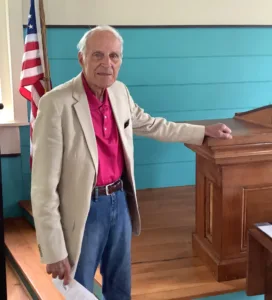
Tim Mannello

Williamsport

For centuries, America has waged a relentless fight over whether Black lives would be treated as fully human or as merely disposable. Today, successful attempts to rewrite and sanitize the story of Black Americans and to reverse civil rights laws downplay the brutality of slavery and the persistence of racial bias. They erase our memories of the resilience, resistance and cultural contributions that define the history of Black Americans.

School boards in several states have recently softened descriptions of slavery. They suggested, for example, that enslaved people “developed skills” that somehow benefited them. This struggle to “correct” historical truth is very much alive. These efforts are not neutral. They shape how Americans understand their past and what injustices we are willing to confront in the present.

The four hundred year history of Black people in the United States has been shaped by barriers deliberately built to deny their humanity. Trafficked here as slaves beginning in 1619, millions were forced across the Atlantic in the Middle Passage, where one in seven died before ever reaching American shores. Those who survived entered a world designed to treat them as property.

Under laws like the Virginia Slave Codes of 1705, babies followed the status of their mothers, thereby ensuring that bondage reproduced itself generation after generation. Enslaved people could be bought, sold, mortgaged or willed away like livestock. Their marriages had no legal standing. Blacks were subject to bodily violence without recourse.

Stripped of personhood, they lived under laws that protected slavery, not the people suffering inside it. Teaching an enslaved person to read was a crime punishable by fines or imprisonment. Families were routinely separated at auction blocks in cities like New Orleans, and Charleston.

Even free Black people were denied the possibility of citizenship in a nation they had helped build with their labor, labor that enabled the cotton economy to account for more than half of all U.S. exports by 1860.

Despite the end of slavery, new restrictions rose to keep freedom out of reach. Black Codes in the 1860s criminalized unemployment and “vagrancy, “and imprisoned thousands of Blacks in camps where they worked under conditions often worse than slavery.

Jim Crow laws enforced segregation in schools, transportation, restaurants, and hospitals. Redlining maps created by the Home Owners’ Loan Corporation in the 1930s marked Black neighborhoods as “hazardous,” denying residents access to mortgages and generational wealth. Violence from lynchings to the 1921 destruction of Tulsa’s Greenwood District served as a constant reminder that racial ranking would be enforced by law or by terror.

The Civil Rights Act of 1964 was meant to break those chains by protecting access to the ballot box and public life. Titles II and V strengthened federal oversight and enforcement to stop discrimination that kept people from voting or participating fully in society. Earlier, discriminatory barriers to voting, from literacy tests to poll taxes to “good character” clauses, operated alongside segregation in public accommodations.

Weakening federal civil rights enforcement today have similar ripple effects. It makes it easier for states or localities to adopt restrictive voting rules, purge voter rolls and draw gerrymandered districts that dilute the political power of marginalized communities. The Supreme Court’s recent shocking dismantlement of Titles II and V does more than erode protections in public accommodations and federally funded programs. It threatens the fragile protection that supports equal participation in democracy.

The long arc from slavery to today shows a pattern: painfully slow progress met by immediate resistance, rights granted but never fully secure. Every advance, from Reconstruction to the Civil Rights Movement to the election of Black officials nationwide, has been followed by efforts to roll those gains back. The struggle for equality continues because the past still shapes the present. The battle isn’t over, because the same forces that once chained Black bodies still work, in new forms, to limit Black freedom today. The question America faces is whether it will continue repeating this cycle or finally commit to recognizing Black humanity without condition.

Our challenge is clear: stand with truth, confront injustice, defend Black dignity and refuse the revision of history. Organize, vote, speak out and demand a nation that honors Black humanity without compromise.

Starting at $3.69/week.

Subscribe Today