
‘Disclosure Day’: Steven Spielberg and John Williams dazzle us, bringing a career long fascination with the ‘Alien Genre’ full circle
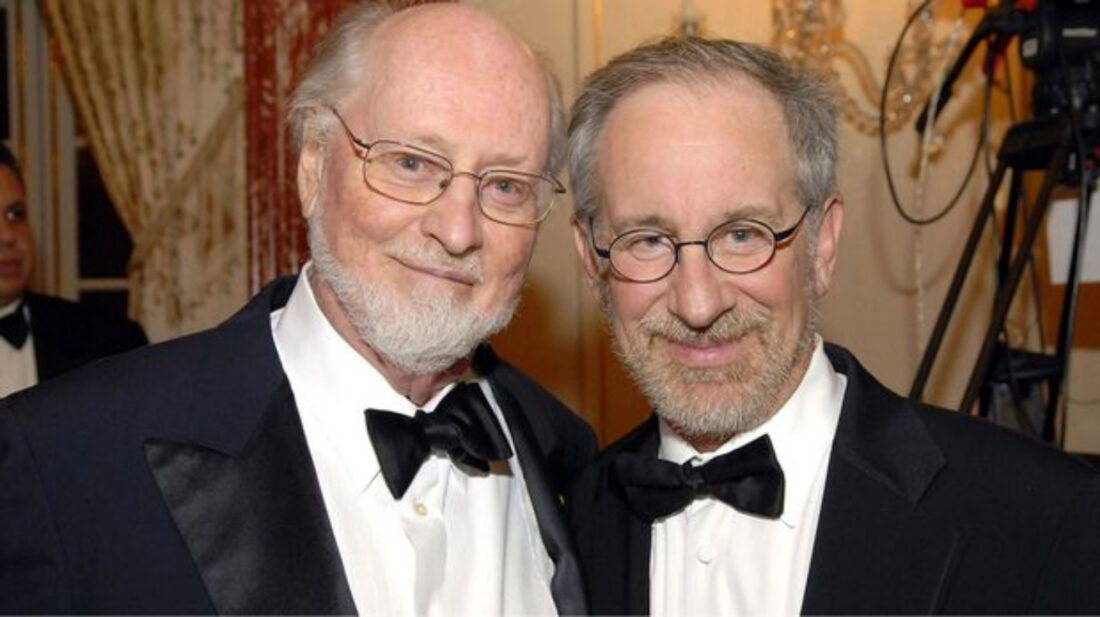
PHOTOS PROVIDED Steven Spielberg and John Williams are pictured.
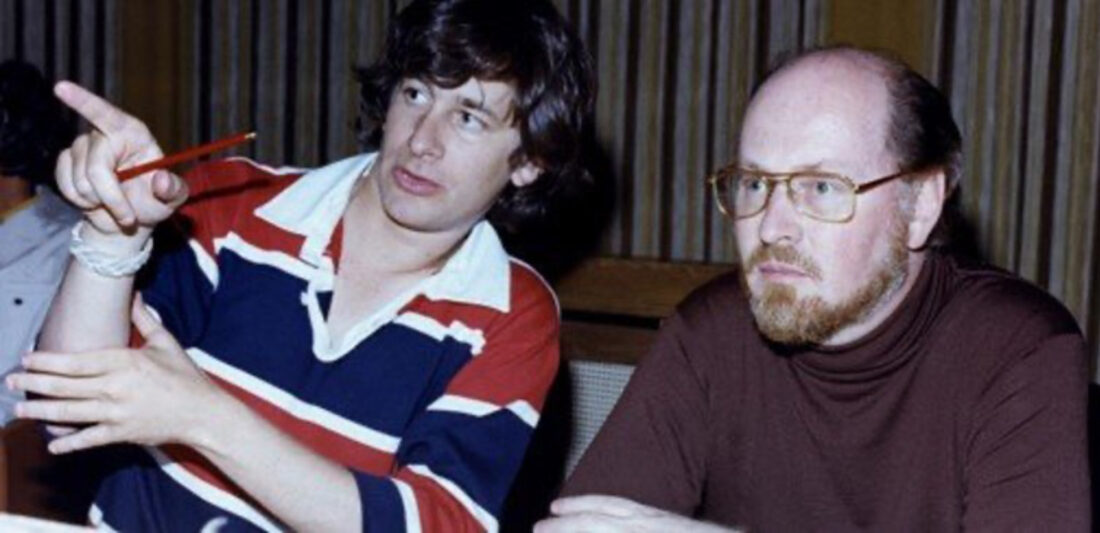
PHOTOS PROVIDED Steven Spielberg and John Williams are pictured.
PHOTOS PROVIDED Steven Spielberg and John Williams are pictured.
PHOTOS PROVIDED Steven Spielberg and John Williams are pictured.
Trending
The Delivery…
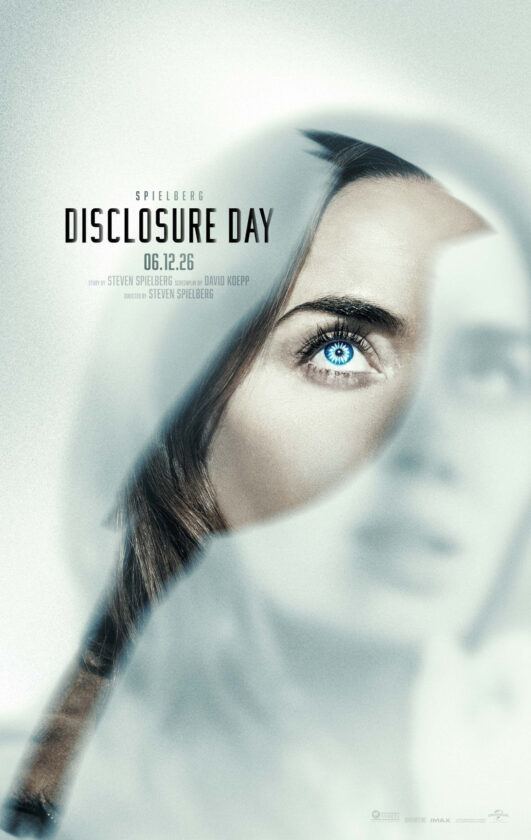
For Steven Spielberg, "Disclosure Day" was always going to be an inevitable movie to make. This is his fourth alien encounter movie, and the one that was to finalize his fascination with the genre.
In 1977, "Close Encounters of the Third Kind" would not only cement his place as a master film maker but would herald the beginning of a genuinely personal journey for him. "We are not alone" were the powerful words on every poster promoting what was to become, both for myself and so many others around the world, an equally fascinating cinematic journey too.
Then followed "E.T. The Extra-Terrestrial," (1982) a true masterpiece that has only gotten better with age.
Many years later, in his own retelling of the H.G. Wells' classic, "War of the Worlds" (2005) which is regarded as the 'Grandfather' novel in the long history of this genre, he would show that, regardless of the obvious scope and size of this subject, his personal belief was, and always has been, one of hope and promise against all the odds and "Disclosure Day" is his final note to that very point.
Emily Blunt brilliantly heads a terrific cast in what can only be described as a 'race-against-time' chase thriller. It presents itself as an edge-of-your-seat experience but, with Spielberg masterfully in control of the pace and emotion, it actually feels more personal on a different level than that of a straight up thriller. What will be the disclosure? And why is evidence still being suppressed after nearly 80 years since the infamous "Roswell Incident of 1947."
The screenplay, by veteran screenwriter David Koepp, who has worked with Spielberg several times since "Jurassic Park" (1993) is very slick and "on point" as it catapults us along with barely any time to take a breath. From a story idea by Spielberg himself, which focuses on the very personal angst and uncertainty of the characters as they gradually discover their purpose in it all, especially Emily Blunt, brilliantly allows us to be in awe of the visual and audio spectacle whilst at the same time, staying fully focused on all the various personal journeys therein. Josh O'Connor, Colin Firth, Colman Domingo, Eve Hewson and Wyatt Russell all support Blunt so very well as the story progresses, but it is her, with what I believe is a career defining role and possibly a future Oscar nod, who carries the film wholeheartedly.
In Spielberg, we are presented with a story of the relentless pursuit of optimism set against an overwhelmingly skeptical and conspiracy-driven world. If we are to believe him then we see the hope, we feel it and we trust in it. Even in his darkest cinematic ventures, Spielberg finds hope for the future -- "Schindler's List," (1993) "Saving Private Ryan," (1998) "Munich" (2005) and "Lincoln," (2012) all stories born out of suffering and the sheer brutality that humans have inflicted on other humans all across world history, were presented by him in as optimistic a way as possible, against all the dire odds on display, these movies ended with hope in one form or another, straight from Spielberg's heart -- honest and open and powerful.
As usual for Spielberg, this movie has created quite a range of critical response. Most have praised it for its bravura in how he was able to remain true to himself in his visual and thematic storytelling.
But there are some dissenting voices that have called it weak and disappointing and saying that he didn't go far enough and didn't give them what they were hoping for. Whilst I understand what they are alluding to, I have to say I think he delivered it with the exact measure that he had always intended. His mastery of his craft is without question, his incredible ability to bring everything to the screen in perfect balance and sway is unrivalled, of that there can be no dispute. However, sometimes even the master can make a misstep, and Spielberg would be the first to admit that he has definitely made cinematic mistakes over the years, but this, in my opinion, is certainly not one of those times.
The movie is both satisfying and frustrating, surprisingly fresh yet oddly familiar all at once, and all designed to make us think for ourselves, to discuss what we saw, to question what we see, and I think it has worked.
All of this is packaged in a way that only Spielberg can do. There's no doubt that every visual and auditory cue used is out of an accumulated film making knowledge that exemplifies Spielberg's brilliance, whilst never losing sight of the most important thing -- the story -- that is what has made him, hands down, one of the best in the business.
The Legacy…
This movie has another story to tell too, one that has defined a generation, molded western cinema and literally gifted the world with one of the greatest creative teams that world cinema has ever known. "Disclosure Day" marks the 30th collaboration between Steven Spielberg and John Williams that has spanned more than 50 years.
Williams, a film music composer of such genius and creative fervor that, together with Spielberg, has created some of the most amazing and memorable audio-visual cinematic experiences of our lifetime. Williams' film music career actually began quite a few years before he and Spielberg began working together. In the early 1950's he began transitioning from TV to Film with such movies as "None but the Brave," (1965) "How to Steal a Million," (1966) and "Valley of the Dolls," (1967) for which he received his first of, now 54 Oscar nominations -- the most by any living person today and the 2nd most nominated person in history, second only to Walt Disney himself. He also became well known for working with legendary disaster movie maker, Irwin Allen, in the early 1970s, on such epics as "The Poseidon Adventure," (1972) "The Towering Inferno" and "Earthquake," (Both 1974) But it was a lunch meeting back in early 1972 that would begin a friendship that would change the world of movies forever.
A young Spielberg, about to begin work on his debut feature film, "The Sugarland Express," (1974) requested a meeting with Williams as he had already become a huge fan of his work on "The Reivers." (1969) It would be easy to say that 'the rest is history' but it was more than that, it was kismet, destiny, however one would like to call it, there was a fate involved that, unbeknownst to anyone at the time, was about to literally change the world forever and, for myself as just one individual, would bring me under the spell of movies and movie making for the rest of my life.
It was to be their second movie together that would really bring them to prominence, a certain little film by the name of "Jaws," (1975) and the now legendary theme was about to show the world just how the right kind of synchronization between film and music can work to perfection. Spielberg recalls that when John first played him those two notes on his piano, he thought it was a joke and couldn't possibly work, but John convinced him to trust him.
After the film was released, Spielberg stated that he would never again doubt his friend, and so the legendary partnership began that year and now, 50 years later, is still as strong and as inspiring as it was in the beginning.
The list of their collaborative works since "Jaws," (1975) is legendary, to say the least, filled with unmistakable themes and visual sequences known so well to us all -- "Close Encounters of the Third Kind," (1977) "Raiders of the Lost Ark," (1981) "E.T. The Extra-Terrestrial," (1982) "Empire of the Sun," (1987) "Always," (1989) "Schindler's List," (1993) "Jurassic Park," (1993) "Saving Private Ryan," (1998) "Minority Report," (2002) "War of the Worlds," (2005) "War Horse," (2011) "Lincoln," (2012) "Bridge of Spies," (2015) "The Fablemans" (2022) and now "Disclosure Day," (2026) are all just a selection out of the 30 incredible work these two have created together. We remember the themes and how they accompanied the scenes within, we remember the emotion that Williams was able to instill into us along with Spielberg's equally emotional visuals, we remember them because they were so well made and so uplifting and they have stayed with us -- simple as that.
That is the real power of these two master craftsmen, not in the technical mechanics of what we see and hear up on that screen, not in the tricks involved with delivering these scenes, no, we are pulled into a new world, we have been able to escape to these new places and thoughts because we were in the hands of two people who knew exactly how to tell the particular story of the time.
They captured our hearts and minds and yes, gave us hope for ourselves and our fellow cinemagoers, they united us all in that one simple factor we all share, our common sense of humanity and caring and, just like that tag line in "Close Encounters of the Third Kind," (1977) we knew then that we certainly were not alone.
As well as his work with Spielberg, Williams has been responsible for other iconic scores that have played as much of an important part of our lives as theirs has. From the "Star Wars" franchise (1977-2019) to "Superman," (1978) from Oliver Stone's "Born on the Fourth of July," (1989) and "JFK" (1991) to the "Home Alone" franchise (1990-1992) and a large part of the "Harry Potter" Franchise (2001 to 2004) all incredibly memorable and, as with his scores for Spielberg, equally as embedded into all our hearts.
Their collaboration has become part of folklore, studied over and over by so many film scholars and others around the world.
A rare kind of teaching tool, one that has used the most basic of entertainment, a movie, to show us, not only who we are, but also who we can become if we just watch and listen. Many books and other writings have tried to analyze just what it is that they have together. In my humble opinion, it is simple -- what they did for me was to inspire me to be a better person and to believe that I too could create something for the good.
After all, isn't that all we really want, to believe in ourselves and to be believed by others. That is their legacy, their gift to us all, and I for one am so grateful to have been around during the time of Spielberg and Williams.
------
Roy Morris is a longtime film columnist for The Express.