Disease resistant plants
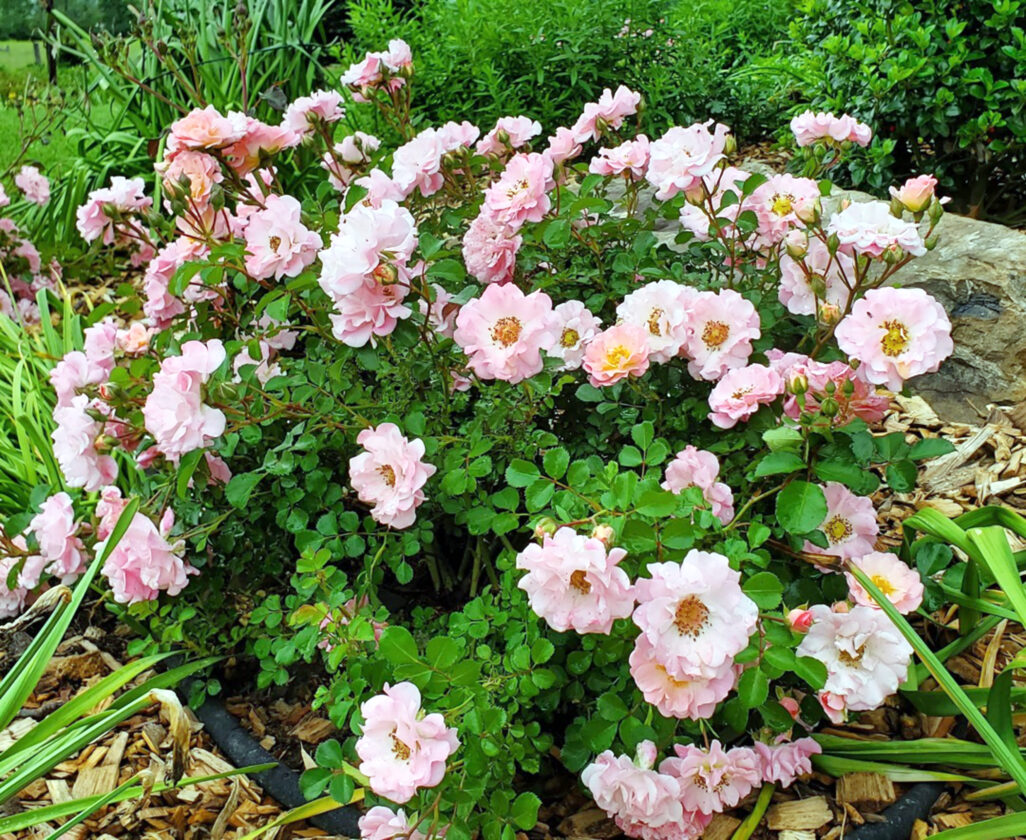
PHOTO PROVIDED A disease resistant groundcover rose is seen thriving in a Clinton County garden.
While gardening can be rewarding, it also has its challenges, and plant diseases are one of those challenges. In past years I’ve seen my tomato plants ruined by blight, phlox and bee balm spoiled by powdery mildew and apples disfigured by scab, all because of plant diseases. Fortunately, plant breeders have been hard at work developing cultivated varieties (cultivars) of many types of plants that are disease resistant. Disease resistant plants can be attractive, low maintenance additions to gardens and landscapes because they are less likely to show signs of disease. They can also help reduce the use of pesticides.
According to University of Illinois Extension (https://hyg.ipm.illinois.edu/pastpest/200302b.html), “Disease resistance is the capacity of a plant to lessen the harmful effects of a pathogen.” Pathogens include viruses, fungi, bacteria and other organisms that infect and damage plants. Fungi are the pathogens most responsible for plant diseases common in gardens and landscapes. Powdery mildew, black spot, apple scab and fusarium wilt are just a few of the diseases caused by fungi. Other examples of common diseases include aster yellows caused by a virus and fire blight which is caused by bacteria.
Disease resistance is a genetic trait that allows a plant to tolerate or avoid the harmful effects of specific diseases. Some plants have naturally occurring genetic traits that enable them to do so. By cross breeding them with plants that lack that trait but have other desirable characteristics, such as large flowers, tasty fruit or appealing foliage, disease resistant cultivars can be developed. The goal is to create a plant that has desirable characteristics while adding disease resistance. This can be a long and complicated process because there are many diseases and developing resistance to one disease does not mean resistance to others. However, breeders have been very successful in creating disease resistant cultivars and there are now more choices available than ever before.
It’s important to note that resistance is not the same as immunity. A disease resistant plant may still become infected but will show fewer symptoms than a plant that is not disease resistant.
There can be considerable variation in the amount of disease resistance, with some cultivars showing a high level of resistance, while others exhibit less resistance. It’s also worth noting that just because one cultivar of a given species is resistant, that doesn’t mean that all cultivars of that species are resistant. Bee balm (Monarda spp.) is a good example. Some Bee balm cultivars, such as ‘Jacob Cline’ and’ Petite Delight’ have shown high degrees of resistance to powdery mildew, while others remain very susceptible.
A few years ago, I purchased apple tree cultivars that were reported to have very good disease resistance to replace my existing trees which had been badly damaged by disease. Keeping them healthy would have required spraying, which could have been harmful to pollinators and other insects. The cultivars, called ‘Liberty’ and’ Enterprise’, are resistant to powdery mildew, scab, fire blight and cedar apple rust. So far, I have not seen any evidence of those diseases on my new trees, which are now showing a very nice crop of apples. That’s not to say the trees will remain completely disease free. There are other diseases that could affect them or, if conditions are very favorable, they could develop mild cases of one or more of the diseases they were bred to resist. Nonetheless, they have so far proven to be low maintenance and a very good investment.
I always thought roses would be a beautiful addition to my landscape but avoided planting them because of the need to use fungicides to keep them healthy. I’m happy to say that last year I found a very attractive disease resistant groundcover rose I liked. It produces pink flowers from spring to frost and is resistant to black spot, powdery mildew and rust. To date, I haven’t seen any signs of those diseases. Weather conditions in my area earlier this growing season were very wet and humid making them ideal for the development of powdery mildew and black spot, so I’m impressed that my new roses have been able to resist them.
I’ve also had good experiences with disease resistant perennials. One of which is a phlox cultivar called ‘David’ which has shown no signs of powdery mildew despite the wet, humid weather this spring. Adding these disease resistant plants has helped improve the appearance of my gardens, because I’ve been able to add attractive plants without having to worry about the unsightly effects of diseases like powdery mildew and black spot and cleaning up after them. They have also decreased the need for pesticides, which is very important to me. I’m looking forward to continuing to plant disease resistant cultivars in future years.
The first step in adding disease resistant perennials, annuals, vegetables, trees and shrubs is identification. Check the plant tags at nurseries and garden centers to see if a plant is marked disease resistant. When purchasing online or through catalogs, look for disease resistance in the plant description. Check reputable websites, such as those from University Extension programs for information on disease resistant plants. For example, Purdue Extension provides a list of disease resistant perennials and annuals at https://www.extension.purdue.edu/extmedia/bp/id-414-w.pdf and University of Missouri Extension has a list of disease resistant apple cultivars at https://extension.missouri.edu/publications/g6026 .
Finally, remember that using sound gardening practices, such as proper spacing to allow for good air circulation, making sure that a plant is suitable for your hardiness zone and receives adequate sunlight and water, and watering the base of plants, not the leaves, will go a long way to decreasing the likelihood of disease occurrence. Should disease symptoms appear, good sanitation is essential. Diseased plant material should be removed promptly and disposed of properly, not composted.
— — — —
Debra C. Burrows, PhD is a retired Penn State Extension Educator and a certified Master Gardener. She can be reached at dcb3@psu.edu.
Garden
Hard freezes and their consequences
Gardeners often hear about supposed hacks and quick fixes. Here are some common ones debunked
Microgardening means getting a surprisingly big harvest from a windowsill or balcony garden
Become a Master Gardener in Clinton County; open houses set to begin in June
Did you find an animal nesting near your house? Here’s what to do