
Hard freezes and their consequences
Trending
This spring has been characterized by significant temperature swings, sometimes as much as 30 degrees from one day to the next, as well as unusually high and low temperatures. The erratic weather has created challenges for gardeners in central Pennsylvania. Of particular concern is the damage resulting from the hard freeze that occurred during the third week in April. Let's look at what happened, the ways in which plants are responding and what, if anything, gardeners can do.
There is a big difference between a "frost" which is a common spring occurrence in our area, and a "hard freeze" which happens infrequently. A frost occurs when ice crystals form on the outer surfaces of plants. A hard freeze causes ice to form inside the plant tissue, which is much more damaging to the plant. Frosts tend to occur as temperatures approach the freezing point of 32 degrees. When temperatures fall well below the freezing mark, as they did during the third week in April, a hard freeze results. At that time, much of Clinton County recorded temperatures in the mid 20's.
Dormant plants are rarely affected by a hard freeze. However, as plants break dormancy and begin to develop new shoots, leaves and buds, they become susceptible to damage from below freezing weather. During early and mid-April, Clinton County experienced extended periods of higher-than-normal temperatures, some in the 80's. These unseasonably warm temperatures caused many plants to break dormancy and begin active growth earlier than usual, leaving them vulnerable to significant damage when the hard freeze occurred.
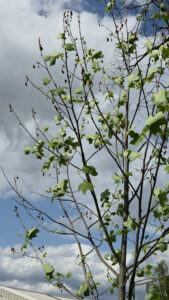
Flowers, buds, new shoots and tender leaves were frozen, leaving them blackened and dead.
Although the damage was unsightly, the good news is that it is unlikely to be fatal to trees, shrubs and perennials hardy in USDA Hardiness Zone 6, which covers much of Clinton County.
Nevertheless, many plants are likely to experience short-term damage. Each species reacts to a hard freeze in its own way. Some show minimal or no effects, while others exhibit obvious injury. With their first flush of new growth frozen off, it will take time for trees, shrubs and perennials to begin forming new shoots and leaves. As a result, many are likely to leaf out later than usual. Fruit trees such as apples and peaches may produce significantly less fruit, or no fruit at all this year, depending upon the stage of bud development they were in when the hard freeze occurred. Ornamental trees and shrubs may not flower at all if their buds were frozen. When the leaves on trees and shrubs unfurl, they may appear tattered or rough around the edges due to damage that occurred while in the bud stage. Perennials may take longer to push out new growth, be smaller and flower later than usual.
After a hard freeze, there is little gardeners can do to mitigate the damage. In most cases, it is best to wait and watch for signs that damaged trees, shrubs and perennials are beginning to push out new growth. This may take some time, so it is advisable to wait before attempting to prune out tree branches that appear to be dead or dig up perennials that are not showing signs of life. Be patient and give plants time to recover before assuming the worst. Avoid fertilizing trees and shrubs that suffered freeze damage. Resume fertilization next year. Keep all damaged plants well-watered to avoid further stress from dry conditions. Unfortunately, annuals planted outside are unlikely to survive a hard freeze and will have to be discarded and replaced.
To minimize damage in future years, be mindful of the hardiness zone requirements of any new plants and purchase only those that are listed as hardy for your zone. Shield tender plants with row covers, blankets or upside-down buckets to protect them if a frost or freeze warning is issued. Don't be deceived by early warm spells. As this year showed, the weather can literally go from balmy to freezing in a matter of hours, so don't plant annuals or warm season vegetables until after the last frost date for your area. If you're not sure when that is, you can type your zip code into an online tool such as Dave's Garden at https://davesgarden.com/guides/freeze-frost-dates or the Old Farmer's Almanac at www.almanac.com/gardening/frostdates) to find out.
While the damage from this spring's hard freeze was very disappointing, it is a temporary setback for this growing season. Unless we experience a hard freeze again next spring, our plants should recover and bring us the spring beauty and summer bounty of fruits and vegetables that we look forward to all winter.
Additional information on frost and freeze damage in gardens is available from Iowa State Extension at https://yardandgarden.extension.iastate.edu/how-to/cold-and-freeze-damage-garden-plants and University of Nebraska Extension at https://lancaster.unl.edu/spring-cold-snaps-how-handle-your-yard-and-after-late-frost/ .
-- -- -- --
Debra C. Burrows, PhD, is a retired Penn State Extension Educator and a certified Master Gardener. She can be reached at dcb3@psu.edu.