
Shapiro’s new memoir doesn’t tell the full story about his time as attorney general
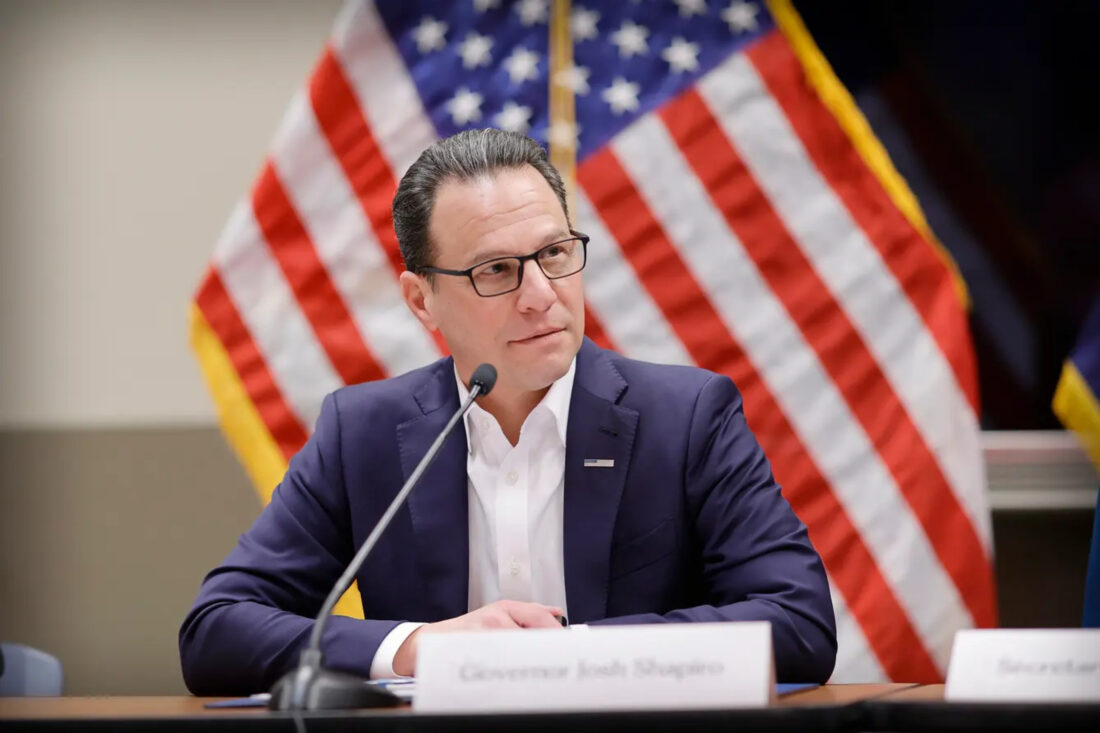
Commonwealth Media Services Gov. Josh Shapiro is pictured in 2026.
HARRISBURG — Gov. Josh Shapiro spent six years as Pennsylvania’s top prosecutor, a notch on his resume that has become an important part of his political brand.
He touts himself as someone who can bridge the uncomfortable divide between law and order and criminal justice reform.
The Democratic governor peppers his new memoir, Where We Keep The Light, with reflections and opinions on both those worlds, and notes — correctly — that his views on policing and the role of law enforcement in communities have put him at odds with the more progressive wing of his party.
For instance, he writes about the deep respect he has for police, and his belief that the emphasis should be on proper training in deescalation and use of force, rather than on defunding police departments.
But Shapiro — widely expected to run for president in 2028 — also emphasizes his belief in second chances and the work over his career to expedite the release of people convicted of nonviolent crimes and to improve probation and parole systems.
This account leaves out key details about his record on commutations and pardons — which became a source of controversy with some in his party — and papers over problems with one of his most-touted police accountability pushes.
It is Shapiro’s story to tell. But below are some areas Spotlight PA pinpointed as missing the full context.
Legislative reform
Shapiro devotes a chapter to his three terms in the state House, including a meticulous chronicling of his shoe-leather approach to his first campaign in 2004 (he says he knocked on 18,000 doors in his Montgomery County district).
He also relives the heady moment when, as a rookie lawmaker in early 2007 (he had just won his first reelection campaign), he orchestrated a political coup in the state Capitol by elevating a moderate Republican to the speakership — one who would side with Democrats and help usher their agenda through.
The new speaker, former state Rep. Denny O’Brien, quickly returned the favor, giving Shapiro the newly created (but unpaid) title of deputy speaker, and tapping him to co-chair a special (and also newly created) legislative committee on reform.
In those days, reform was a buzzword in the Capitol. The legislature was still reeling from public backlash against a dead-of-the-night vote it had taken in 2005 to grant itself hefty payraises.
In his book, Shapiro writes that the commission “passed a bunch of meaningful reform measures through that commission. Real politics, real progress.”
News clips from that time paint a far more nuanced picture.
The commission did shepherd through positive changes. It approved a package of internal rules that made lawmaker expenses publicly available in electronic form and prevented the kind of all-night sessions that allow legislators to ram through controversial legislation (like the pay raise).
It also advocated hard for strengthening the state’s then-weak public records access — changes that eventually formed the backbone of Pennsylvania’s Right-to-Know Law as it stands today.
But the commission couldn’t muster momentum on some of its loftier goals, including limiting campaign finance contributions, implementing term limits for lawmakers, and shrinking the size of the legislature.
Still, some supporters argued the commission had the odds stacked against it from the start. When O’Brien created it, he insisted on a supermajority within each political party for approving reforms — a difficult lift that ended up dooming changes that had simple majority support.
Catholic Church abuse
Few things catapulted Shapiro’s profile — both nationally and internationally — more than the staggering and devastating grand jury report on decades of child sexual abuse by Catholic Church clergy in Pennsylvania, and its cover-up by the church’s leaders. The nearly 900-page report was released in the summer of 2018, when Shapiro headed the state Office of Attorney General.
Drawing on testimony from dozens of witnesses and hundreds of records seized from the church’s secret archives, it contained harrowing accounts of grooming, manipulation, predatory behavior, and sexual assault. It also detailed how Roman Catholic leaders in six Pennsylvania dioceses covered up the abuse for decades.
The report almost didn’t come to light. Lawyers for a group of unnamed individuals and organizations mounted a furious, monthslong, and largely secret legal battle to block its release. Shapiro and his top prosecutors were widely credited for not bowing to the pressure and fighting to make the report public.
In his memoir, Shapiro dedicates an entire chapter to that time in his career. He writes in detail about how he met and stayed in contact with survivors to assure them he would fight for the report’s release and their truth to be heard.
But Shapiro is silent on the aftermath: the struggle to get the state legislature to create or advance a two-year window to allow survivors of long-ago abuse to sue the perpetrators and those who covered up the abuse. Those survivors are barred from bringing civil lawsuits under the state’s statute of limitations.
Shapiro and some of his most senior officials in the attorney general’s office at the time furiously worked to convince the state Senate’s then-president, Joe Scarnati — the most prominent opponent to a two-year window — to allow a bill to be brought to the chamber’s floor for a vote.
The intensity of that lobbying effort in the months following the report’s release — including news conferences inside the Capitol featuring survivors and their families pleading with lawmakers to take action — was unmatched by almost any other time in the state’s modern history.
But it ultimately failed. The legislative session came to a close in 2018 without a vote by the state Senate. Since then, efforts to approve a two-year window have unfolded with dramatic starts and stops, and still face an uncertain future.
Some survivors, once firmly in Shapiro’s corner, have also lost confidence in him, insisting he’s abandoned the effort and not used the bully pulpit of the governor’s office to push the measure through.
Shapiro’s office, meanwhile, places the blame on the state Senate’s unwillingness to bring a two-year window measure to a vote without tying it to an expanded voter ID proposal.
Trump lawsuits
Shapiro’s book also weighs in on what he calls President Donald Trump’s “politics of grievance.” He believes the president rose to power by taking advantage of people’s economic insecurity, and parlaying their frustration into a resentful movement with Trump at its center as the only savior.
“There is so much to legitimately fear and loathe and resist about what we have witnessed in this era of politics,” he goes on to write. “That’s why I sued the first Trump administration dozens of times in my time as Attorney General.”
He adds: “But while I had profound differences with the guy … I only sued the administration when I believed that he was actually violating the law. I didn’t join every lawsuit that every Attorney General in every state brought against him just because I knew it would make for a good headline or get attention on social media.”
News releases and articles show Shapiro’s attorney general’s office participated in at least 16 legal actions in 2017 and 2018, his first two years in office. In a 2019 speech, Shapiro told an audience his office had sued the Trump administration 29 times, according to a Butler Eagle article.
That was before the litigation-heavy year of 2020 and its geyser of lawsuits by states over everything from COVID-19 policies to Trump’s false claims of widespread voter fraud and a stolen election.
While those lawsuits raised Shapiro’s national profile, not all of them were spearheaded by his office. In fact, Pennsylvania frequently joined or piggybacked onto other states’ efforts.
The lawsuits ran the gamut, from blocking rollbacks of student loan protections, tailpipe emissions, birth control coverage, and greenhouse gas emissions; to ending efforts to add a citizenship question to the census and restricting the number of legal immigrants who live or enter the United States.
But true to Shapiro’s account, there was at least one time he held off on joining high-profile, multistate lawsuits: in February 2019, when 16 states sued over Trump’s emergency declaration to fund a wall along the U.S.-Mexico border. Shapiro declined to join, saying he first wanted to wait and see whether the effort would divert federal funds away from congressionally approved projects in Pennsylvania.
Board of Pardons
Shapiro dedicates only a few paragraphs to his time on Pennsylvania’s five-member Board of Pardons. As attorney general, he had a guaranteed seat on the five-member panel, which reviews criminal convictions and decides whether to recommend a person’s sentence be commuted or pardoned. In the book, he discusses the board primarily to explain his beliefs on the death penalty, policing, and criminal justice.
That paucity glosses over his voting record while on the board. It also belies the impact the role had on some of his political relationships — namely, with Democratic U.S. Sen. John Fetterman, who was the state’s lieutenant governor for four years starting in 2019 and also a board member.
It was probably one of the worst-kept secrets in Harrisburg that Shapiro clashed with Fetterman over when and how often to commute or provide clemency in cases before the board. Their time on the panel strained their relationship badly enough that Fetterman, in his own recently released memoir, writes it’s the reason the two no longer speak.
“Shapiro was far more cautious, and at a certain point, I began to think that what was influencing him was not mere caution but political ambition,” Fetterman writes in Unfettered, referring to a meeting where Shapiro voted against the vast majority of cases.
In 2019, for instance, the board voted on 41 commutations, which at the time was the largest number in decades. Where Fetterman tied with another board member in voting in favor of the most commutations, Shapiro approved the least, according to an analysis by the Pennsylvania Capital-Star.
Shapiro’s office at the time said he had supported more commutations than all of Pennsylvania’s attorneys general in a quarter century. But the news organization reported that Shapiro also had more chances to vote on such matters, since the board under then-Gov. Tom Wolf, a Democrat, had vastly scaled up the number of applications it reviewed.
In Where We Keep The Light, Shapiro explains his approach to the work in broad strokes, saying he took the job seriously, studied cases with a near obsessive attention to detail, and struggled with condemning people to die in prison versus releasing them and putting a community at risk. (The Board of Pardons is not the final say on cases. The panel makes recommendations, with the governor making the final decision.)
“I would be so emotionally spent leading up to these meetings that Lori [Shapiro’s wife] would make a point to force me to take breaks throughout those days,” the governor writes.
Shapiro’s more cautious approach to pardon cases has bled into his decision-making as governor.
Spotlight PA has reported that in his first two years in the job, Shapiro has signed about half of the clemency applications recommended to him by the board. In contrast, Shapiro’s predecessor, Wolf, granted nearly all of the applications recommended to him by the board in his second term.
Floyd-inspired misconduct database
Shapiro takes time in the book to explain his positions on policing, which he said made him unpopular with some fellow Democrats in the wake of George Floyd’s murder in 2020.
Shapiro writes that he believes the formula for creating safer communities requires both hiring and training more police officers, and investing in neighborhoods and community anti-violence organizations.
“Some loud voices on the political Left came for me after I said all of that and challenged their assertion that defunding the police was the answer,” he writes. “Some even threatened to primary me and end my career.”
After Floyd’s death, Shapiro says he pushed for a statewide police misconduct database with information on disciplinary actions, performance evaluations, and attendance records that could be used as part of a background check when hiring officers.
“What this meant was that departments have access to misconduct and disciplinary records of officers … which hopefully gives the public more trust in the people who are there to protect them,” he writes.
The database’s actual effectiveness is far less storied.
As Spotlight PA reported last year, the database is riddled with loopholes. The 2020 law that created it does not require law enforcement agencies to upload disciplinary actions that don’t result in final or binding disciplinary action, meaning there could be serious complaints against an officer that go unreported.
Those agencies also do not have to upload records of officers who left their employment before the law took effect in 2021.
And while the law requires police departments to use the database, there is also no penalty if they don’t.
Construction contractor case
One high-profile case championed by the Office of Attorney General while Shapiro was in charge, involved a major Pennsylvania construction contractor, Glenn O. Hawbaker.
In 2021, Shapiro’s office accused Hawbaker of siphoning millions of dollars in retirement and health benefits from its employees.
Shapiro writes about the Hawbaker prosecution, saying it “boils my blood” when people are overlooked or taken advantage of by powerful organizations or interests. That is the reason he said he created a labor division within the office: “I had seen too many workers have their rights violated and get held down by the system.”
He describes the work of Hawbaker employees as “backbreaking” and “dangerous,” referencing their shifts on the sides of highways and atop bridges. He said he met with some of them, including one woman whose “thumbs had slid off their bones by about a quarter inch” because of the shovels and hand tools she used. “They didn’t sit where they used to,” Shapiro writes, “They certainly didn’t work the same.”
He continues: “This case, like most for me, boiled up from the bottom — from the people who were wronged, whom I listened to.”
The company pleaded no contest to the charges in 2021 and agreed to pay more than $20 million in restitution to its employees as part of a plea agreement.
Left unsaid in the memoir is the messy aftermath.
That plea agreement was followed by protracted litigation over the state’s decision to bar the company from receiving state contracts. A spokesperson for Hawbaker did not respond to a request for comment.
Under Shapiro’s administration, the company has received more than $300 million in contracts from PennDOT, Pittsburgh news station WTAE reported last year — this despite Shapiro reiterating last year that he believes the company should not be rewarded with taxpayer-funded business.
When asked by the news station what he thought about Hawbaker continuing to receive state contracts, Shapiro said: “Obviously, my view is they shouldn’t be eligible, but there is a separate process that has to go on that began during the Wolf administration and is reaching, I think, its conclusion now.”
——
Spotlight PA is an independent, nonpartisan and nonprofit newsroom producing investigative and public-service journalism that holds power to account and drives positive change in Pennsylvania.
Local news

Legal fight escalates over 2020 Georgia voting records

Grants announced at Lamar Township meeting

The last US-Russian nuclear pact is about to expire, ending a half-century of arms control
Shapiro’s new memoir doesn’t tell the full story about his time as attorney general

Fifty years of recognition: Centre proclaims February Black History Month
Council goes against legal recommendation; accepts bid for waterline project
LOCK HAVEN — Though its legal council recommended it reject bids for a portion of a waterline project in Wayne ...