
Experimenting with art: Sugar Valley Rural Charter creates ceramics with bare firing technique
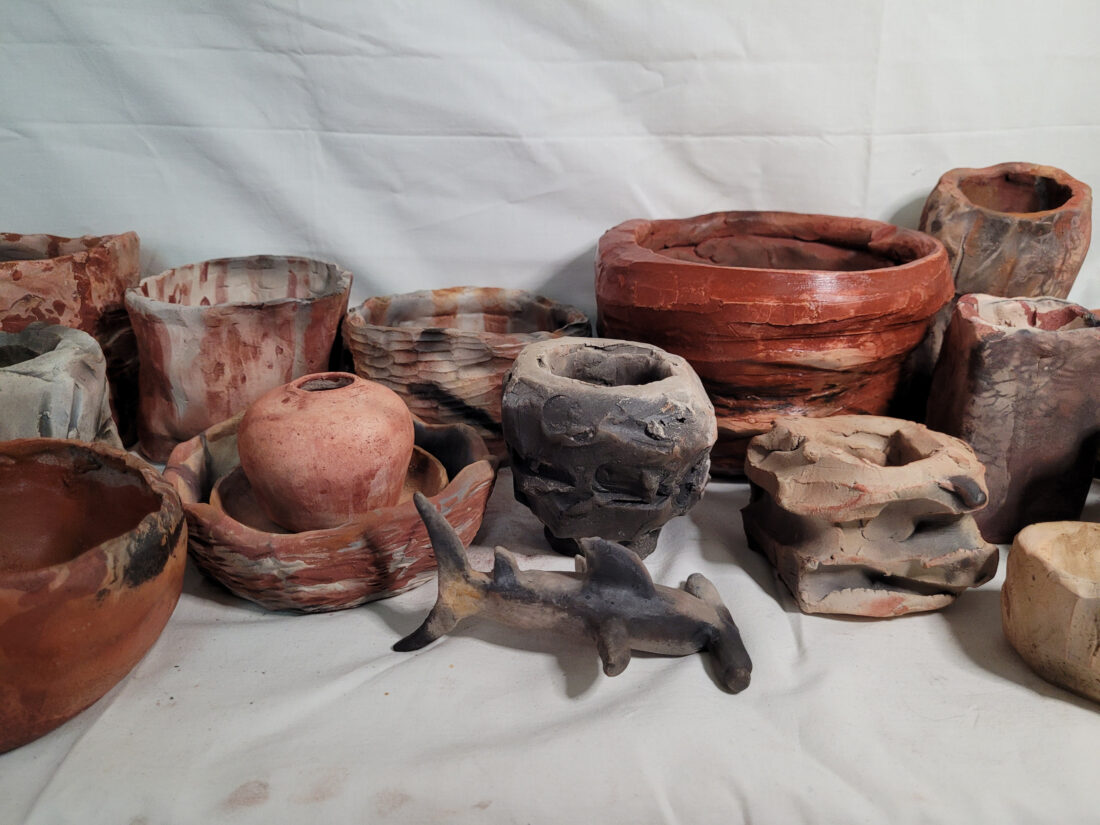
PHOTO PROVIDED Some of the ceramics created by SVRCS students with the bare firing technique are pictured.
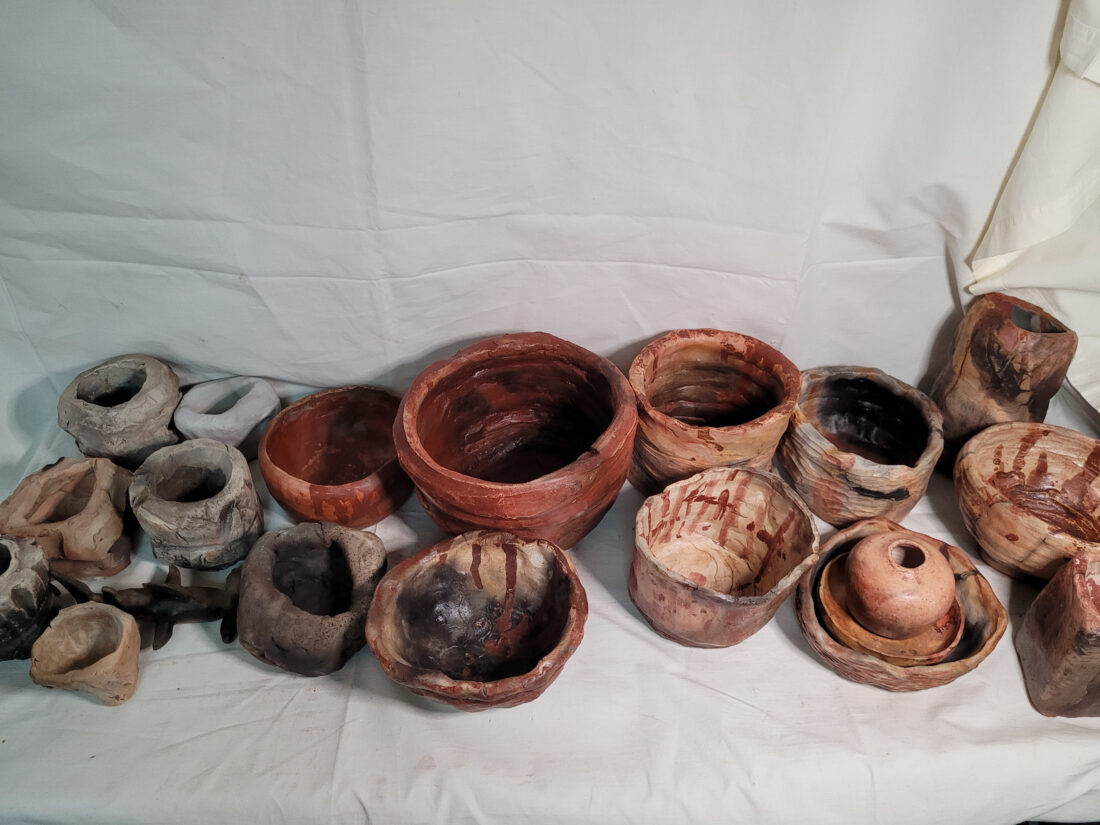
PHOTO PROVIDED Some of the ceramics created by SVRCS students with the bare firing technique are pictured.
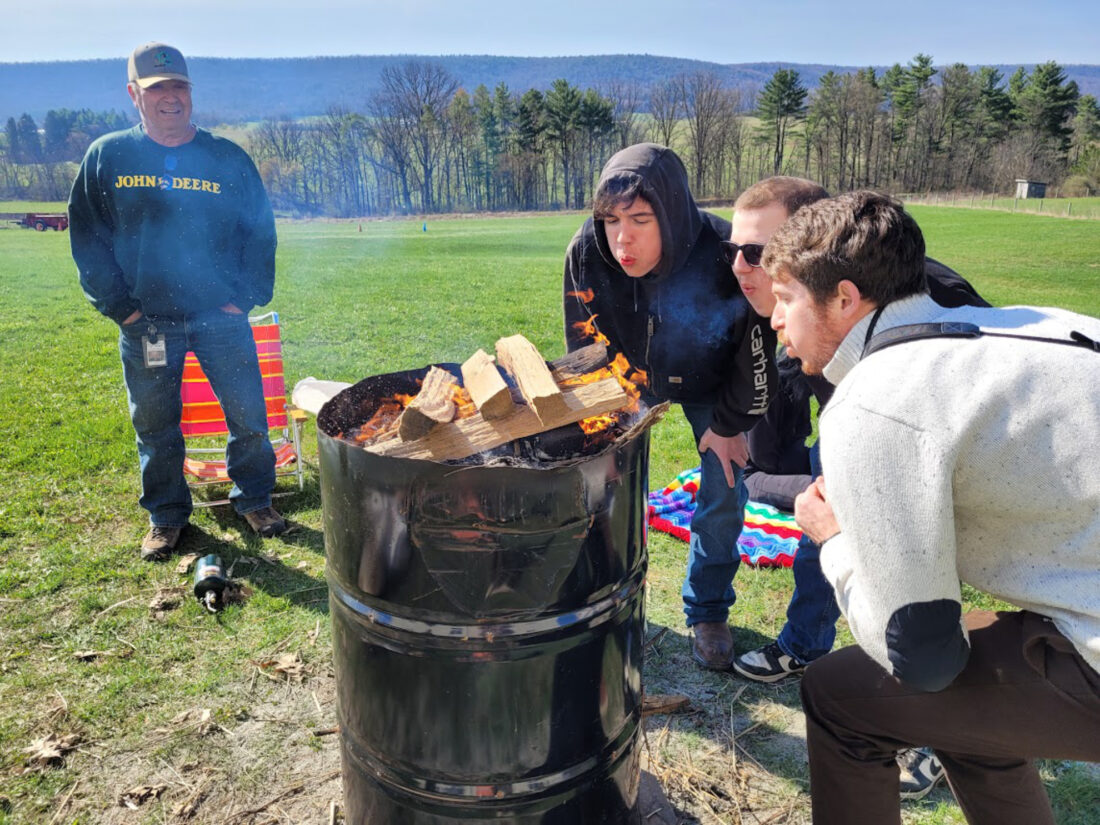
PHOTO PROVIDED SVRCS students are pictured stoking flames for the ceramic firing.
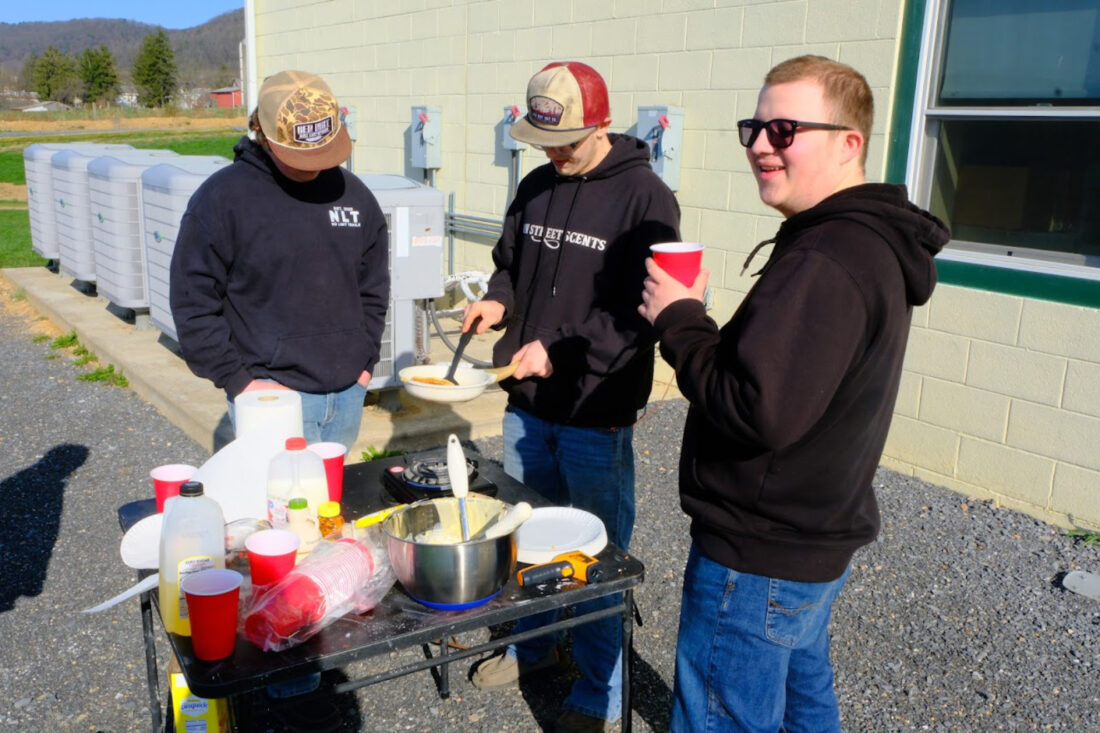
PHOTO PROVIDED SVRCS students are pictured while working on their ceramic projects.
PHOTO PROVIDED Some of the ceramics created by SVRCS students with the bare firing technique are pictured.
PHOTO PROVIDED Some of the ceramics created by SVRCS students with the bare firing technique are pictured.
PHOTO PROVIDED SVRCS students are pictured stoking flames for the ceramic firing.
PHOTO PROVIDED SVRCS students are pictured while working on their ceramic projects.
Trending
LOGANTON -- The new art teacher at Sugar Valley Rural Charter School has treated her class to an exciting, hands-on lesson in firing ceramics.
After graduating from Penn State University, Kat Wysnewski began her first year of teaching this past August and dreamed big for her students.
"I love the opportunities that this school has been providing me -- especially as a first time teacher. This school has really been encouraging me to take a leap and explore concepts that have interested me. I really appreciate the school's support of the teachers here," said Wysnewski.
Barrel firing is a deceptively simple firing process using everyday items such as sawdust, manure and, of course, a barrel.
The barrel is packed in layers, and holes are poked into the barrel to allow it to "breathe" as the fire burns.
"There are different types of barrel firing you can do. The one (we) did in particular was a sawdust firing. The majority of the fuel we used was bags of sawdust. We also incorporated some cow manure because it is very combustible and will burn nicely if it's dry. We incorporated wood chunks too," said Wysnewski.
She explained the importance of "pushing the fire down" into the barrel, but still allowing for oxygen.
"It took a while for it to actually catch fire, but after some time it caught. We had to maintain it and drive it down into the barrel. It's important to not light it from the bottom. You want it to be a hot and slow burn. You don't want to make the process any quicker than it needs to be," she said.
It's important to allow the ceramic pieces to have time to react to the heat, according to Wysnewski. If the fire burns out too quickly, the pieces will not have time for a transformative process.
"(We) also threw in some other combustibles. Adding combustibles to your ceramic pieces can create interesting flashes of color or unique markings," She said.
The ceramic pieces were wrapped in tinfoil to act as a "safeguard" along with those combustibles.
The class was able to use a few different types of combustibles to make different effects on their pieces such as iron oxide powder, banana peels, salt, copper wire, steel wool scrubbers and ferrous sulfate.
Wysnewski encouraged students to think creatively for their projects, and they tested out different aspects of firing to see what would happen.
"At the base we threw some pieces in -- I was interested to see the difference between pieces that sat at the bottom of the barrel and pieces that sat on racks," said Wysnewski.
The students seemed to love the process of building and tending to the fire -- with some students gathering materials to burn to keep the fire hot.
"They were very helpful. I was happy to see a lot of them were into it and willing to help and participate," she said.
Along with her typical ceramics and advanced ceramics class students, Wysnewski also allowed students from a previous semester who weren't able to participate to create something for the kiln.
The process took a very long time, Wysnewski noted. In order to tend to the fire and make sure everything was working as it should be, the teacher stayed very late after the school day. Once the fire was out, Wysnewski got permission to allow the pieces to cool over the weekend.
"The pieces ended up being very very cool, and I'm pleased with the results," said Wysnewski.
Though the final result isn't food safe, each piece of pottery is unique and would make for an interesting decoration.
Wysnewski hopes to do this same lesson again in the future, but wants to change some of the elements up a little bit.
"I want to have the students make animal sculptures. One of my students (this year) made a shark, and I really love how the pattern imprinted itself on the sculpture," she said.
She noted a previously taught lesson on Kurinuki -- the hand-building process of carving into a block of clay to create unique, rugged pieces -- and how the barrel firing really emphasizes some of those textured features.
"I feel like I could fit even more pieces next year. I was going to throw in a previously glazed piece, too. Next year I would love to experiment with other things in the barrel," Wysnewski said.
Wysnewski also wants to emphasize to the students the importance of burnishing a piece to make it polished without a glaze -- an important step to the barrel firing process. Instead of a glaze, burnishing is what is used to smooth the pieces.
"The beauty of art sometimes is the unpredictability," said Wysnewski, "(I want to teach) my students to embrace the unpredictability. I wanted them to go wild with it and have fun. I think the students put in an amount of effort that they're pleased with the results. I look forward to exploring new concepts with the students, introducing new ideas and perspectives and having the kids work with different materials."