
Q&A with Penn State Expert: Tips to protect against ticks
Trending
UNIVERSITY PARK -- May is Lyme Disease Awareness Month, and Pennsylvania consistently ranks as one of the top states in the nation for reported cases of Lyme disease and other tick-borne illnesses. However, there are ways to protect people, pets and livestock against ticks and the pathogens they carry, according to Erika Machtinger, associate professor of entomology in Penn State's College of Agricultural Sciences.
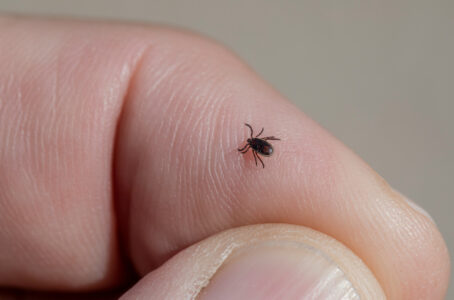
Machtinger, an expert who studies ticks and other arthropod pests and the risks they pose to humans and animals, said there are more than 900 species of ticks worldwide, at least 25 of which are thought to exist in Pennsylvania. Of these, two species account for more than 90% of identification requests submitted to Penn State: blacklegged tick and American dog tick. Three other species found in Pennsylvania include the lone star tick, Asian longhorn tick and winter tick.
In this Q&A, Machtinger answered common questions about ticks in Pennsylvania and how to best prevent poor outcomes:
Q: What is the current situation with ticks in Pennsylvania?
Machtinger: Pennsylvania remains one of the leading states for tick-borne diseases. According to the Pennsylvania Department of Health and the Centers for Disease Control and Prevention (CDC), the state consistently reports a high number of Lyme disease cases in the United States, often accounting for a substantial proportion of national cases each year.
It is important to distinguish total case counts from incidence, meaning cases per 100,000 people. Pennsylvania has a large population and widespread exposure risk, which contributes to its high total case numbers. While the state is considered to have a high incidence, it is not always the single highest on a per capita basis, compared to some smaller northeastern states.
Beyond Lyme disease, both the Pennsylvania Department of Health and CDC highlight an increasing concern about other tick-borne diseases, including anaplasmosis, babesiosis and ehrlichiosis. There also is growing attention to rare but serious infections such as Powassan virus disease. Pennsylvania is not only a Lyme disease hotspot, but also remains a key state of concern for overall tick-borne disease risk.
Q: Why are we experiencing an increase in the number of ticks and cases of Lyme disease?
Machtinger: The increase in ticks and Lyme disease is driven by a combination of ecological and social factors rather than a single cause, including abundant wildlife hosts -- especially deer and small mammals; fragmented forests that create ideal edge habitat where these animals thrive; suburban development that brings people into closer contact with ticks; and longer, warmer seasons that extend tick activity.
Historically, land use and settlement patterns have reshaped forests into patchy habitats that favor ticks and their hosts, while reductions in predator populations -- like mountain lions, wolves and the American marten -- that once helped regulate deer and small-mammal populations have further amplified host availability. At the same time, increased outdoor recreation, residential expansion into wooded areas, and improved awareness and diagnosis all contribute to higher reported cases. It is less about one behavior and more about long-term environmental change intersecting with how and where people live and work.
Q: What is the risk to livestock and pets?
Machtinger: In the eastern United States, livestock and pets face variable risk from ticks and tick-borne pathogens, with dogs and horses both susceptible to Lyme disease and anaplasmosis. Livestock, particularly cattle, are increasingly impacted by the Asian longhorned tick, which can reach very high numbers on a single host and is associated with transmission of Theileria orientalis, a pathogen that can lead to theileriosis that can cause anemia, weakness, decreased production and, in severe cases, death.
Beyond direct disease risk, heavy tick burdens can reduce weight gain, milk production and overall animal welfare, and pets also can serve as a bridge by bringing ticks into homes, increasing the risk of human exposure.
Q: What can livestock and pet owners do to protect their animals?
Machtinger: Protection should focus on integrated management and animal owners should work with their veterinarian to find the best on-animal management methods for their situation. Owners should routinely check animals and remove ticks promptly; manage habitat by reducing tall grass, brush and leaf litter near barns, kennels and pastures; limit access to high-risk wooded edges when possible; and work with veterinarians to respond quickly to signs such as fever, lethargy, lameness or anemia following activities in these tick-risky areas.
Q: What can we do to protect ourselves? Are tick repellents safe?
Machtinger: Personal protection should be layered and practices, including avoiding high-risk vegetation when possible, wearing long pants and closed shoes, performing regular tick checks after outdoor activities, using insecticides like permethrin to treat clothes and using repellents registered with the U.S. Environmental Protection Agency (EPA), such as those that contain the active ingredient DEET.
These repellents are considered low-risk and effective when used according to their labels, making them a key tool alongside behavior-based prevention. Active ingredients such as picaridin, oil of lemon eucalyptus -- not the essential oil -- and IR3535 can also be used as repellents, as long as they are registered with the EPA. The most important thing is that whatever repellent you use should be EPA-registered, which means it has gone through rigorous testing for safety and effectiveness against ticks and mosquitoes.
Q: What are some of the key resources that Penn State has available to the public?
Machtinger: Penn State provides extensive, science-based resources through Penn State Extension and the VectorED Network, including homeowner guidance, livestock and pet recommendations, and risk communication materials. The VECTOR Library remains a central, curated and searchable repository of science-based vector-borne disease education materials for professionals and the public collected from every Extension in the U.S. and U.S. territories. It will also soon include more than 4,000 materials, including all state public health resources from every state and territory as well.
The public can also register for a free webinar on Lyme disease presented by Penn State Extension on May 26 from noon to 1 p.m. ET.