
Growing lettuce
Trending
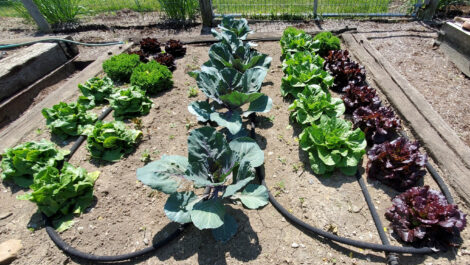
Lettuce (Lactuca sativa) is one of the easiest vegetables to grow in home gardens. Perhaps the only thing difficult about growing lettuce is deciding which varieties to plant. There are plenty of choices. Cornell University Extension lists 358 varieties of lettuce, which can be a bit overwhelming. To narrow things down, let's look at the four primary types of lettuce, their cultural requirements and uses.
Crisphead
Crisphead lettuce cultivars are known for firm, tightly grown leaves which form "heads" of various sizes. Leaves tend to be light green and have a mild flavor. A good example is Iceberg lettuce, which is frequently seen in grocery stores. Its compact, pale green, round heads can be cut into wedges or torn apart for salads. In addition, crisphead lettuce can be finely chopped for use in chopped salads or stir fry recipes.
Butterhead
Butterhead types also form heads, but they tend to be smaller and much less firm and compact than crisphead types. The leaves, which range from shades of green to red, are loosely packed and somewhat crumpled. Butterhead types have softer leaves and a sweeter taste than crispheads. Bibb and Boston lettuce are familiar butterhead cultivars. They tend to be more nutritious than Iceberg lettuce and are frequently used in salads, on sandwiches and for garnishes.
Romaine
Romaine lettuce, also known as cos, has increased in popularity in recent years. It has long, straight or slightly curved leaves which form a loose head that can reach approximately 12 inches tall. Leaves tend to be dark green to red, sweet and high in nutrition. Romaine is an essential ingredient in Caesar salads and widely used in other salads as well. It is also used on sandwiches, in wraps and as a garnish.
Leaf
Leaf lettuce does not develop heads. Instead, the plant forms a rosette of leaves round a central stalk. There is considerable variation in the size and coloration of the leaves, depending upon the cultivar. Leaves can be shades of green, red, speckled or solid. Some are smooth while others are ruffled. They can be just over an inch to several inches in length. Leaf lettuce is used extensively in salads and valued both for taste and appearance.
It's important to point out that lettuce grows best in cool weather. Warm weather causes lettuce to shift its energy into producing seeds, which is referred to as "bolting." Bolting causes the leaves to become bitter. For that reason, many gardeners focus on growing lettuce in spring and fall, rather than the hot summer months. To delay bolting, choose lettuce varieties that have been bred specifically to be more tolerant of warm weather. Shielding the plants with shade cloth or planting them in locations that are shaded from hot afternoon sun can be helpful as well. Crisphead varieties are especially intolerant of hot weather.
Lettuce can be planted by direct-sowing seeds into the garden or by setting out transplants. Both seeds and transplants are readily available at garden centers and greenhouses in Clinton County. Lettuce plants have shallow roots, so they should be kept well-watered and weeded carefully so as not to disturb roots.
There is considerable variation in the number of days required for lettuce plants to reach maturity. For example, many leaf lettuces require only 45-60 days, while others, such as romaine, need about 70 days and crisphead varieties can take even longer. The outer leaves of butterhead and romaine can be picked and used while allowing the plant to continue to grow. Leaves of leaf lettuce can also be picked without harvesting the whole plant.
To have a supply of fresh lettuce available for an extended period, many growers use succession planting, which is the practice of planting at intervals instead of planting all the plants at the same time. This is something I learned the hard way when I first began to grow lettuce. I found transplants of exactly the varieties I wanted and bought about two dozen of them, which I took home and planted immediately. Much to my chagrin, they all reached maturity at the same time, so I ended up giving heads to friends and neighbors so they wouldn't go to waste. Needless to say, I now practice succession planting!
Additional information on growing lettuce is available from North Carolina Extension at plants.ces.ncsu.edu/plants/lactuca-sativa/ and from Cornell Extension at www.gardening.cornell.edu/homegardening/scene9aa6.html
-- -- -- --
Debra C. Burrows, PhD, is a retired Penn State Extension Educator and a certified Master Gardener. She can be reached at dcb3@psu.edu.