Community to celebrate levee 25 years after its dedication
-
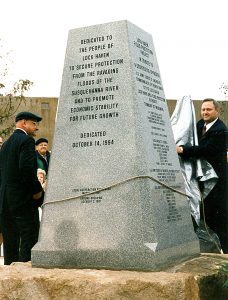
- PHOTO PROVIDED Robert Yowell, director of the Lock Haven Flood Protection Authority when the $86 million flood protection system was built, unveiled the monument that stands at the corner of Jay and Water streets at the base of the levee, on Oct. 14, 1994. At left is authority member Emmet Bongar. The inscription on the monument at the corner of Jay and Water streets reads: “Dedicated to the people of Lock Haven to secure protection from the ravaging floods of the SusquehannaRiver and to promote economic stability for future growth.” — Dedicated October 14, 1994.
-
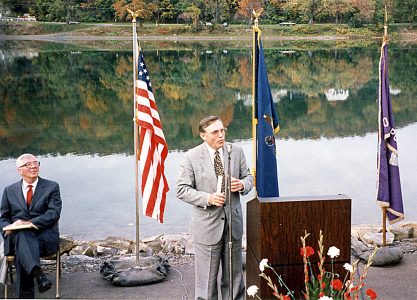
- PHOTO PROVIDED State Sen. J. Doyle Corman was among those who fought for the levee. The amphitheatre built into the levee was named the J. Doyle Corman Amphitheatre.
-
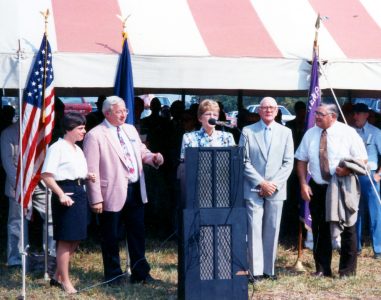
- PHOTO PROVIDED These are the five Lock Haven City Council members who voted to float a bond to pay the city’s share of the project — $4.4 million — shown at the groundbreaking ceremony on Oct. 4, 1991. From left are June Houser, Alfred Hoberman, Mayor Diann Steumpfle, Joe Nevins and George Shade. Voting against the bond issue to finance the project were Scott Smith and Mahlon Dunkle.
-
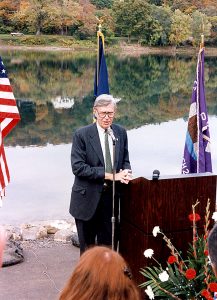
- PHOTO PROVIDED U.S. Congressman William G. Clinger Jr. was guest speaker at the dedication ceremony on Oct. 14, 1994. Clinger was instrumental in keeping funding for the levee in the federal budget and the walkway atop the levee is named the William G. Clinger Jr. Memorial Riverwalk. At Clinger’s left is Bill Eiseman, who was a Lock Haven City councilman at the time of the dedication.
-
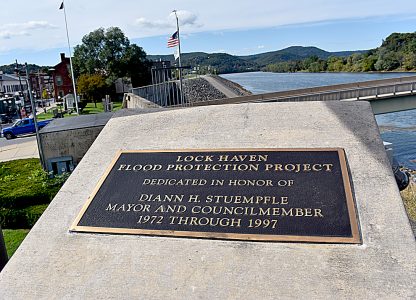
- LAURA JAMESON/THE EXPRESS A plaque on the levee dedicates the Flood Protection Project to Diann H Stuempfle, mayor and councilmember.
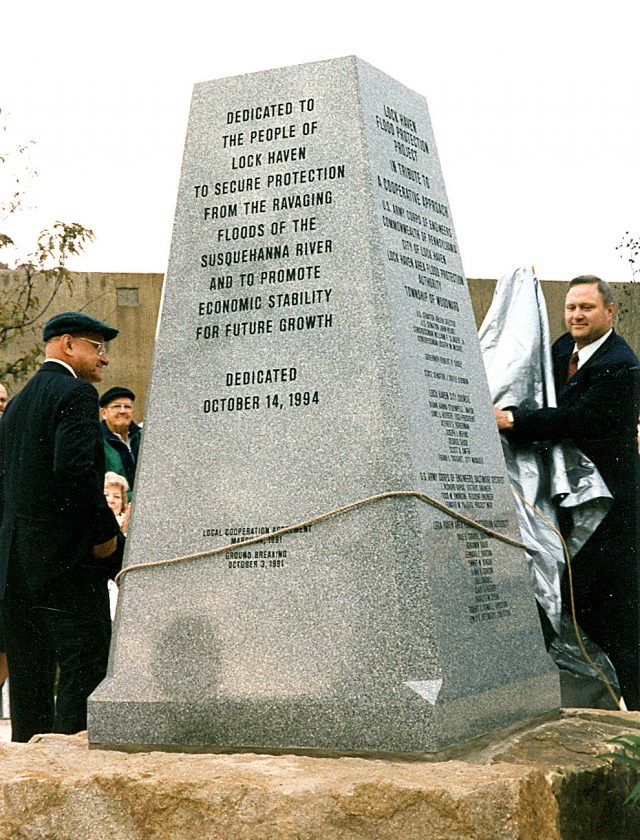
PHOTO PROVIDED Robert Yowell, director of the Lock Haven Flood Protection Authority when the $86 million flood protection system was built, unveiled the monument that stands at the corner of Jay and Water streets at the base of the levee, on Oct. 14, 1994. At left is authority member Emmet Bongar. The inscription on the monument at the corner of Jay and Water streets reads: “Dedicated to the people of Lock Haven to secure protection from the ravaging floods of the SusquehannaRiver and to promote economic stability for future growth.” — Dedicated October 14, 1994.
By LOU BERNARD
For The Express
LOCK HAVEN –The flood protection levee runs along the northern border of Lock Haven, standing between the city and the Susquehanna River. Some use the river walk to exercise, or get out and take a pleasant stroll. They walk dogs, they take photos.
Some people barely notice the levee; it’s just there as they drive down Water Street. Many citizens of Lock Haven likely don’t remember a time it wasn’t there.
But this month is the anniversary of the levee. It was dedicated 25 years ago, and a small group of local citizens are holding a ceremony to commemorate it.
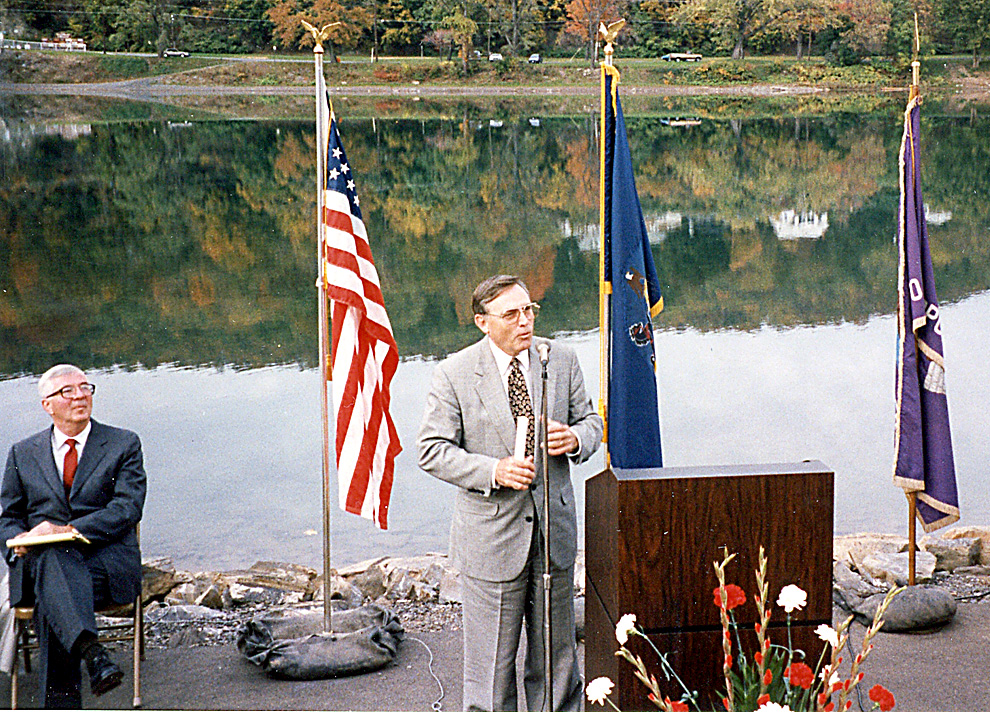
PHOTO PROVIDED State Sen. J. Doyle Corman was among those who fought for the levee. The amphitheatre built into the levee was named the J. Doyle Corman Amphitheatre.
Over the past several months, local people Aaron Russell, Mark Stern, former city council person June Houser, former city manager Richard Marcinkevage, and Flood Protection Authority chairman Terry Shultz have planned to look back on the levee after a quarter-century. The public is invited to join them at the monument at the corner of Jay and Water Streets on Monday, Oct. 14 at 1 p.m. for a few words about the historic event.
The history of Lock Haven has been interspersed with floods. Back before recorded history, the area was flooding when the river rose too high. Over 30 years ago, city council began to discuss the possibility of a levee to protect the city from the rising waters every few years.
The debate almost immediately became controversial. Some citizens of Lock Haven were in favor of such a plan, and some were against it. People argued at city council meetings, protested, and boycotted businesses that didn’t agree with them, and the debate went on for years.
There was merit to both sides of the issue. The floods had cost Lock Haven dearly in both money and lives throughout its history, and better flood protection would help prevent those losses.
On the other side of the coin, people stood to lose their homes over the project; as the Army Corps of Engineers designed the levee, it became clear that some residences would have to come down. Though money was paid to the homeowners, many felt that there was no amount that would fairly make up for the loss of their homes to eminent domain.
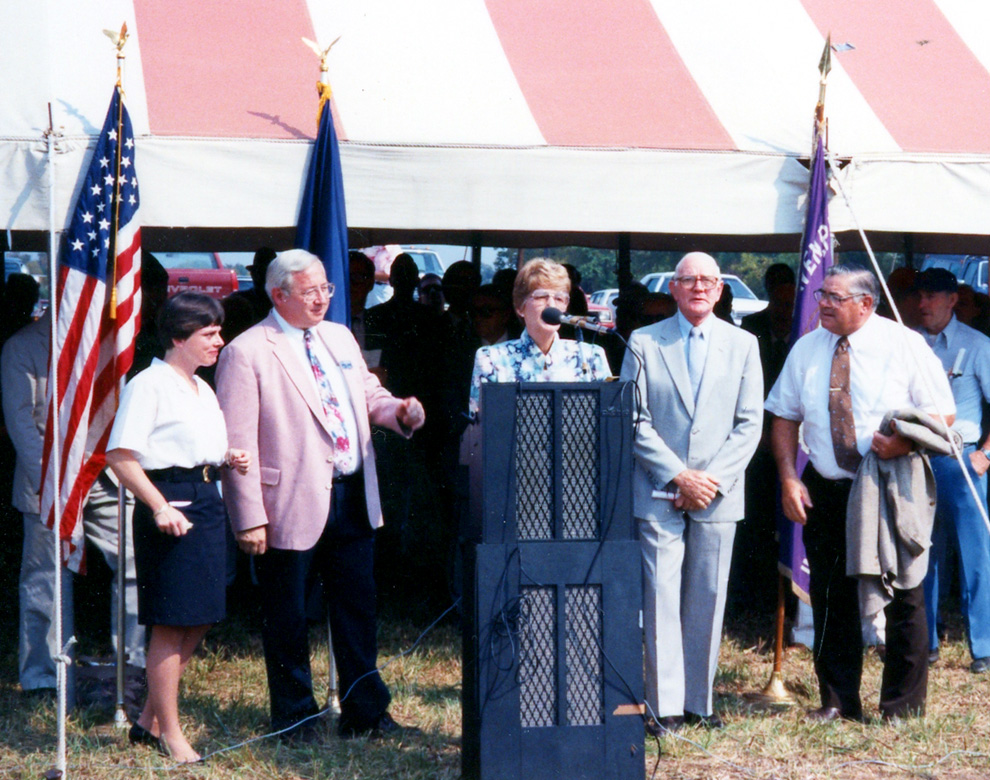
PHOTO PROVIDED These are the five Lock Haven City Council members who voted to float a bond to pay the city’s share of the project — $4.4 million — shown at the groundbreaking ceremony on Oct. 4, 1991. From left are June Houser, Alfred Hoberman, Mayor Diann Steumpfle, Joe Nevins and George Shade. Voting against the bond issue to finance the project were Scott Smith and Mahlon Dunkle.
In 1992, Robert Edmonston won a term as Lock Haven’s mayor by running on an anti-levee platform, but had lost the issue as the levee was built. He served one term as mayor, declining to even attend the opening ceremony for the levee, which was held in October of 1994.
The ceremony attracted over 500 locals, and had a speech from Congressman William G. Clinger Jr., who was a supporter of the levee and whose name is on the Riverwalk. “Flood protection beats flood cleanup,” Clinger stated, adding, “This project has been in the making for 20 years, and it represents the best of times and the worst of times, fortune and misfortune, pain and pleasure.”
Also in attendance were Colonel Randall R. Inouye and Brigadier General Milton Hunter, representing the Army Corps of Engineers, who constructed the levee.
The levee’s first big test came a little over a year later, in the flood of Jan. 20, 1996. In addition to the heavy rainstorms, the snow melted much too fast, and the Susquehanna rose rapidly. The levee held back the rising water, preventing Lock Haven from experiencing another flood like 1972 or 1936.
The Lock Haven Express summed up the experience in one front-page headline.
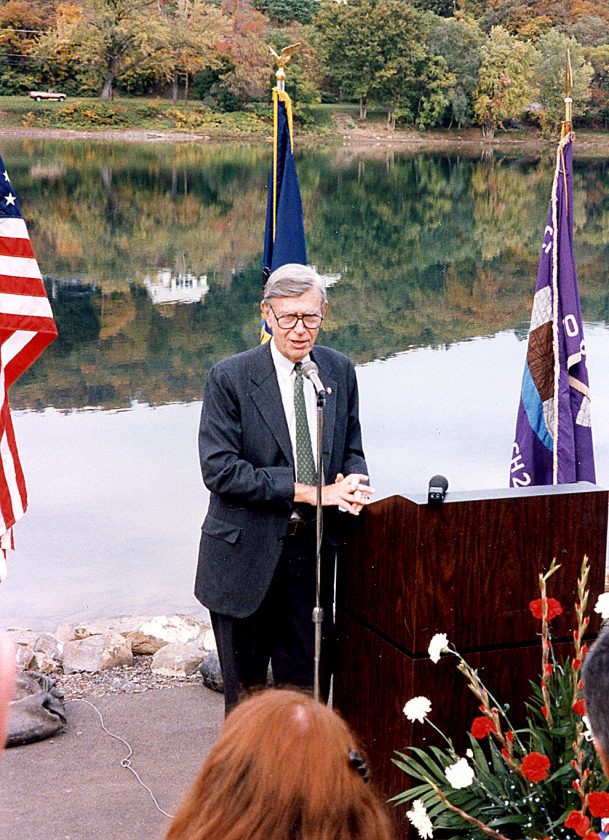
PHOTO PROVIDED U.S. Congressman William G. Clinger Jr. was guest speaker at the dedication ceremony on Oct. 14, 1994. Clinger was instrumental in keeping funding for the levee in the federal budget and the walkway atop the levee is named the William G. Clinger Jr. Memorial Riverwalk. At Clinger’s left is Bill Eiseman, who was a Lock Haven City councilman at the time of the dedication.
“IT WORKED!”
The prevention of another flood won over some — Though not all — of the skeptics.
“I’m really happy for Lock Haven,” city councilman Al Hoberman said. “This really vindicates just a whole bunch of people.”
Diann Steumpfle, mayor at the time the levee was begun, was glad for the levee.
“I’m just thankful that it worked, thankful it protected the community,” she said. “I don’t care who you are, you have to be happy it worked.”
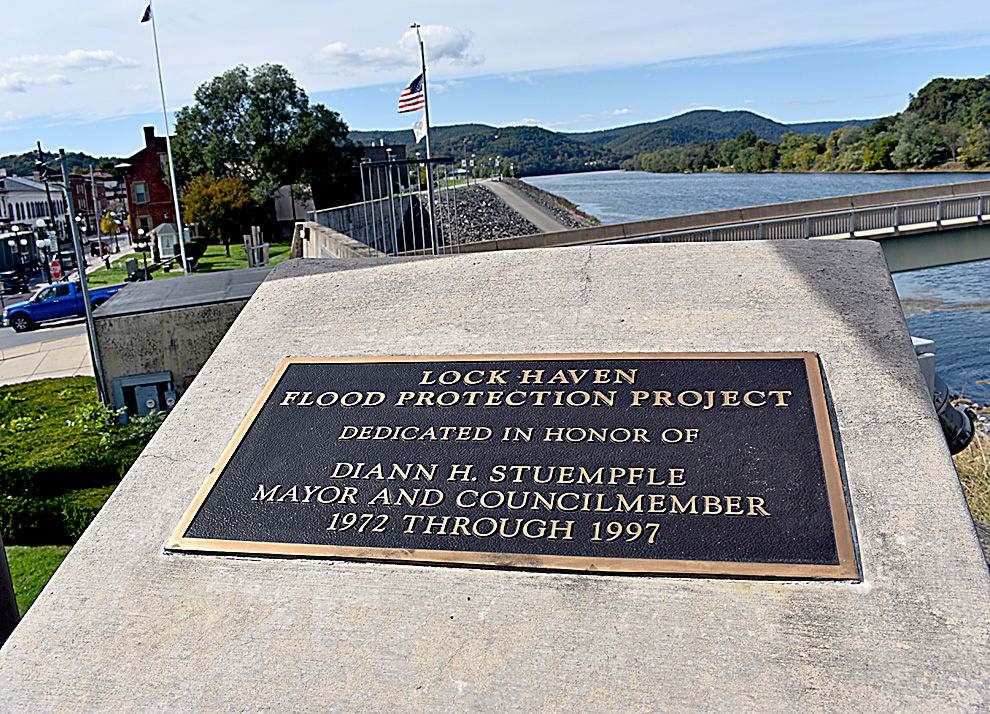
LAURA JAMESON/THE EXPRESS A plaque on the levee dedicates the Flood Protection Project to Diann H Stuempfle, mayor and councilmember.
In the 25 years since the levee was completed, it has protected the community several times. It has saved the city of Lock Haven countless dollars in repair and restoration.
On Monday, people will gather to remember the levee, recall the construction and the controversy, and show gratitude for the protection.
The community is invited to join in.
Local news

YMCA’s Pre-K Counts help keep community clean for Earth Day

Meet two of the million independent Pa. voters shut out of May’s primary

Trump’s upcoming public events get a fresh security look
Survey shows residents’ discontent with PA healthcare on the rise
A new survey shows Pennsylvanians are expressing more dissatisfaction with the quality of healthcare in the ...

FFA awards banquet honors SVRCS students