
Following ‘devastating’ crop freeze, state leaders call for federal aid
Trending
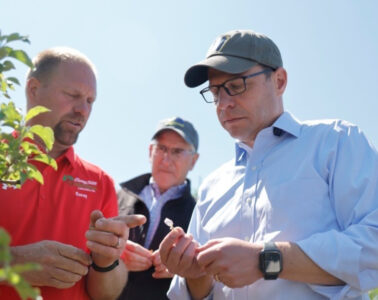
State officials, speaking from an orchard in Lancaster County on Friday, called for the federal government to provide disaster assistance to farmers whose crops were damaged by an April freeze. Early estimates put economic losses for the commonwealth's special crop industry between $150 million and $200 million.
"My Administration has prioritized Pennsylvania agriculture from day one because we know farming powers our economy, feeds our communities and sustains our rural communities. Right now, Pennsylvania farmers are facing catastrophic losses through no fault of their own, and they deserve a federal government that moves with urgency," said Gov. Josh Shapiro in a release.
"We will continue to have the backs of our farmers and make sure we explore every option at our disposal to help them through this crisis," he continued.
Shapiro and others highlighted Cherry Hill Orchards, the hosting Lancaster County farm, which doesn't expect any revenue until the Fall of 2027 after near-total losses this year.
"Fruit farming is a year-round investment of time, labor and faith in the season ahead, and after a freeze like this, you can see months of work and planning impacted in just a few hours," said Corey McCleaf, owner of the orchard and a fifth-generation grower. "For operations like ours, these losses affect not just this year's crop, but the employees, families and local communities that depend on Pennsylvania agriculture."
In a letter to U.S. Secretary of Agriculture Brooke Rollins, Shapiro requested a federal disaster designation following an April 21 freeze that followed "several weeks of warm weather ... that pushed blossoms on fruits and ornamental trees."
Temperatures in the low 20s harmed fruit operations -- including peaches, cherries, apricots, pears, strawberries, grapes and apples -- "that were well into blossom and in the early stages of producing fruit." Other crops, including Christmas trees, were similarly damaged. For some farmers, including those who have closed their doors for the season, losses could be as high as 100%.
"This freeze didn't just damage crops -- it jeopardized years of hard work and the future stability of family farms across Pennsylvania," said state Agriculture Secretary Russell Redding. "Cherry Hill Orchards' story is one we are hearing in every corner of the Commonwealth. Growers are facing heartbreaking losses that will ripple far beyond the orchard or field, impacting local economies, farm markets, processors and packagers, and the families who depend on agriculture for their livelihoods."
Shapiro's letter includes missives from several companies and industry associations, detailing the scale of the "devastating" freeze in Pennsylvania. In addition to the disaster designation, which would open up opportunities for assistance, Shapiro also asks for faster damage assessments to help growers file crop insurance claims.
The state is also working with Penn State Extension to collect early industry assessments. Lawmakers vowed to work on legislation to support farmers and asked Pennsylvanians to support local farmers with their produce purchases.
The state's release pointed to long-term solutions funded under the Agricultural Innovation Grant Program, which can help farmers prepare for severe weather. Ridgetop Orchards in Bedford County, for example, received $58,964 for wind machines that provide freeze protection.
The freeze comes on top of a myriad of other challenges for farmers, including the rising cost of diesel fuel and fertilizer as the Iran War strangles critical imports.
Growers and farmers seeking more information and resources related to the freeze, including reporting losses, business planning and risk management, can visit agriculture.pa.gov.