
KC board grapples with deficit; may consider no tax increase for 26-27
Trending
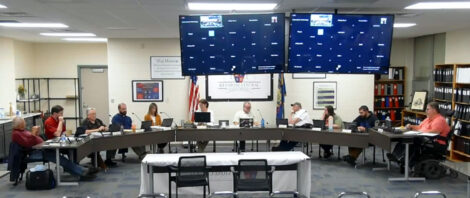
MILL HALL -- As the deadline for approving a 2026-2027 budget nears, tensions rose during the Keystone Central School District Board of Director's work session this week, including its board president attempting to remove one of its members during discussions on Thursday night.
At first, the board seemed to move past the proposed $94 million budget for 2026-2027 -- which it will vote to approve for adoption in June at its meeting next Thursday.
The proposed budget, according to the work session agenda, would see no tax increase as the district is projected to end the 2025-2026 year with a $3.5 million deficit.
However, new board member Jason Smith requested it be discussed more prior to the voting session on May 14.
Smith pointed to the numbers, which sees reserves projected for 2027-2028 at about $133,814 after the district pulls funding to offset the deficit.
"The proposal, as I understand it, is a zero percent tax increase. If we do this, if we do no tax increase -- which I'd love to do -- we are committing ourselves as a board to a lot of hours of special meetings and trying to cut expenses."
He noted the clock is ticking for the district to avoid being placed into a receivership with the Commonwealth.
"We are committed and the clock is ticking. If anything goes sideways, we're going into receivership. It's probably a financial certainty, that's how I see it," he said.
He noted if the district were to increase taxes, he saw it as a short term gain, long term loss, but that it could buy them time to right things.
"Even if it's another year. Bureaucracy is notoriously slow to change so if we're coming at this one, we want to reduce expenses," he said. "There's going to be legalities, there's concerns, there's some things we have to take into consideration that just don't work the way we want them to work."
Smith asked for other board members' input regarding the proposal and whether or not they preferred no tax increase for 2026-2027 versus some form of an increase to up revenues.
"I just wanted to hear where the board kind of was. I would feel more comfortable if we had more time to be honest but I don't want to raise taxes. I haven't made up my mind," he said.
Board member Chris Scaff said he's been asking fellow members to look closely at budgets he's helped produce with administrators as a way to try and decrease costs.
"Before we increase taxes, let's see what we can cut. We need to know where we're standing. If we can find something in the budget to take out then maybe we don't have to do such a big tax increase," Scaff said. "Maybe we can do our homework and look at the situation after things are cut."
He said one program he reviewed was able to make about $100,000 in cuts if it's approved.
"That's why I'm asking for everybody to be together, let's work on it in the finance meeting. You have plenty of time right now to look at all of their budget pages and look for something," he said. "If we can sit down and cut a bunch out of the budget and save. Like (Baldino) said, we've never done any reduction. And there's a reduction we can do."
Board member Dr. Bill Baldino said he felt the board would need to look where to reduce expenses, but also increase revenues through some form of tax increase.
"We've got to raise income and we've got to lower expenses. We have done a lousy job over the last three years of lowering expenses. We need to do that," he said.
However, he said there may be a need for an increase in taxes for the 2026-2027 budget.
"I've voted against tax increases the last two years. But I would propose at the very least we use last year's budget, $92 million -- maybe even try to cut it a little more. Plus, at the same time, raise taxes a little bit," he said. "If we go with the $94 million budget and raise taxes to maximum without any cuts in staffing, we're still at $2.6 million in a deficit budget. If we get cuts from the staffing, we'd get it down to about $1.6 million."
Baldino's comments regarding staff relate to a study done by Superintendent Dr. Francis Redmon which was presented to the board in March. At the time, the board voted down a recommendation from Redmon which would allow him to furlough a number of positions to help decrease the deficit going into the next fiscal year.
Baldino said trimming the deficit would reduce the likelihood of the district being placed in receivership by the state government.
Baldino and Smith's comments regarding receivership are in reference to the state's Financial Recovery System.
According to the Pennsylvania Department of Education, Financial Recovery for public school districts in the state involve three tiers: Financial Watch; Financial Recovery and Receivership.
According to PDE, the district isn't listed as being under Financial Watch.
"Trim that deficit, maybe even get it all the way down and maybe balance it or get a smaller deficit. It'll make the state less likely to want to come up here and interfere because they've got other problems on their plate," Baldino said. "I think we're kidding ourselves if we don't raise revenues and cut expenses. We got to do them both."
Scaff said he's trying to reduce expenses by looking closely at the budget, which Baldino referenced was micromanaging.
"You sit their and say we've done nothing, but there's some of us who have been contributing for two years," he said. "You, yourself have said you know nothing about finances, that's not your thing. With that said, I'm trying to get everybody here to look at those budgets."
In the midst of Scaff's statements, when he questioned Baldino about what he was doing and Baldino attempted to answer, arguments erupted between the two and Board President Elisabeth Lynch.
When Lynch requested Baldino stop and allow Scaff to finish his statements, Baldino told her to be quiet. This lead to Lynch demanding Baldino leave the room, and requested he be removed.
Baldino ultimately refused to leave the brief disruption stopped, allowing discussion to continue.
With order restored, Baldino answered the questions Scaff brought forward.
"I don't know what Frank needs to run this district. You don't either. Neither does anybody else sitting at this table expect maybe Richard (Wykoff). To say I've brought nothing, I did bring something," he said. "Let's say 'Frank we need you to reduce the budget... by this percentage or this many dollars' then expect him to do it. That's what we're supposed to be doing. We're a policy making organization here."