
Responding to those who Respond: Critical Incident Stress Management team aims to assist first responders
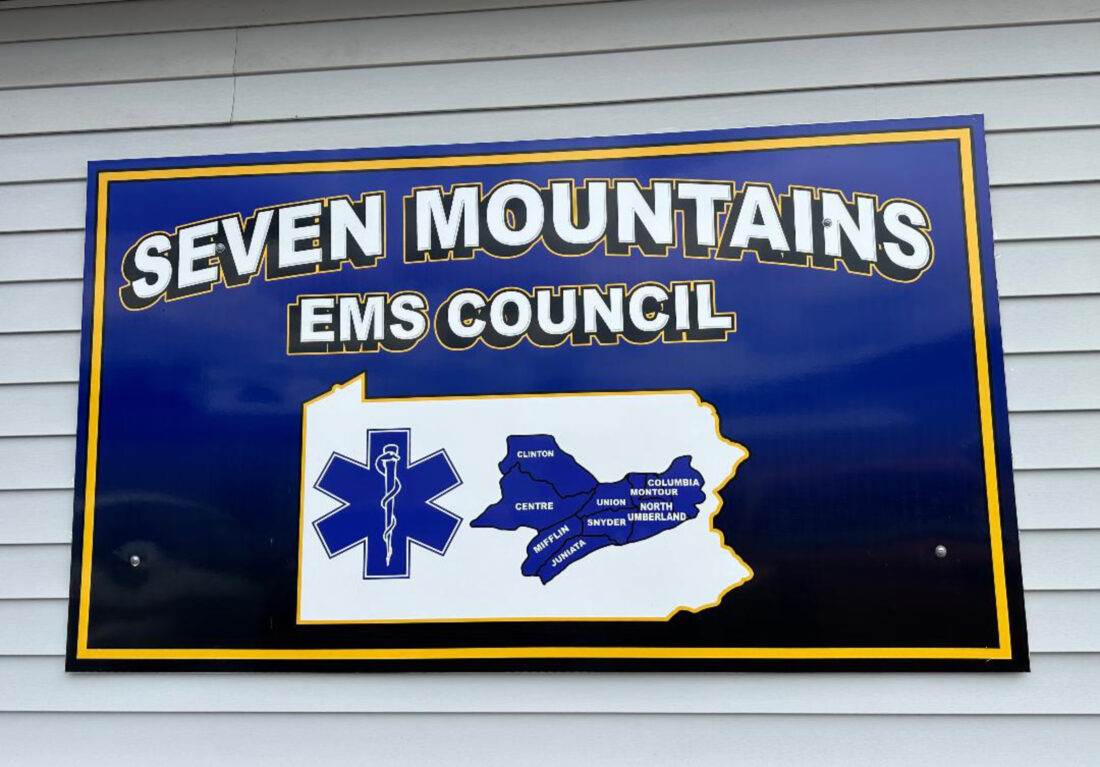
BRAD REIDER/FOR THE EXPRESS Pictured is the Seven Mountains EMS Council. The council covers a number of counties, including Clinton and Centre.
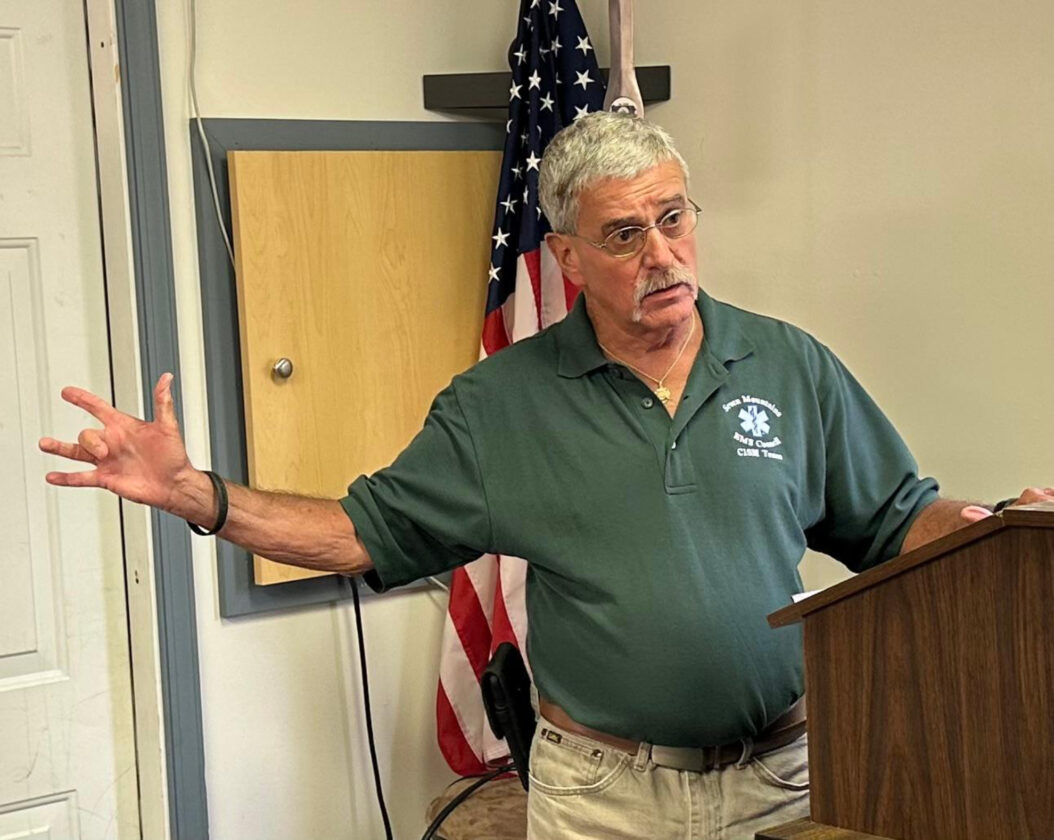
Critical Incident Stress Management Team Leader Patrick Pauley talks about the program he oversees and its role in assisting first responders. BRAD REIDER/FOR THE EXPRESS
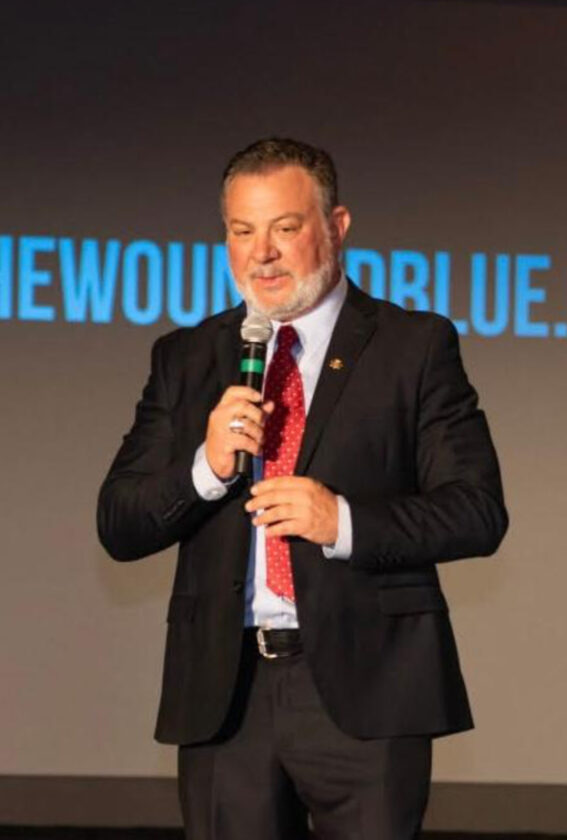
PHOTO PROVIDED In this photo provided by The Wounded Blue, its founder, Randy Sutton, speaks at an event.
BRAD REIDER/FOR THE EXPRESS Pictured is the Seven Mountains EMS Council. The council covers a number of counties, including Clinton and Centre.
Critical Incident Stress Management Team Leader Patrick Pauley talks about the program he oversees and its role in assisting first responders. BRAD REIDER/FOR THE EXPRESS
PHOTO PROVIDED In this photo provided by The Wounded Blue, its founder, Randy Sutton, speaks at an event.
Trending
BELLEFONTE -- "Routine" is a word often avoided by first responders when describing a call, and responders are trained that no call should ever be considered routine.
Fortunately, many calls are minor in nature.
Firefighters often respond to false alarms.
EMS personnel have lift-assists calls, and police officers respond to parking complaints and minor neighbor disputes.
Then there are the other calls.
There are calls that can evoke a visceral reaction from the moment the dispatch tones go off, such as a traffic collision with entrapment, a farming accident with serious injuries or a dwelling fire with victims inside.
For those types of calls, often referred to as "critical incidents," it can sometimes be a challenge for a first responder to simply "let the incident go" or "move on" once the response is complete or their shift is over. Sometimes they need help processing what they experienced.
Critical Incident Stress Management (CISM) is a system developed in the 1970s and 1980s designed to help first responders cope with stress that a response to a critical incident might result in.
The process often involves group debriefings in which first responders can discuss the incident in a relaxed forum with other personnel that responded in order to help them manage their feelings and reactions.
While firefighters, EMS personnel and law enforcement officers are usually thought of as it relates to the term "first responder," the CISM process is inclusive of other personnel that might be affected by an incident as well, such as 9-1-1 operators and coroners' personnel.
Calls Take a Toll
Dave Ray is a psychologist who has been working with first responders for over 30 years. He is the Clinical Director for the Seven Mountains/Susquehanna Valley CISM Team.
Ray noted that a recurring theme with CISM is helping responders "process" what they've witnessed or experienced.
"The calls take a toll," Ray said, adding that he views the CISM process as "Emotional First Aid for First Responders"
The Seven Mountains/Susquehanna Valley team currently has approximately 35 CISM team members, the majority of which are or were first responders themselves.
The team falls under the purview of the Seven Mountains EMS Council, a non-profit organization which, in addition to offering CISM services, provides training and licensure certifications for a variety of emergency agencies in the region. The EMS Council and CISM team, headquartered near Bellefonte, serve several Central and North Central Pennsylvania counties, with Centre, Clinton and Lycoming among them locally.
Several CISM team members in addition to Ray have a background in clinical psychology.
CISM team members are required to attend training sponsored by the International Critical Incident Stress Foundation (ICISF) prior to participating in debriefings as team members.
While most debriefings conducted by Seven Mountains / Susquehanna Valley CISM are requested by the Fire and EMS community, the team offers their services to law enforcement as well.
The
Debriefings
According to Ray, a CISM debriefing usually takes place 12 to 72 hours after an incident. An agency head, such as a fire chief, will request the team and a debriefing location and time will be set, usually at the fire house or EMS station.
Personnel who responded to the given incident can then meet in group settings with CISM team members, most of whom have a background in the fire service or EMS.
The debriefings are not meant to be critiques or criticisms of the response itself, but rather they allow responding personnel to express what they might be feeling due to their role in the incident. That forum can help assist them in managing potential stress they might experience as a result.
Should a first responder still have an issue dealing with a particular call they were on, the CISM team offers a one-on-one follow-up with that responder. If necessary, the first responder can be referred to additional counseling through the agency they're a member of.
Part of the Community
Harold Mast is the director of Seven Mountains EMS Council and has a background in both the fire service and EMS.
Mast says that one aspect of being a first responder in a rural area is that individual responders likely reside within the areas they serve, something that can make it difficult for them to separate their personal lives from an incident they responded to.
"It can be overwhelming at times," says Mast, adding that often when responding to a call within their own community, the patient could be someone the responder knows personally, or might even be part of the responder's own family.
Jason Brooks is one such responder. Brooks has been a first responder for over 17 years, serving as both a firefighter and EMS worker, and most recently as chief of the Miles Township Volunteer Fire Company in eastern Centre County.
Brooks indicates that it can be difficult to talk with a friend or family member regarding something a responder has dealt with on a scene, stating that "when you talk to other first responders, they can relate in a unique way that helps validate your feelings."
Brooks is a proponent of the CISM process, having personally attended several debriefings over the years. He noted the importance of following up with individual members in the days and weeks after a critical incident to ensure they're doing well and don't require further assistance.
"We make sure we have each other's backs," Brooks added.
Incidents Add Up
Patrick Pauly is a CISM Team Leader and says that it's not always just one specific incident that could pose an issue, but that responding to numerous tragedies can have a cumulative effect on a first responder.
Pauly says that one of the goals of the CISM process is "to make the first responder ready to be a first responder for the next call," adding that it's not uncommon for first responders to second-guess themselves, leading a series of "what if" questions they dwell on in their own minds.
The
Incidents
Cathy Grimes is an EMS Programs Specialist with Seven Mountains EMS Council and assists with the CISM program.
Grimes says that the number of debriefings that Seven Mountains conducts each year varies, but that so far in 2026, they've conducted six.
Grimes indicated that the debriefings over the years largely involved fatal fires and motor vehicle crashes, but debriefings for farm accidents are also common.
As Real
as a Bullet
Randy Sutton is a retired police lieutenant from the Las Vegas Metropolitan Police Department, serving a total of 34 years in law enforcement.
In 2017, Sutton founded The Wounded Blue, a Nevada-based non-profit which supports officers injured or disabled in the line of duty, whether physically, mentally or emotionally.
"Post-traumatic stress can be as real as a bullet," said Sutton, adding that while the exact number is unknown, an estimated three to five times the number of officers killed in the line of duty each year will die by suicide.
Sutton stressed the importance of the CISM process, indicating that as with firefighters and EMS personnel, police officers deal with "tremendously traumatic" incidents on a regular basis.
"Law Enforcement deals with traumas, death, suicides, child abuse and homicides, even within rural areas," says Sutton, noting that even conducting death notifications, a common duty for rural and suburban officers, has an effect on them.
Sutton says that while law enforcement has "come a long way" regarding mental health, there can still be "a tremendous reluctance for many officers to ask for help."
"You cannot walk alone in law enforcement," Sutton says.
For more information about the Seven Mountains/Susquehanna Valley CISM Team, you can visit www.smemsc.org, or visit the Seven Mountains EMS Council Facebook page.
For more information regarding The Wounded Blue, visit www.thewoundedblue.org, or visit their Facebook Page, The Wounded Blue.