
‘Black Swan’ is a dark, twisted tale of a realistic fear
Trending
For a really long time I've seen 2010's "Black Swan" teasers, posters and reviews online or TV and thought about how I should watch it.
The concept -- a young ballerina driving herself to madness for perfection -- seemed really interesting to me. When you throw in Natalie Portman as the lead and Mila Kunis as a supporting character, you can double how interested I was.
However, it wasn't until last month, near Christmas, that I finally sat down and watched this movie, directed by Darren Aronofsky.
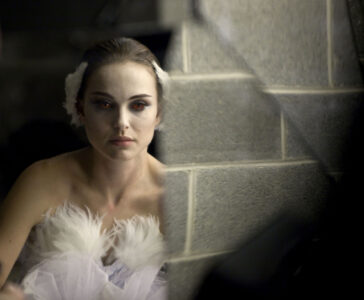
The movie, a psychological thriller with lots of horrific moments (definitely avoid if body horror isn't your thing), follows Nina Sayers (Portman), a young dancer in the New York City Ballet who dreams of her big break. You can see pretty early on that not only does she face pressure internally, it's also external through her overbearing mother, Erica (Barbara Hershey), a former ballerina who is pushing her life's ambitions on her daughter.
Nina soon finds her chance to show her worth when artistic director Thomas Leroy (Vincent Cassel) picks her to star as both Odette, the innocent white swan, and Odile, the black swan, in the company's opening performance of "Swan Lake." This is after he forces the company's star dancer, Beth (Winona Ryder), into retirement.
From the get-go we see Nina begin to struggle. Though she can perform Odette's moves with perfect poise, Thomas is constantly frustrated by her inability to embody Odile -- going as far as to insinuate he should give the role to newcomer Lily (Kunis).
Throughout the movie we watch Nina wrestle with her insecurities, need for perfection and mother's dreams while discovering new parts of herself. And if that isn't enough, she also has a tendency to experience vivid and terrifying hallucinations.
All of this snowballs into opening night, where Nina -- having already bucked her mother's authority and rebelled in ways she never thought possible -- leans even more fully into this new "dark side"… letting the hallucinations continue to overcome her, whether intentionally or not.
When Aronofsky came up with the concept of this movie, he said it was to tell the story of a fear an understudy can bring, or even body double. In this case, it was Nina's fear of being replaced by Lily.
A lot of people can relate, to some degree, with the fear of being replaced. Whether on the stage, the field or even at your job -- if you care about something deeply enough, and you put everything into it, the idea of losing it is jarring.
I feel Aronofsky did a great job of showcasing that fear in the context of the stage. I know nothing about ballet or the intensity of theater.
However, I can relate to putting my all into something I'm passionate about and fearing one day it could be ripped away. So it was easy to feel Nina's anxiety when it came to Lily as her understudy.
Her hallucinations, sometimes disorienting even for a viewer, helped add to that unsteadiness. I genuinely watched this movie with a slight unease the entire time. My headline even summarizes it pretty well for me: I did really enjoy the movie. But I doubt I'll watch it again.
Portman did an excellent job in her role. She expressed Nina's anxieties and fears with perfect microexpressions and body language just as well as she did her sudden bursts of confidence.
All in all, I'd recommend "Black Swan" for at least one watch. Perhaps you'll feel differently than me and want to see it again. If that's the case, good for you!
It really is such an interesting story, told expertly and acted out to perfection.
"Black Swan" is rated R and may be watched on Hulu, Disney Plus, Amazon Prime, Apple TV, Google Play and Fandango.
-- -- -- --
Laura Jameson is Managing Editor of The Express.