
Clean up underway after weekend storms left thousands without power in Pa.
Trending
State and local officials are assessing damage across Pennsylvania after a series of severe storms left tens of thousands without power.
"My administration has been coordinating not just here at the state level, but with local first responders throughout the storms," Gov. Josh Shapiro said at a press conference Monday.
"Let me just reiterate how grateful I am to the folks at PEMA, PennDOT and all of our state agencies who this weekend left their families to come here and keep the rest of us safe," he added.
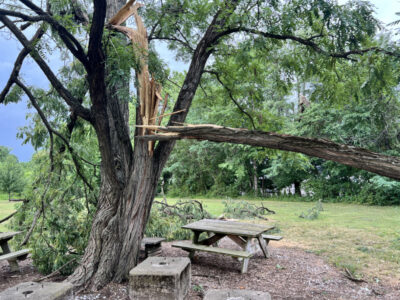
Severe thunderstorms were reported in 64 of 67 Pennsylvania counties over the July 4 holiday weekend. In some cases, that led to flooding and wind damages.
According to Shapiro, three deaths are believed to have been caused by heavy winds.
Pennsylvania Emergency Management Agency (PEMA) Director Randy Padfield said the worst weather has likely passed, but flash flood risks remain with rain expected to continue this week.
"We're not completely out of that window yet," he said. "We really want people to be weather aware so they can make the appropriate decisions and keep them and their families safe."
Padfield urged Pennsylvanians not to drive through moving waters or flood waters.
People using back-up generators were also urged never to use them indoors or within 20 feet of a door or window, for safety purposes. They can cause carbon monoxide, which has no taste, color or odor. Exposure has led to injuries and deaths during widespread power outages in the past. It's also important to keep generators dry and protected from rain and floods.
The peak number of power outages across the commonwealth came at around 10 p.m. on Saturday, leaving 267,000 residential and business customers without power, according to a spokesperson for PEMA.
Monday morning, an estimated 105,000 customers remained without power as repairs continued. Lancaster County is the most affected, with around 29,000 outages as of Monday morning.
Seventy-five roads also remain closed, down from a peak of 200 over the weekend. Work crews may also be on open roads helping with debris removal and power restoration.
"Please give them enough area to work, please slow down when you're in the area and they're operating, and please obey anyone who is out there directing traffic," said state Department of Transportation Secretary Mike Carroll.
Pennsylvanians who experienced property damage are encouraged to document it and to contact their insurance providers and county emergency response teams.
As it stands, Shapiro said he has not received a request to issue a state disaster declaration. But he stressed that as damage surveys continue, one can be issued if it's determined necessary.
Pennsylvanians experiencing outages who require powered medical devices or need air conditioning are encouraged to contact local and county emergency response teams.
According to the National Centers for Environmental Information, weather disasters leading to large-scale damage have become more common in Pennsylvania over the last 30 years.
"Weather in many ways is the most significant and acute event that we have to prepare for," Shapiro said. "Weather more and more is responsible for claiming lives in our commonwealth and doing real damage to property. This is something we've been working on for years, updating all of our different policies and procedures to be able to deal with significant weather events."
Shapiro also noted that changes to the Federal Emergency Management Agency (FEMA) under the Trump administration have put more responsibility on states like Pennsylvania to take charge after disasters.
Padfield noted that state programs may make funding for repairs, property replacement and temporary housing available to residents if surveyed damage reaches certain thresholds. The Disaster Recovery Assistance Program (DRAP), for example, requires a municipal government and the U.S. Small Business Administration must make disaster declarations before residents can apply for funding.